The Environment and Natural Resources Foundation (FARN), one of Argentina’s leading non-governmental organisations, has accused China of pressuring the Argentine government to speed up construction on a hydroelectric dam complex in Patagonia. According to the NGO’s directors, Chinese banks are threatening to suspend funds to update the railway network owned by the state-run Belgrano Cargas y Logísticas S.A, if the dams project is suspended.
Cristina Kirchner, the predecessor of current Argentine president Mauricio Macri, Argentina and China signed a loan deal that contains a clause preventing what is known as called cross default, where the cancellation of one project suspends finance for others. Construction of the Kirchner and Cepernic dams on the Santa Cruz River in the south of the country has been suspended by the Argentine supreme court (CSJN) since December last year.
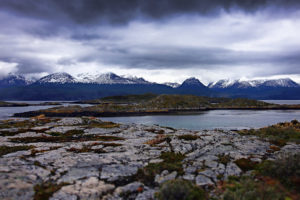
The unanimous ruling determined that an environmental impact study (EIA) and public hearings must be conducted prior to continuing construction, as established in the national environmental impact law for hydroelectric projects. But according to FARN, the Chinese have been pushing for quick release of the EIA and the immediate restart of the project. The controversial hydroelectric complex, which would provide 5% of the country’s power generation, jeopardises the flora and fauna of the Santa Cruz River, the last river formed by glacial melting. According to green groups, it would also have an impact on the Upsala, Spegazzini, and Perito Moreno glaciers, which have been declared a world heritage site by UNESCO.
“The contract for building the Kircher-Cepernic hydroelectric complex openly favours the Chinese creditors, companies, and banks involved in the deal. It imposes enormous financial burdens on the Argentinian government if the projects are modified or cancelled,” says María Marta di Paola, a researcher at FARN.
The Patagonia complex ranks only behind other hydro projects Yacyretá and Salto Grande in size and cost, estimated at US$4,7 billion. It is funded by China Development Bank (CDB), the Bank of China and the Industrial and Commercial Bank of China (ICBC). Construction is the responsibility of a consortium formed by Electroingenieria S.A., China Gezhouba Group Company Limited, and Hidrocuyo S.A., which was awarded the contract in August 2013.
“Both the Chinese government and the institutions financing the project must avoid possible reprisals for lack of progress on the project. They must accept the country’s Supreme Court decision and prioritise compliance with Argentine law,” says FARN’s executive director Andrés Napoli. “This states that every large-scale project, like the two mega dams, must have an environmental impact study done before construction, and also must include scientific studies and be carried out by professionals and independent institutions,” Napoli added.
The hydroelectric complex was originally conceived in the 1950s and its viability was only studied later in the 1970s, during the military dictatorship. Former President Cristina Kirchner relaunched the project in 2007 under the names Condor Cliff (now Nestor Kirchner) and La Barrancosa (now Jorge Cepernic) at a cost 35% below the current value, but it was cancelled for lack of funding. To construct the complex, 50 properties comprising 47,000 hectares are expected to be flooded, and 11 turbines will be installed in the dams to generate 5000 gigawatts/hour (GWh) annually, with potential of 1740 megawatts (MW).
FARN released a letter condemning what they called Chinese pressure and stating that it “expects the project to be suspended to ensure there are no serious environmental and economic impacts.” The letter takes an even harder line by stating that FARN fears that if, built “the hydroelectric complex will be remembered as the most misguided partnership between China and Argentina of all time, just at the moment when protecting glaciers is among humanity’s priorities for climate change.”