The president of Power Construction Corporation of China (Powerchina) made a big splash across the Himalayas last week by announcing its plans to develop large scale hydropower on the Lower Yarlung Tsangpo river, known as the Brahmaputra in India.
This has long been a bone of contention between the two countries, with India fearing that large scale damming of the river upstream by China will effectively cut off its water supply downstream. The Brahmaputra river runs across the Tibetan Plateau before passing through India and Bangladesh. While these fears are based on a misconception of how much water is contributed to the river in Chinese territory, the ecological impacts of large dam building in the region will be immense.
When plans first appeared in the Chinese Communist Party’s proposal for the 14th Five Year Plan and the long-term vision for 2035 in early November there was no reaction in either India or China. The proposal simply said: “implementation of hydropower development plans on Yarlung Tsangpo,” without giving any further details. There was no coverage in the Chinese media.
In his conference speech, company president Yan Zhiyong said Powerchina will be the project contractor and ensure its execution. The project, he said, could play a significant role in helping China reach its goal to achieve peak carbon emissions before 2030 and carbon neutrality by 2060 and would bring money and development to the Tibet Autonomous Region.
World’s largest dam
The development of nearly 60 million kilowatts [60 GW] of hydropower in the lower reaches of the Yarlung Tsangpo can provide nearly 300 billion kWh per year, offering a glimpse into the huge scale of the project proposed in the Grand Canyon of the Yarlung Tsangpo, where the river takes a sharp bend and drops over 2,000 metres, making it an ideal place to generate hydropower. The area has 70 GW of technically exploitable hydro resources, more than triple the capacity of the Three Gorges Dam.
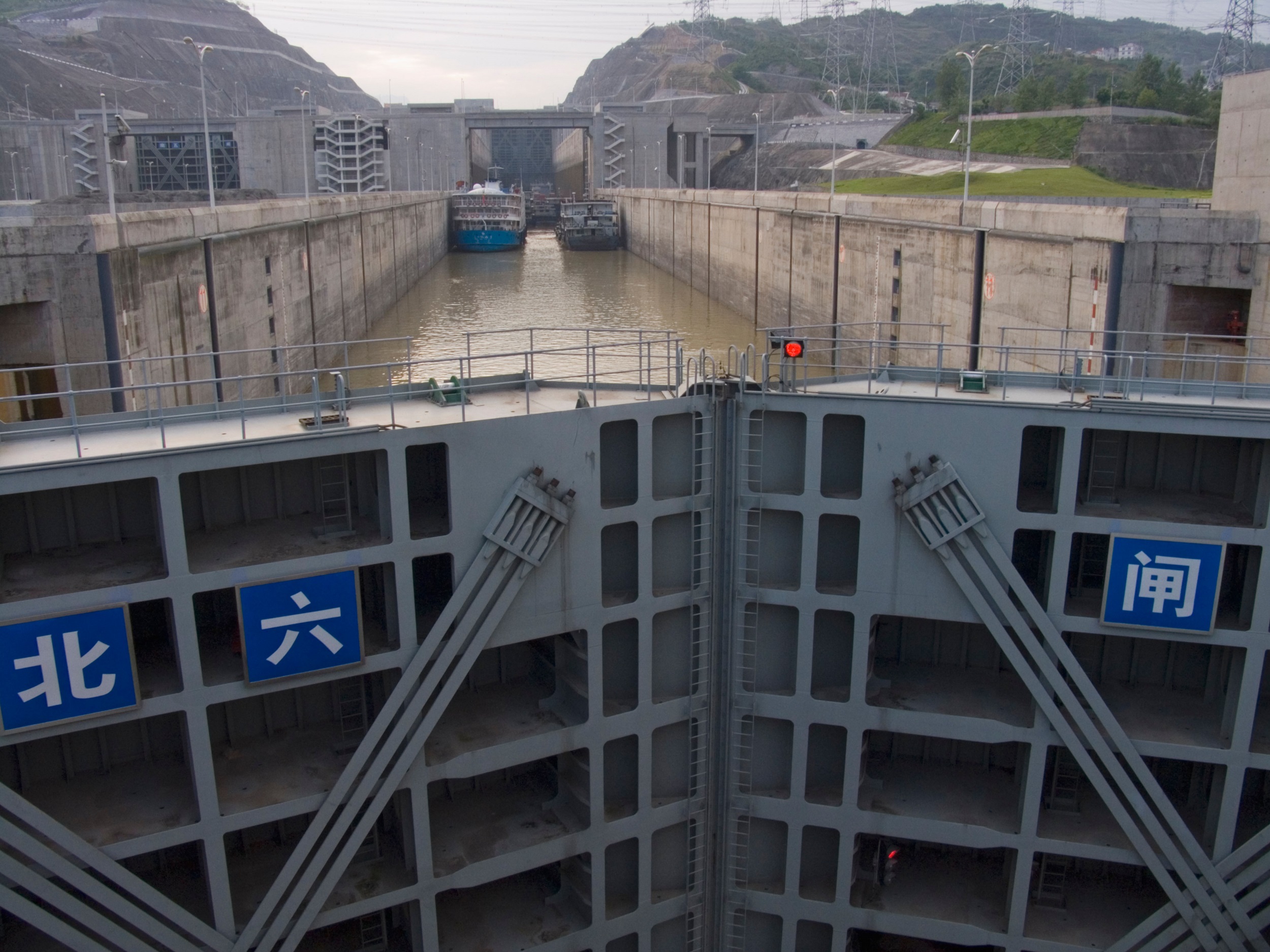
China had already planned five smaller dams along the mainstream of the Yarlung Tsangpo. So far, two of them have been completed, in 2014 and August this year respectively, according to the website of the China Society for Hydropower Engineering. In recent years there has been speculation in China on the commissioning of this sixth project, which is frequently referred to as “Medog hydropower station” after the county where it is located in south-east Tibet.
Fear downstream
Following widespread speculation in the Indian media, the spokesperson for the Chinese embassy in India reached out and said China would take a responsible attitude toward the project in terms of the interests of downstream areas, and that the project was still in the preliminary planning and demonstration stage. “There is no need for the outside world to over-interpret it,” he said.
The next day, Hua Chunying, spokesperson for the Chinese Foreign Ministry, said: “It is China’s legitimate right to develop hydropower on the river,” adding that “for a long time, China has cooperated well with India and Bangladesh in hydrological flood reporting, disaster prevention and mitigation, and emergency response. China will continue to maintain communication with India and Bangladesh through existing channels.”
Chinese media has covered concerns in India extensively, including the suggestion by an Indian federal official of building a big dam on the Siang River – as the Yarlung Tsangpo is called when it crosses the border into Arunachal Pradesh. The official said India’s dam project, planned in the Dibang valley, would have a reservoir, and that would even out water flow changes upstream “to mitigate the adverse impact of the Chinese dam projects”.
The Dibang project has been on the drawing board for six years, but project developers have still not been able to come up with a plan that can minimise damage in this fragile biodiversity-rich region. And in these six years, India has become an electricity-surplus country, so the developers’ interest has cooled off.
The basis of fear
A dam in upstream China will not reduce water flow to India unless there is a reservoir behind it, say experts. If there is no reservoir and it is a “run of the river” project, electricity is produced by channelling water through a tunnel, rather than impounding the water. China says the two dams that have been completed further upstream are also for run-of-the-river hydroelectricity projects.
The Siang flows down the Himalayas in Arunachal Pradesh, enters the Assam valley, joins two other rivers and together they become the Brahmaputra. At that point, the Siang contributes about 30% of the water of the Brahmaputra. Other large tributaries join the Brahmaputra along the Assam valley in India, so that it carries eight times more water when it exits the country to Bangladesh than when the Siang enters Arunachal Pradesh.
However, a dam of the scale envisaged in China’s latest five-year plan will hold back silt which provides essential nutrients for soil and farming downstream. The combined dam plans of China and India could have disastrous ecological consequences in one of the world’s most fragile regions, experts have warned.
There is also serious worry in India because China’s plan to divert the waters of the Yarlung Tsangpo to northern China has not gone away, though it continues to face serious opposition within China.
The impacts of climate change are already acute in this region, known as the roof of the world. The glaciers and snowlines of the Himalayas are retreating. If this continues, the waterways of the Tibetan Plateau could first flood and then dry up, turning the land into a desert.
Today, the ecosystem of the gorge region where the Yarlung Tsangpo leaves the Tibetan Plateau – called the Great Bend and where this mega dam is planned – is already in decline. The primary forests are disappearing, leading to a rapid spread of soil erosion and landslides. This is also a highly earthquake prone region, putting any large structure at immense risk.
See: Why India and China should leave the Brahmaputra alone
China’s government-controlled newspaper Global Times cited an expert claiming China’s dam could also bring positive effects to India by regulating water flow. It quoted an unnamed observer as saying, “India is likely to express its concerns to China through existing bilateral platforms, or propose a multilateral joint plan similar to the Mekong–Lancang Cooperation Mechanism.”
However, he added that with the bilateral relationship at an impasse, river cooperation between the two hardly looks optimistic.
Explore The Third Pole’s earlier report on the Brahmaputra Yarlung-Tsangpo and China–India water cooperation.