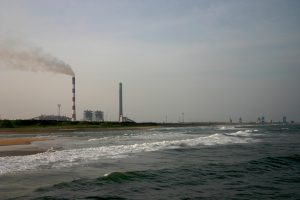
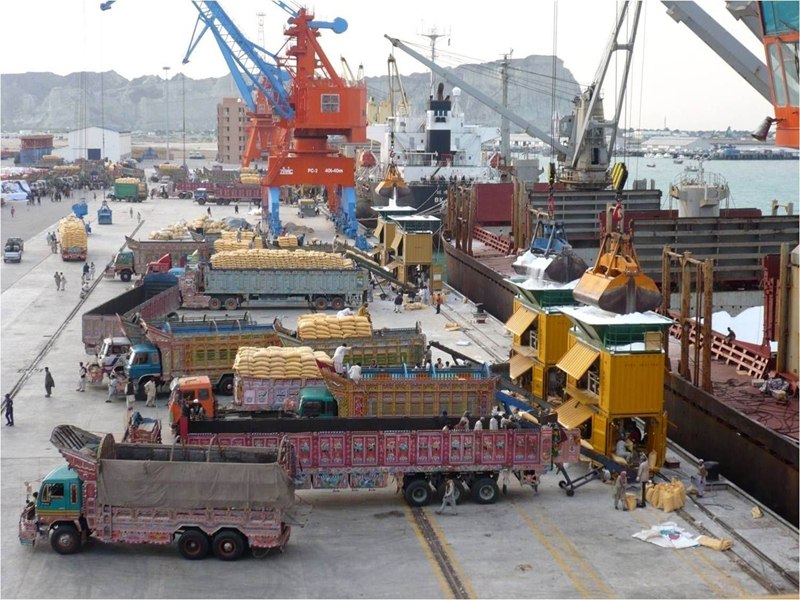
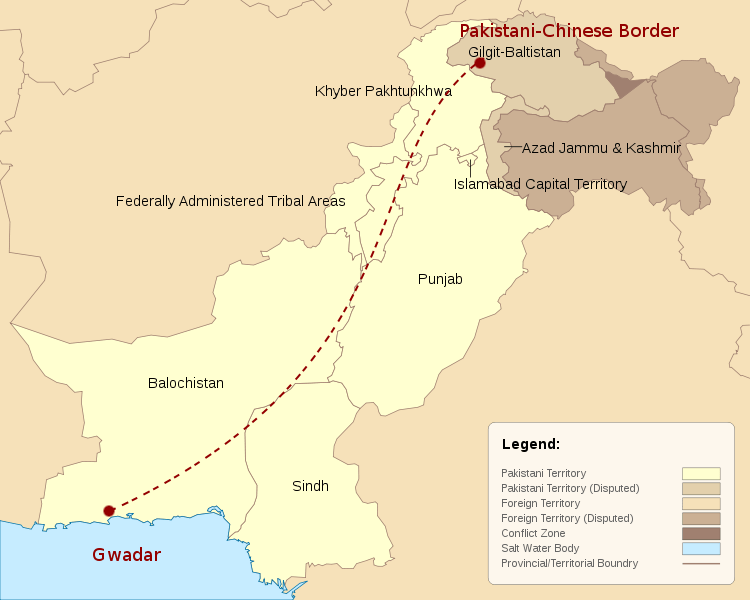
Pakistan’s Gwadar port is facing acute drinking water shortages after a three-year drought in the arid province of Balochistan. Officials hope the port city will become an international business hub at the end of the China Pakistan Economic Corridor (CPEC) – an ambitious USD 46 billion project linking the deep water port on the Arabian Sea with the city of Kashgar in western China.
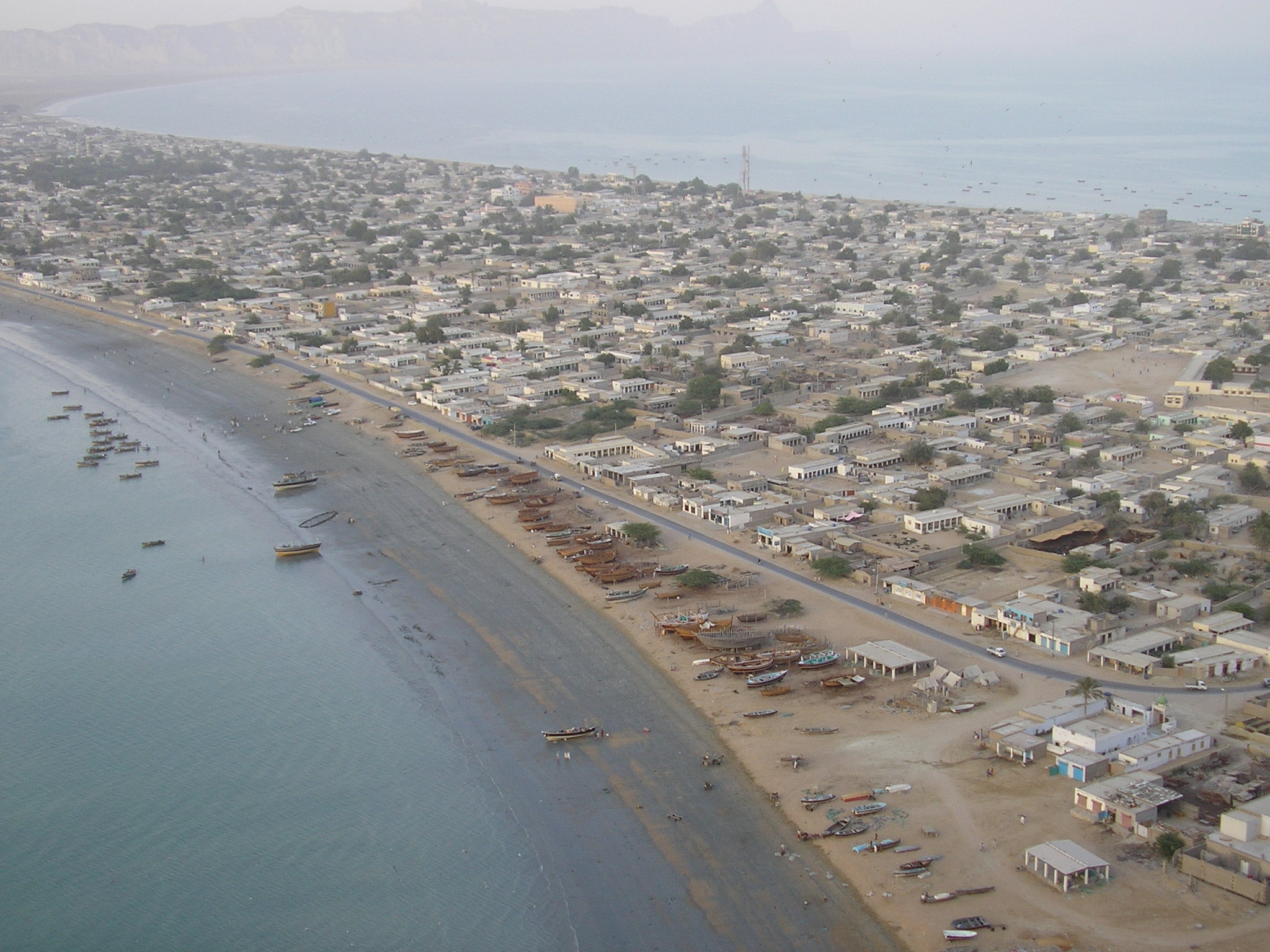
But Gwadar city is facing a growing water crisis, leaving 100,000 people with no access to clean drinking water.
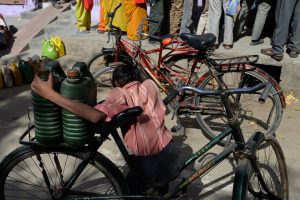
Residents have been forced to buy expensive water (USD 115-140 per tanker) or wait days for government subsidised water transported from 80 kilometres away. Other locals have resorted to boiling sea water for drinking purposes. This is the second time that Gwadar and the surrounding areas in Balochistan province have suffered major water shortages in six years.
Investment puts pressure on water resources
The recent influx of investment has put more pressure on water resources. The city’s population is growing due to the CPEC project and the crisis will become more severe unless urgent steps are taken by the government. A Chinese state owned company took control of the strategically important port at Gwadar in Pakistan in November last year, signing a deal for over 2,000 acres of land. The port has been designated a free trade zone.
Foreign investors and domestic companies have to bring their own barrels of clean drinking water, said an official from Gwadar port. “We rely on bottled water, but poor people here are in bad condition due to the water crisis,” the official noted.
Humanitarian crisis for the poor
Women, children and the poor have been particularly badly hit by the water shortages, Naseema Ehsan Shah, a female senator from Gwadar city told thethirdpole.net. “Women and children have to load jars or buckets on their heads to carry water from miles away to meet their domestic needs,” she said. Women also travel for miles just to wash their clothes.
“Bibi we don’t expect anything else from you. Please just give us water”, Shah quoted a woman in Gwadar as saying during a recent visit to her constituency. Despite the poverty and other social problems in the city, the water crisis has forced people to forget everything else, she said.
“Water is the basic requirement of every human being and we request the government to take steps to provide this immediately”, said Shah.
The Akara Kaur dam, the only source of water for Gwadar and surrounding areas, has almost dried up because of the prolonged drought, said a local of the port city talking to thethirdpole.net over the telephone. The dam, designed and built in early 1990s, has failed to keep up with the water demands of the city because of the growing population and the slow accumulation of silt in the reservoir, the senator explained. She asked the authorities to speed up work on two other dams currently under-construction.
“Gwadar has become known to the entire world due to the multibillion CPEC project, but nobody knows how its population is suffering due to the water shortages,” said Ms Shah.
She criticised the large metro project being constructed in Lahore with an investment of over one billion dollars under the CPEC. “It would be more appropriate if even half of these funds were diverted towards water supply projects in Gwadar,” she said.
“There will be a humanitarian crisis in the city in future if steps are not taken,” she warned.
Slow government response
Federal Minister for Planning, Development and Reform Ahsan Iqbal, who is leading the CPEC project, said that ministry understood the gravity of crisis and was taking urgent steps to resolve the issue. “The federal government has designed a desalination plant project in Gwadar to purify the sea water,” he noted.
“Gwadar is very important for us and we will ensure all the facilities not only for the investors, but also for the locals, who are the key stakeholders of the development process,” he noted.
Rafique Baloch, Chief Engineer of Gwadar Development Authority (GDA), said the government is providing water tankers for drinking water and desalinized water for other purposes. The government is also constructing a 68 km long pipeline from the dam to the city to distribute water and the Ahsan Iqbal will himself monitor of these water related schemes, he said.
Balochistan has also been the site of a long-running insurgency, and militants in the region have targeted drinking water projects, compounding the current crisis. Construction of the USD 13 million Sawar and Shadi Kaur dams begun by the provincial government in 2007 was suspended after contractors and workers were kidnapped by armed men in 2014.
“Work on the two dams resumed one month back and we will complete the projects by 2018, as part of the early schemes under the CPEC,” Baloch said, adding that special army security personnel have been deployed for the security of the workers. “Militancy followed by drought is mainly responsible for the crisis like situation,” he said.
Deep roots of the crisis
Faiz Karar, manager of the International Union for Conservation of Nature (IUCN) programme in Balochistan, said the root of the water crisis runs far deeper than the recent drought. “We see frequent droughts in Balochistan and [federal and local] governments have failed to design sustainable long term plans to tackle the water issue,” he stated.
The region is arid, with low rainfall, and planning better water infrastructure is crucial. “With no underground water, Gwadar city depends entirely on harvesting rain water”, Karar said, pointing out the need for more dams to harvest rain water and desalination plants. He also advised sending water to Gwadar city from Mirani dam, some 200 km away.
Water Expert Dr Pervaiz Amir agreed that Gwadar’s water crisis is a chronic problem that the provincial and federal authorities have failed to address. “There is a need to build small as well as big dams for rain water harvesting and ensure their fool proof security to avoid any insurgent act,” he said.
Besides government negligence and climatic changes, he also held the tanker mafia responsible for creating a crisis to boost their lucrative business.