
Energy

Large dams don’t make economic sense, says study

The wave of mega dams being built worldwide is economically unviable, even before taking into account environmental and social costs, argues an Oxford University report
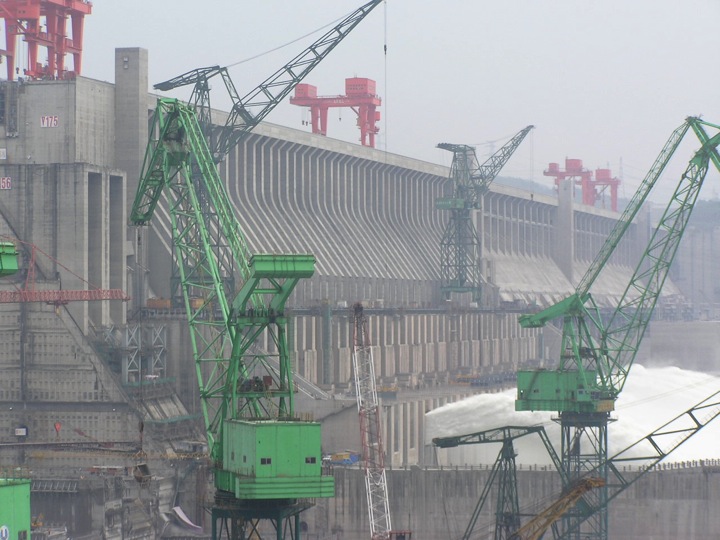
<p>The Three Gorges Dam will cost China an estimated US$26.45 over the next decade</p>

The Three Gorges Dam will cost China an estimated US$26.45 over the next decade

The wave of new mega dams under construction globally is economically unviable, according to Oxford university researchers who have found such projects typically cost nearly twice as much as first estimated and rarely finish on time.

The findings are based on a study of 245 dams built in 65 countries since 1934, making it the most comprehensive analysis since a slew of mega-dam projects began recently, ending a two-decade lull.

Projects under construction, including the Diamer-Bhasha in Pakistan, the cascade on the Jinsha River in China, and the Gibe III dam in Ethiopia, are unprecedented in scale.

Proponents argue such projects boost renewable energy in countries eager to increase their electricity supplies without burning more fossil fuels. However, they meet with fierce opposition because they displace millions of people, flood swathes of farming land and destroy fragile ecosystems.

This study will provide fresh fodder for campaigners who want to make the economic case against dams as a sustainable energy source. It found large dam construction costs were on average more than 90% higher than initial budgets, while eight out of 10 suffered a schedule over-run. Dam builders and financiers have also failed to learn from mistakes of the past, argue the researchers, since neither cost nor schedule overruns have improved over time.

The study condemns Pakistan’s Diamer-Bhasha dam as “a non-starter” – the giant project on the Indus River is expected to cost US$25.4 billion rather than US$12.7 billion, and to be completed in 2027 rather than 2012.

While projects in poorer regions tend to have longer delays and leave countries saddled with more debt, even in China large projects are “likely to hinder the economic viability of the country as a whole unless risks are mitigated,” claim the researchers.

China is the world’s leading dam builder; half of the world’s 45,000 large dams are in China and Chinese companies are involved in over 300 dam projects in 70 different countries.

More than economics

For China it is not only the direct construction costs that need to be considered. The bulk of the country’s new hydropower will come online in the remote south-western regions and on the Tibetan plateau. Transferring the electricity produced thousands of kilometres to where it will be consumed by industry and growing cities on the east coast will further push up costs.

Mitigating the environmental damage inflicted by hydropower is also costly. Reports in Science estimate it will cost US$26.45 billion will to deal with the environmental impacts of the Three Gorges Dam over the next 10 years. The US – the world’s second most prolific dam builder after China – is now spending huge amounts of time and money dismantling dams across the country to restore river flow.

Cookies Settings

Dialogue Earth uses cookies to provide you with the best user experience possible. Cookie information is stored in your browser. It allows us to recognise you when you return to Dialogue Earth and helps us to understand which sections of the website you find useful.

Required Cookies

Required Cookies should be enabled at all times so that we can save your preferences for cookie settings.

Dialogue Earth - Dialogue Earth is an independent organisation dedicated to promoting a common understanding of the world's urgent environmental challenges. Read our privacy policy.

Cloudflare - Cloudflare is a service used for the purposes of increasing the security and performance of web sites and services. Read Cloudflare's privacy policy and terms of service.

Functional Cookies

Dialogue Earth uses several functional cookies to collect anonymous information such as the number of site visitors and the most popular pages. Keeping these cookies enabled helps us to improve our website.

Google Analytics - The Google Analytics cookies are used to gather anonymous information about how you use our websites. We use this information to improve our sites and report on the reach of our content. Read Google's privacy policy and terms of service.

Advertising Cookies

This website uses the following additional cookies:

Google Inc. - Google operates Google Ads, Display & Video 360, and Google Ad Manager. These services allow advertisers to plan, execute and analyze marketing programs with greater ease and efficiency, while enabling publishers to maximize their returns from online advertising. Note that you may see cookies placed by Google for advertising, including the opt out cookie, under the Google.com or DoubleClick.net domains.

Twitter - Twitter is a real-time information network that connects you to the latest stories, ideas, opinions and news about what you find interesting. Simply find the accounts you find compelling and follow the conversations.

Facebook Inc. - Facebook is an online social networking service. China Dialogue aims to help guide our readers to content that they are interested in, so they can continue to read more of what they enjoy. If you are a social media user, then we are able to do this through a pixel provided by Facebook, which allows Facebook to place cookies on your web browser. For example, when a Facebook user returns to Facebook from our site, Facebook can identify them as part of a group of China Dialogue readers, and deliver them marketing messages from us, i.e. more of our content on biodiversity. Data that can be obtained through this is limited to the URL of the pages that have been visited and the limited information a browser might pass on, such as its IP address. In addition to the cookie controls that we mentioned above, if you are a Facebook user you can opt out by following this link.

Linkedin - LinkedIn is a business- and employment-oriented social networking service that operates via websites and mobile apps.