Pollution in the largest mangrove forest in the world became front page news yet again in Bangladesh as a large ship carrying over 1,200 tonnes of coal sank in the southern Shela River on Sunday.
Rescuers from the Bangladesh Inland Water Transport Authority have traced the sunken vessel 35 feet deep under water, but they have not been able to salvage the ship.
This is the third vessel to have capsized in less than two years in the ecologically sensitive region, and the issue has caused intense anger among environmentalists. “We may not see immediate impact of these accidents, but in the long run recurrence of such mishaps will eventually destroy the forest,” said Abdullah Harun Chowdhury, professor of environmental science at the University of Khulna. While coal may not be as environmentally destructive as an oil spill, the commercial shipping track across the Sundarbans has had a track record of disasters.
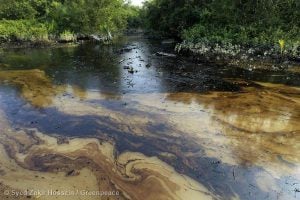
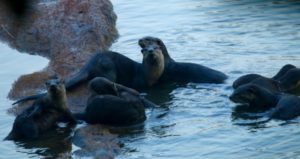
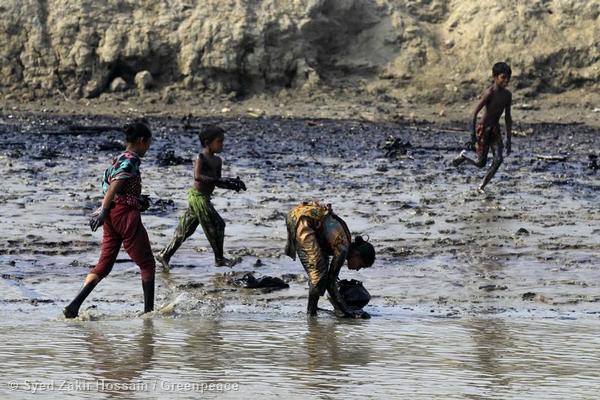
Two other vessels – one loaded with coal and the other with furnace oil – sank in October 2015 and December 2014. The 2014 accident caused oil spill over 359 square kilometres of Sundarbans forest, intersected by several rivers and tributaries. These frequent disasters have endangered the vast mangrove, home to endangered crocodiles and migratory birds, economically important fishing grounds and the Royal Bengal Tiger. Shared by Bangladesh and India, the forest, declared a UNESCO world heritage site, also acts as a sanctuary to the rare Ganges and Irrawaddy dolphins.
Read: India and Bangladesh agree joint initiative for Sundarbans
A ban, an investigation and a fine
The government has slapped a ban on cargo ships plying the river after the vessel sank en-route to Nowapara of south-western Jessore district from Chittagong. Unfortunately there is some fear that the ban will only be a temporary measure. After the December 2014 oil spill, the Bangladeshi government momentarily had suspended the operation of commercial cargo liners, but the ban was lifted shortly thereafter.
The government is trying to work around the problem by creating a new route through the Ghasiakhai river, which is being dredged to become navigable, said the Shipping Minister Shahjahan Khan. “From now on, all the commercial cargo will have to use this channel while the Pashur channel will be closed.”
In the meanwhile a parliamentary panel from the ministry of environment and forests has been set up. Hasan Mahmud, a former minister, and chairman of the panel, said, “We have asked the government to stop plying commercial vessels through the Shela River.”
The government has launched an investigation into the capsizing of the ship, asking a committee to report back in a month. In the meanwhile the department of forest lodged a lawsuit asking the vessel owner to pay compensation worth more than half a million US dollars. “We have demanded compensation as the coal-laden vessel will cause both ecological and environmental damage,” said forest officer Saidul Islam.
Problems in the future?
The problems for the Sundarbans may not end with the shipping. Earlier this month several hundred activists marched towards the mangrove forest to protest against plans to build a coal-based power plant near the Sundarbans. The activists called on the government to stop construction of proposed 1.3-gigawatt Rampal power plant, which is located about 14 kilometres upstream of the forest.
The project, led by an Indian firm, is due to begin operations in June this year, at an estimated total cost of USD 1.8 billion. There have also been indications that the Bangladeshi government may ask the Chinese for help as well.
The activists say that the forest is already under threat from changes in water quality and increased boat traffic. Construction of a coal-fired plant will expedite its destruction. Whatever happens, the struggle for the Sundarbans is not over just yet.