“With only 2.5% of the world’s landmass, we have 8% of the world’s recorded biodiversity,” India’s minister of Environment, Forest and Climate Change, Prakash Javadekar told world leaders at the 75th UN biodiversity summit this September, reminding delegates that he represented one of the 17 megadiverse countries in the world.
For years, India has highlighted its rich flora and fauna. Today, amidst unlocking some of the world’s most precious landscapes and diluting environment laws, the Indian government is misleading Parliament about the state of the natural world and providing inaccurate, confusing data about its wildlife – all of this taking place as global and national biodiversity assessments suggest that India’s flora and fauna, like everywhere else, is in free fall.
Environment minister in denial of wildlife decline
Babul Supriyo, the Minister of State in the Ministry of Environment, Forest and Climate Change told the Lok Sabha this September in response to a question that the government had no data to say that endangered bird populations in the country were in a state of continuous decline.
Seven months ago, however, the State of India’s Birds Report 2020 – which analysed data from 15,000 birdwatchers on the eBird platform – painted a different picture. The report measured the abundance and distribution of 867 bird species, and concluded, “Of the 261 species for which long-term trends could be determined, 52% have declined since the year 2000, with 22% declining strongly. In all, 43% of species showed a long-term trend that was stable and 5% showed an increasing trend. Current annual trends could be estimated for 146 species. Of these, nearly 80% are declining, with almost 50% declining strongly. Just over 6% are stable and 14% increasing.”
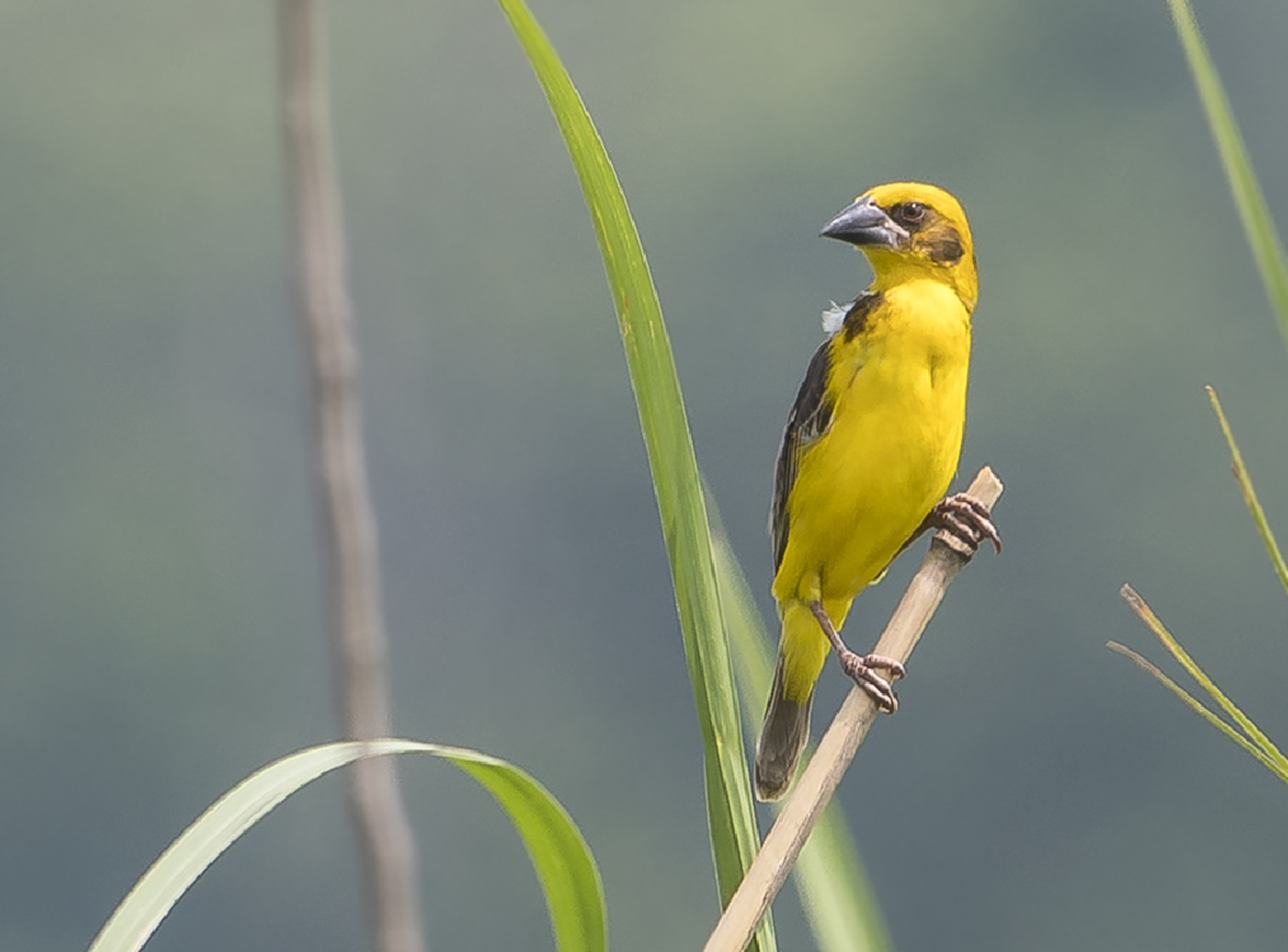
Eagle and vulture numbers have plummeted, but so have the counts of several neglected species like the Finn’s Weaver. In 20 years, Finn’s Weaver populations in Uttarakhand have dropped by as much as 94%, with less than 500 birds found in India.
In his response to parliament, Supriyo failed to note findings from the State of India’s Birds report, even though three autonomous government institutions – the Wildlife Institute of India, the Salim Ali Centre for Ornithology and Natural History and the National Biodiversity Authority – had collaborated on it.
This is not the only evidence that shows birds in India are collapsing. In five years, since 2015, the number of bird species at high risk of extinction in India has shot up from 82 to 101, according to data from the International Union for Conservation of Nature (IUCN) Red List.
Monitoring and recording India’s wildlife decline
Earlier this year, when Supriyo was asked in the Lok Sabha if the government had recorded the endangered species of animals and birds to take steps to prevent their extinction, he said that it had.
Endangered species were indexed under the Wildlife (Protection) Act 1972 in various schedules based on their threat status, he said, and Schedule I species are accorded the highest degree of protection.
India’s Wildlife Protection Act
Under the Wildlife (Protection) Act, 1972, flora and fauna are catalogued under six schedules – from I to VI; and wildlife crimes against top-schedule species (especially schedules I and II) are dealt stiffer punishments.
But the classification, scientists say, is often unscientific and disconnected from an animal’s conservation status.
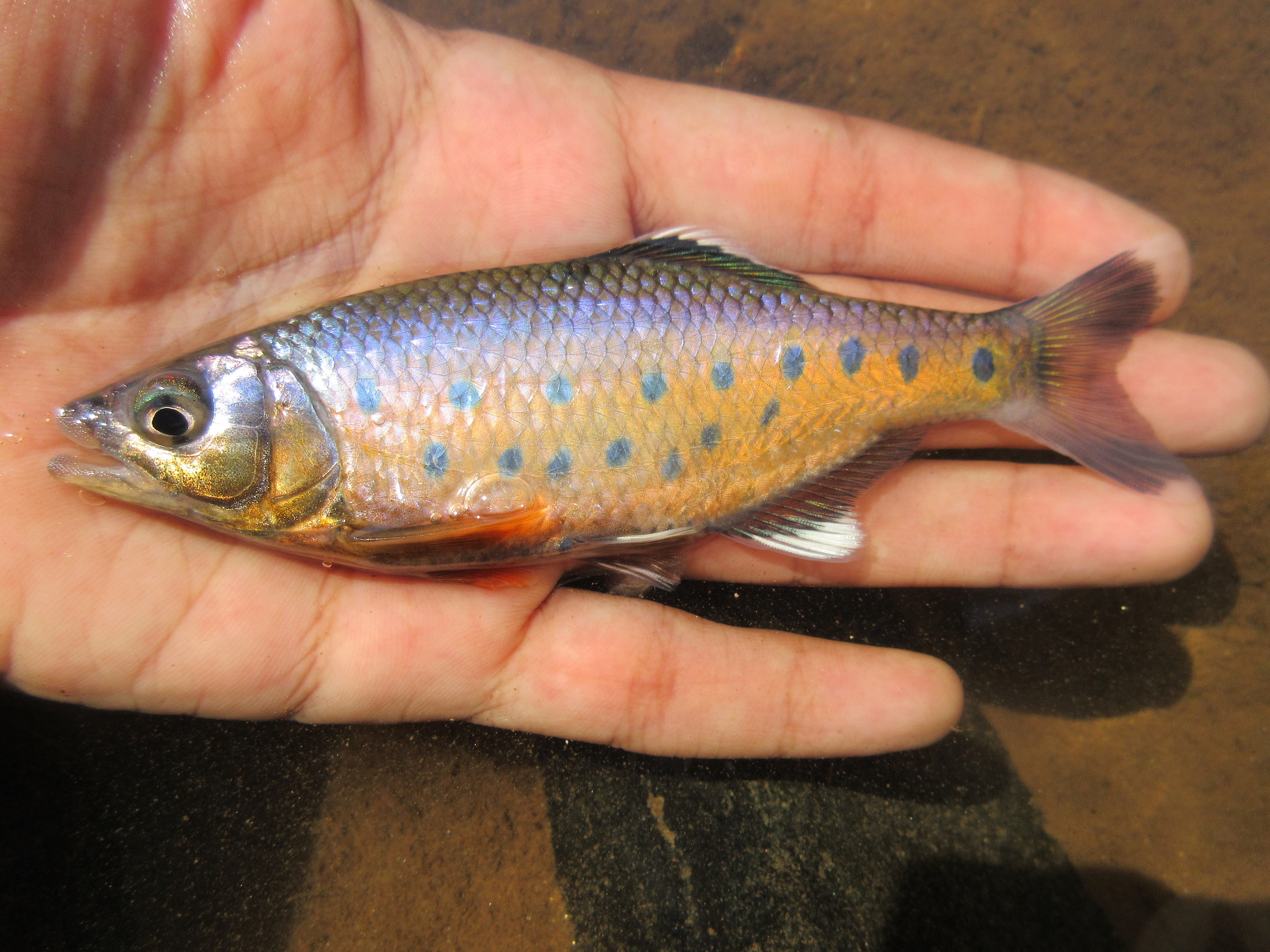
“There are 159 species of freshwater fish threatened by extinction in India, but none of them are listed under the Wildlife Protection Act,” Rajeev Raghavan, professor at the Kerala University of Fisheries and Ocean Studies and an IUCN SSC Freshwater Fish Red List Coordinator told The Third Pole, “If the fish are not protected by law, the purpose of assessing and prioritising them is quite pointless.”
“In India, all we have done is a static exercise of listing species under the various schedules of the Wildlife (Protection) Act,” Abi T. Vanak, Senior Fellow at the Ashoka Trust for Research in Ecology and the Environment told The Third Pole. A number of species with stable populations, marked as ‘least concern’ by the IUCN, are listed under Schedule I of the legislation, he says, and several endangered species are lower down in priority.
According to Vanak, India’s wildlife laws, particularly the Wildlife Protection Act is not designed to monitor endangered species. “The law doesn’t outline what needs to be done to revive the species.”
India’s neighbours, Sri Lanka and Bangladesh, have, under the guidance of the IUCN, established national red lists to monitor the status of flora and fauna within their borders – a process India has not initiated. “India had plans of doing a country-level assessment,” K.A. Subramanian, Senior Scientist at the Zoological Survey of India (ZSI), India’s premier zoological research institute told The Third Pole, “but these have not been done so far.”
Extinction of wildlife in India
In September, a WWF assessment found that wildlife populations around the world had plummeted by 68% from 1970 to 2016. Last year, a sweeping international report found that human transformation of natural landscapes had put at least 1 million species at risk of extinction. Both assessments observe that the destruction of wildlife habitats – forests, grasslands, wetlands, rivers – for mining, dams, industry, and agriculture is the most significant factor for plummeting wildlife numbers.
See: Steep global biodiversity loss puts humanity in peril
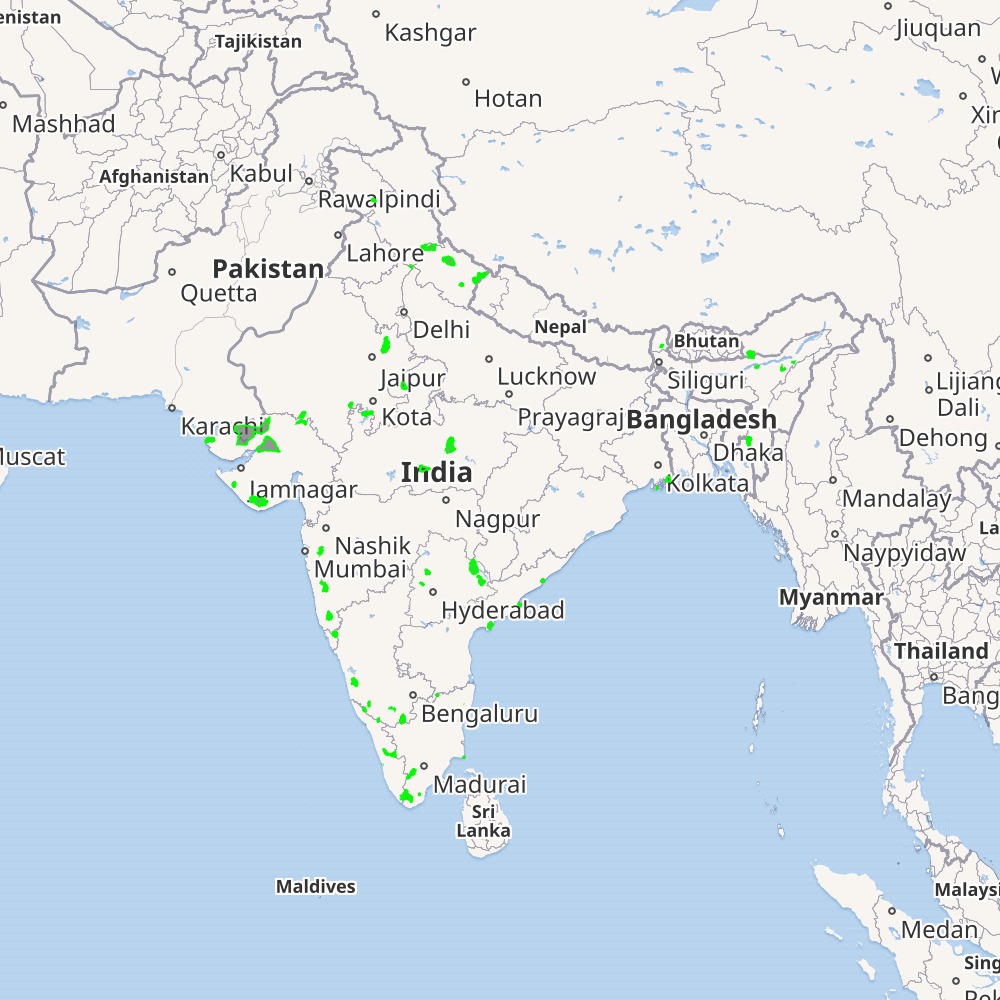
Out of the 8,664 species that the IUCN Red List has catalogued in India, about 13 percent are considered at high risk for extinction in the wild. Yet, India continues to unlock protected landscapes at a rapid pace.
Since 2015, India’s environment ministry approved the felling of about 11 million trees to make space for infrastructure projects, data presented in the Rajya Sabha said. The National Board for Wildlife cleared over 692 hectares of inviolate wildlife sanctuaries – roughly the size of one thousand football fields – to lay railroads, build highways, install mines and launch industries between January 2019 and August 2020, research by Legal Initiative for Forests and Environment, an environment non-profit found. The environment advocacy group maintains that the clearances are illegal and violate the Wildlife Protection Act which only permit encroachments that are beneficial to wildlife.
IUCN red list India
When queried about whether flora and fauna in India’s forests were gradually becoming extinct, the environment ministry in the Lok Sabha in July 2019 listed four animals and 18 plants species it considers extinct.
The ministry did not mention the animal and plant species in the IUCN critically endangered bucket – the species on extinction’s edge – facing ‘extremely high’ risks of being wiped out. Today, a total of 180 species found in India are critically endangered, many not recorded in the Wildlife Protection Act.
USD 42 trillion – a majority of global GDP – is dependent on high-functioning ecosystems, noted Swiss Re, a global insurance firm this October, arguing that a shocking fifth of the world’s nations are at risk of biodiversity collapse. It put India at the top – among the ‘highest risk’ countries.
Recent biodiversity assessments emphasise, more forcibly than ever before, how the future of humankind is intertwined with the health of our landscapes and ecosystem. Wetlands purify and store water. Mangroves shield villages from rising seas and floods. Threatened bees and insects pollinate our crops. Clean undammed rivers nourish fish populations that feed millions of people.
“In most villages near streams or rivers, the moment you start talking about the river, the fish, and fishing gear, you’re going to have a crowd of young and old people around you,” Suman Jumani, an ecologist who has spent years studying the impacts of Karnataka’s dams on freshwater ecosystems said, “It’s a testament to how intricately our rivers and its wildlife are tied to our livelihoods and culture.”