![<p>Iceberg off the Antarctica coast [Image by: National Centre for Polar and Ocean Research, India]</p>](https://dialogue.earth/content/uploads/2018/11/Antarctica_Iceber_on-the-sea-768x468.jpeg)

At the sidelines of a conference jointly organised by the Indian Ministry of Earth Sciences, the Norwegian Embassy, and the European Union on 19-20 November, the Director of India’s National Centre for Polar and Ocean Research (NCPOR), explained the importance of the research for India, its history, and its ambitions.
Omair Ahmad (OA): India has a long standing research programme in the polar regions; how did it come about?
M Ravichandran (MR): We began work in 1981, with our first station, Dakshin Gangotri, established in 1983 in Antarctica. Unfortunately we had done limited surveying before making that choice, and did not realise it was in an accumulation zone, and so it has been submerged, buried in ice, over the years. We then established the Maitri, with the help of the Indian military in 1989, which became fully operational in 1993. Our third, most modern base, the Bharati, was established in 2012. We did an international tendering process for this and it is a state-of-the-art research facility.
We acted early, and became members of the Antarctic Treaty System [in which only 29 countries – including India – have Consultative status] in 1983. Since then many new members have wanted to join and receive Consultative status, often due to geo-strategic reasons, but have not had it so easy.
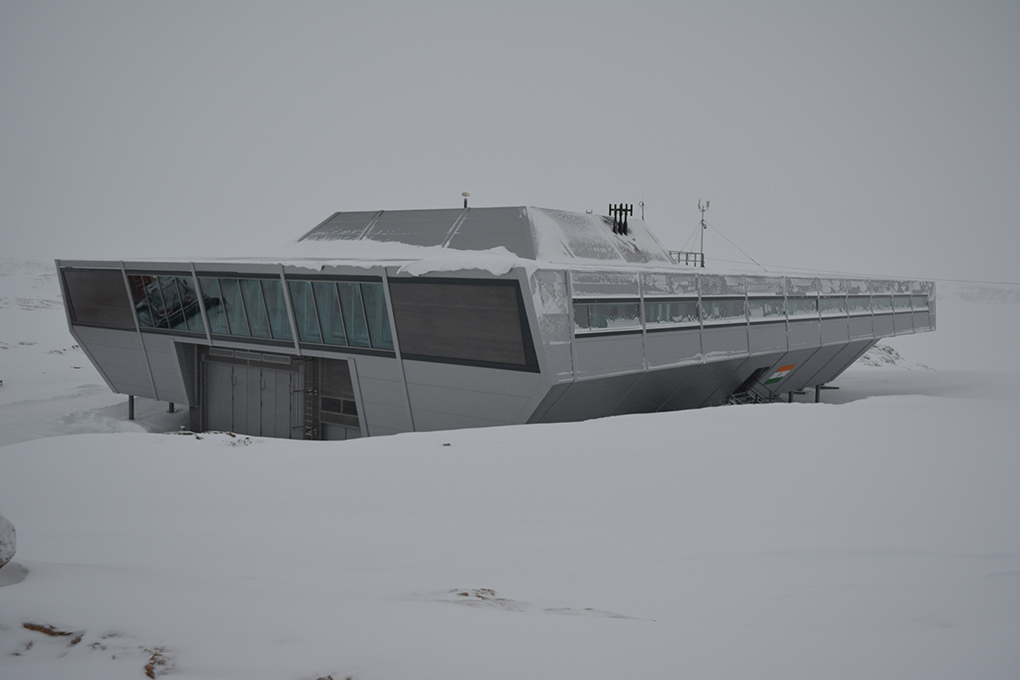
MR: Our fundamental question had to do with the monsoons. Could we predict its variability, help in predicting how it would play out? This is a critical question for India. Unfortunately the Antarctic could not give us as much information as we wanted – although with deep drilling and the examination of ice, we can determine what the weather patterns were like for decades, even a century, earlier. The variation in Antarctica is limited, it is in the Arctic that the retreat of ice has been more significant. This is why we expanded our research to the Arctic region in 2008.
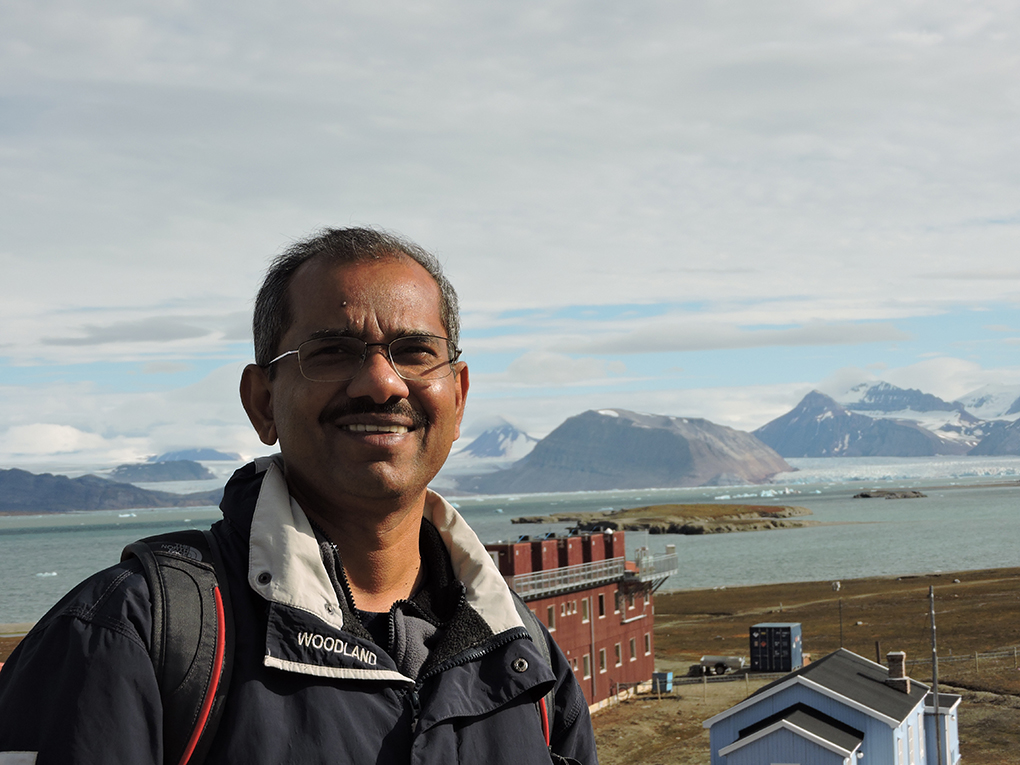
The Himadri station in Svalbard, Norway, was inaugurated in 2008, and we started serious work there in the years thereafter, looking at four key questions: the mass balance of glaciers, the effect of the warming on the marine system, the formation of clouds and precipitation, and the effect on biodiversity.
OA: What connections have you found between the monsoons and the Arctic?
MR: You have to understand what is happening. It is not as if average rainfall during the monsoons has changed, it is that there is increased variability in when the rainfall happens and where. This is directly related to heating in the atmosphere. Since a warmer atmosphere can hold more water, it takes more water to make rainfall happen, and when it falls, it is more water in a more concentrated area. When the rainfall happens, heat dissipates. That heat is transported to the Arctic. So after a massive downpour in Uttarakhand, or in Kashmir, within 15 days you will see greater melting in the Arctic.
The connection in the other direction – from the Arctic to the Himalayan region – is more complicated, and takes longer, but the study of precipitation and temperatures in the Arctic from June to October tells us how the monsoon will be in the coming year. For example, you may have read about the western disturbance in the newspapers when they talk about the monsoon. This is created by the oscillation in the air as it moves over ice and snow in the Arctic. If there is less oscillation, the air will have less moisture, leading to less rainfall in the monsoons.

MR: Yes. This happens for two reasons. One, because of polar regions melting, and two, because warmer water expands. The Indian Ocean is the warmest ocean in the world. One reason proposed is because the heat has no ventilation to the north. In the Pacific, the warm water travels to the north and the south, and cools at the poles. In the Indian Ocean, the Asian landmass prevents the hot water circulating to the north, so it has only the South Pole to cool it.
See: An Indian scientist in the Arctic
See: Studying the South Pole from the North Pole
MR: We have too few glaciologists, and we need to find out more about how glaciers work, especially in the Himalayan region. Learning from the Arctic and the Antarctic helps us in that. For example, one of the two was looking at ice rises in the Antarctic. These rises stop the collapse of glaciers, interrupting an even melt, so it happens unevenly. We would look to model from such research how glacier collapse might happen in the Himalayan region.
As I mentioned, we are drilling out ice cores to see what the weather was like over the years. We are working with Norway, which has great ice and sea radar, and we are good at ice drilling. The areas we look at have relatively stable ice accumulation, and a core of 100 metre depth lets us see what the temperatures were like for about 100 years (in other areas the same depth of ice, depending on accumulation, may reveal only 20 years of data, or with low accumulation, even 500 years.)
MR: Not as much as I would like. For example, I would suggest our investment in this research is about one order of magnitude less than China’s. Where we send ten people, they send 100. Where we invest INR 100 million (USD 1.4 million), they invest INR 1 billion (USD 14 million). Ministers are regularly a part of the initiatives, giving it political heft.
For example, there is a Mosaic Expedition in the Arctic in 2019. This has been driven by Germany, and is going to be the biggest Arctic scientific expedition ever, with hundreds of scientists from many countries, on a ship that they will sail up and let freeze in the Arctic. We did not join, I do not know why. The Chinese and Russians will sail their icebreakers to the ship to supply it with oil and food, but we will not even be part of it.
We have been trying to commission a Polar Research Vessel since as far back as 2004, but the bureaucratic process is very slow. Right now we hire ships, and do not have one for ourselves. This type of research is long-term and it requires long-term planning. It is critical to understanding how our monsoons, the Indian Ocean, and the Himalayan glaciers will change, all of which are very important for India, but there does not seem to be that focus.

![The sea ice and mountains in Spitsbergen, Svalbard during the Arctic summer [Image by: Josh Harrison/Alamy]](https://dialogue.earth/content/uploads/2018/11/arctic-summer-sea-ice-300x200.jpg)