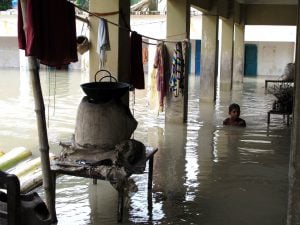
Droughts. Cyclones. Floods. There are few places where such extraordinary events are as commonplace as they are in Bangladesh. One of the most disaster-prone countries in the world, extreme weather poses a real threat to millions of Bangladeshis. Its low-lying geography, high population density and under-developed infrastructure make things worse, especially for the poorest.
Fortunately, Bangladeshis are highly aware that nature can turn on people and are being spurred into action. In response to environmental change, people are growing alternative crops, migrating and changing jobs. In fact, Bangladesh is sometimes described as the adaptation capital of the world, thanks in part to the many government, civil society and international interventions aimed at helping people cope with a volatile climate.
So that’s all fine, then. No problem. Nothing to see here. Move along.
Maybe not.
Despite high levels of awareness and pockets of proactiveness, BBC Media Action’s research found that many people still aren’t doing anything in response to environmental changes. Inaction stems from the fact that people either don’t know what to do, don’t think they have enough money to do anything, or feel they need help from the government to do something. This state of affairs is unlikely to stay sustainable if the environmental situation becomes increasingly unforgiving.
Turning awareness into action
We set out to support those most affected by extreme weather to respond to these challenges themselves. Our reality TV show, Amrai Pari (Together we can do it), aimed to give people the information they need to take action. It built on Bangladeshis’ strong community and family ties by sparking discussion to raise awareness of challenges, building networks to share information and showcasing good practice to inspire people to act.
Read more: Transboundary data sharing helps Bangladesh prepare for floods
We know that most Bangladeshis watch TV regularly so that was our primary channel for reaching them. We also worked with well-developed volunteer networks of the Red Crescent Society and our NGO partners to engage people face-to-face. And – with Dhaka now the world’s second most active city on Facebook – we used social media to provide fun and lively content, specifically designed for young urbanites.
Aiming to go beyond the abstract, scientific and political angles that sometimes dominate media coverage of changes in climate, our focus was on helping people find affordable, achievable solutions to everyday challenges around extreme weather. But producing that content wasn’t easy.
How exactly do you help ordinary people cope with extreme weather?
Rising to this challenge meant moving away from the abstract concepts of “climate change” and “global warming” and talking more specifically about how changes in fluctuating temperatures and rainfall were affecting people’s ability to earn money, keep healthy or produce crops. It meant fully understanding people’s attitudes, beliefs and needs to get to the heart of what was stopping them from taking action, and what could help them overcome their inertia.
It meant making a show that would motivate people to change their behaviour through an engaging, entertaining and culturally relevant format. It also meant working with Bangladesh’s many experts in this area, like Dr. Saleemul Huq, director of the country’s International Centre for Climate Change and Development, as well as practitioners on the ground to ensure that our work drew on proven, replicable solutions and reinforced – rather than contradicted – the prevailing advice on how to adapt to changes in climate.
And, crucially, it meant constantly listening to what people had to say. We heard about the grassroots innovations they were already trying and gathered feedback on episodes of Amrai Pari, continually adapting and reworking the show as we learned more.
What did success look like?
We were astonished by how well Amrai Pari did. We reached 7.5 million people in its last year alone, nearly half of whom said they – after watching the programme – had done something new such as storing food, learning a new skill or diversifying the crops they grew. Regular viewers were especially likely to be inspired.
The extent of people’s self-belief – that they themselves could tackle environmental challenges – was one of the two most important factors in whether they’d actually respond, along with how at risk they felt. Amrai Pari increased people’s awareness of the specific risks they faced. Second, it helped make people feel less dependent on the government to solve their problems.
Read more: Climate change pushing Asia towards doom
And the work is not over yet. Across the country, our partners are still projecting Amrai Pari onto screens in villages and sharing episodes on mobile phones in informal settlements to lead practical, engaging discussions with communities most affected by changing weather patterns.
Nobody better understands the challenges caused by extreme weather than those experiencing it. Learning from the most affected and helping them respond is more important than ever. Our experience shows that well-designed media and communication programmes, produced and shared in partnership with NGOs, local broadcasters and others can be a key part of the solution.
This blog was originally posted on ACCCRN.net and has been republished with permission.
![A flood affected resident of Jakhalabandha, Assam on the south bank of the Brahmaputra being evacuated on a raft on August 13, along with the family's livestock [Image by Biju Boro]](https://dialogue.earth/content/uploads/2017/09/Jakhalabandha-flood-300x200.jpg)