![<p>From the Welcoming Ceremony of the conference [image by: UNclimatechange]</p>](https://dialogue.earth/content/uploads/2017/11/26435051199_6e8885660f_k-768x511.jpg)
This year is set to beat all records due to losses from natural disasters. United States President Donald Trump has decided to pull his government out of the Paris Agreement. These are the two over-arching pieces of reality within which the annual UN climate summit opened in Bonn, Germany, on 6 November.
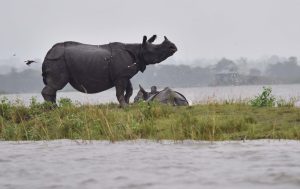
Bonn, home of the UN Framework Convention on Climate Change (UNFCCC), is hosting this year’s summit – COP23 – on behalf of Fiji, the country presiding over the deliberations. As an almost inevitable consequence, there is sharp focus on natural disasters which are increasing in frequency and intensity due to climate change, according to the Intergovernmental Panel on Climate Change (IPCC).
Another big consequence – sea level rise – is also in focus due to Fiji’s presidency. If this leads to some concrete action to adapt to sea level rise, it should be good news to people living along the coastlines of South Asia – especially in the Sundarbans where an estimated 3 million people are endangered by rising seas.
“COP23 needs to bring the impacts of climate change to the limelight of the international community,” Peter Hoeppe, chairman of the Munich Climate Insurance Initiative (MCII), said on the opening day.
The World Meteorological Organisation (WMO) says it is likely that 2017 will be one of the three hottest years on record, with long-term indicators of climate change such as increasing carbon dioxide concentrations, sea level rise and ocean acidification. Arctic sea ice coverage remains below average and previously stable Antarctic sea ice extent is at or is near a record low.
WMO’s provisional statement on the State of the Climate says the average global temperature from January to September 2017 was approximately 1.1 degrees Celsius above the pre-industrial era.
“The past three years have all been in the top three of temperature records. This is part of a long-term warming trend,” said Petteri Taalas, secretary general of the WMO. “We have witnessed extraordinary weather, including temperatures topping 50 degrees Celsius in Asia, record-breaking hurricanes in rapid succession in the Caribbean and the Atlantic, devastating monsoon flooding affecting many millions of people, and a relentless drought in east Africa.”
“Many of these events – and detailed scientific studies – will determine exactly how many bear the tell-tale sign of climate change caused by increased greenhouse gas concentrations from human activities,” Taalas added.
Patricia Espinosa, executive secretary of the UNFCCC, said: “These findings underline the rising risks to people, economies and the very fabric of life on earth if we fail to get on track with the aims and ambitions of the Paris Agreement.”
According to the World Health Organisation (WHO), the overall risk of heat-related illness or death has climbed steadily since 1980, with around 30% of the world’s population now living in climatic conditions that deliver prolonged extreme heatwaves. Between 2000 and 2016, the number of vulnerable people exposed to heatwave events has increased by approximately 125 million.
In 2016, 23.5 million people were displaced during weather-related disasters, most of them due to floods or storms in the Asia-Pacific region.
Scant promises
Despite this situation, and while global attention remains riveted on the US withdrawal announcement, an Indian think tank says all developed and many large developing countries are failing to make commitments that will keep global average temperature rise within two degrees Celsius, a key goal of the Paris Agreement.
See: Climate pledges not enough to deal with emissions
The Council on Energy, Environment and Water (CEEW) has analysed the Paris Agreement commitments of all countries – data that was made public by the Climate Action Tracker – and concluded that only five developing countries had made commitments compatible with the two-degree ceiling: Costa Rica, Ethiopia, Gambia, India and the Philippines.
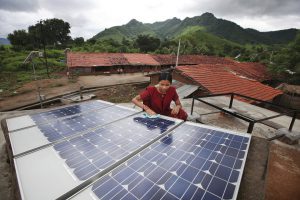
Echoing this, Harsh Vardhan, India’s minister for environment, forests and climate change, said that the country had already installed 58.3 gigawatts of renewable energy out of the 175 gigawatts planned by 2022.
Arunabha Ghosh, head of CEEW, said developed countries whose commitments fail to meet the two-degree ceiling included the US, Russia, Japan, Australia, Canada, European Union, New Zealand, Norway and Switzerland. Major developing countries in the same situation include Saudi Arabia, China, South Africa, South Korea, Brazil, Indonesia, Mexico and the United Arab Emirates.
In this situation, the main agenda of this year’s climate summit is to prepare a roadmap to implement the Paris Agreement in a way that average global temperature rise stays within two degrees Celsius. Many observers fear this roadmap will be disrupted by US delegates.
Meanwhile, poor countries continue to plead for more action and more money. Gebru Jember Endalew, chair of the least developed countries (LDC) group, said: “COP23 is an important opportunity to bridge the widening finance gap, a serious barrier to ambitious climate action worldwide. LDCs and other developing countries cannot take ambitious action to address climate change or protect themselves against its impacts unless all countries fulfil and outdo the pledges they have made.”
“Over the past 25 years, the US has been an obstruction to an ambitious climate deal. Today, we are in a state of climate crises, with the world reeling from a series of climate change-induced extreme weather events,” said Chandra Bhushan, deputy director general of the Centre for Science and Environment (CSE), a New Delhi-based think tank. “The US withdrawal should be taken as an opportunity and a call for greater and more ambitious action, and not a call for inaction.”
We want to hear from you! Tell us what you think about The Third Pole and you could win $100. Take our survey here.