The town of Modbury in the county of Devon, in south-west England, is an unlikely spot for a revolution. Nestled on the South Hams coast, 27 kilometres east of Plymouth, it is a blink-and-you’ll-miss-it sort of place. With a population of around 1,600, it is the kind of community that considers you a newcomer unless you have several generations of family buried in the grounds of the local church. "It’s fiercely rural and fiercely Devon," says Rebecca Hosking, a wildlife documentary-maker and arguably Modbury’s most — perhaps only — famous resident.
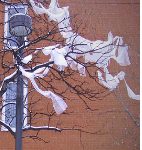
At this time last year no one had heard of either Hosking or Modbury, but both have become synonymous worldwide with one thing: plastic bags. On May Day last year, the unassuming town rather grandly announced that it would be the first community in Europe to become "plastic shopping bag-free". Hosking, the leading force behind the ban, was horrified by the marine pollution she had seen while filming in the Pacific Ocean. After seeing her film [Message in the Waves], local traders implemented a self-imposed ban on plastic carriers. Within a fortnight the whole town was behind the project.
Twelve months on, townsfolk are keen to paint the scheme as 100% successful. Request a plastic bag these days in Modbury and you will be asked politely if you really need one, and if you absolutely do, you will be charged five pence (10 US cents) for a corn-starch alternative. The Co-op store also sells string bags, and for around $6 you can pick up a specially designed canvas Modbury "bag for life" (ethically produced, of course).
But it is clear the success has come at some cost. Modbury’s shopkeepers and residents have become accustomed to satellite vans and camera crews from around the world setting up camp on their streets, and Hosking herself has grown used to being referred to as "the bag lady".
The backlash took a while, but it was fierce. First, there were descriptions of Modbury both as a radical town, full of reactionary hippies, and as a place overrun by gas-guzzling “Chelsea tractors”, as large four-wheel-drive (4×4) vehicles are increasingly being called in Britain. ("Any 4×4 you see will be a working one, and it will be covered in mud," says Sue Sturton, owner of the local gallery.) Then came the accusations that banning plastic bags was a pointless token gesture, "rearranging the deckchairs on the Titanic", as the climate scientist James Lovelock called it.
"Absolutely, I agree," says a slightly exasperated Hosking. "We always said plastic bags were just the tip of the iceberg. It’s a shame that message got lost."
Some traders have been criticised in the national press because they still use plastic packaging. "It’s sad that people feel the need to criticise,” says Sturton. “The only claim we’ve made is that we were going to make Modbury plastic shopping bag-free, which it is."
But Hosking bore the brunt of the backlash. "I got called a green Stalinist, and someone wrote, ‘Rebecca Hosking is a watermelon: green on the outside and red in the middle,’" she says, with a laugh. "I get embarrassed. A lot of environmentalists are so cross with the amount of time that has been given to plastic bags. There are far more important things to be talked about."
In fact, mention plastic bags in Modbury these days and you are likely to be met with a groan. Modbury has moved on: once the inhabitants had got rid of plastic bags, it became impossible for them to ignore other forms of packaging. It was a chain reaction, says Hosking, proudly. "They have woken up."
For example, the butcher, Simon Wilkinson, now packs meat in biodegradable cornstarch bags, the florist wraps bouquets in cornstarch cellophane and has replaced ribbon with paper and raffia, and Adam Searle, owner of the local delicatessen, puts sandwiches in brown paper bags rather than plastic boxes.
"Previously, I used plastic pots for clotted cream and olives, and I used plastic boxes for salad boxes, but now I’ve moved over to these," Searle says, holding out one of his new cartons. "They look like plastic, but are made out of corn starch. They are 100% biodegradable, so break down to nothing on your compost heap. We’ve also moved away from using plastic packaging for sandwiches, so now I just present them on a paper plate in a brown paper bag. Initially, we switched to white paper bags, then I realised bleach was used to make them so I moved over to the plain brown ones, which are better for the environment."
Even these are offered reluctantly: Modbury would rather we got out of the habit of using disposable bags altogether, than simply switching to paper (which still often comes with a large carbon footprint). And it is not just the evils of plastic bags that Modbury has woken up to: Wilkinson recently replaced all his fridges and vacuum packers with energy-efficient models. "We’ve also changed all our packaging," he says. "We’ve even gone back to greaseproof paper. All our packaging is biodegradable."
Go into Pip’s, the greengrocer, and you will now see giant tubs of eco-sensitive detergent behind the counter. Most of the produce in the shop is also sold loose (the shop smells wonderful as a result), and brown paper bags hang by the rows, rather than the plastic bags the most greengrocers and supermarkets use. In fact, the few items that are still wrapped in plastic, such as grapes, salads and cucumbers, look out of place and unappetising because of it.
The bag ban has affected how residents think about other things. "After a month, all the traders wanted to know what they should do next," says Hosking. They have a new target: on April 27, the nearest tidal time to the first anniversary of the town going plastic-bag free, the people of Modbury scheduled a mass beach clean.
"Whatever we can recycle, we will,” says Hosking. “Whatever we can’t, we’ll take photos of it so we can log what is washing up. Whatever we notice is the most significant thing will be the next thing we’ll work on to remove."
Does she have a hunch what the most likely contender will be? "Plastic water bottles. They really are a long-time problem," says Hosking.
The traders already have started talking to the nearest spring-water company, Devon Hills, about whether it would be willing to switch to reusable glass bottles. Searle also has been researching the viability of using cornstarch bottles. There is one being produced in Australia that he is particularly taken by: "They have a seed in each bottle, so when it breaks down on a rubbish heap, a tree will grow from your bottle. I think it’s a beautiful idea."
Copyright Guardian News & Media Ltd 2008
Homepage photo by Kate_A
The English town of Modbury has made a global name for itself through its campaign to be plastic-bag-free, and it has other environmental goals in mind. Like many cities and towns around the world, China has launched a campaign against plastic-bag pollution, banning the use of the thinnest bags beginning June 1.
What ecological initiatives can your town take a leading role in?
Let us know on the forum what you think.