Food

Golden rice scandal undermines China’s GM food push

The controversary over the use of children in GM rice trials has seen three officials sacked and jeopardised the future success of China’s GM research, say observers.
English
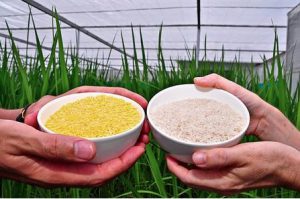
<p>China has sacked three officials for approving the testing of GM rice on school children without appropriate consent (Image copyright: &nbsp;IRRI images)</p>

China has sacked three officials for approving the testing of GM rice on school children without appropriate consent (Image copyright:  IRRI images)

China has sacked three officials for approving the testing of vitamin A-enriched Golden Rice, a genetically modified (GM) organism, on school children without appropriate consent, according to state news agency Xinhua.

The study, part of a Sino-US joint research project, was designed to test the efficacy of Golden Rice in alleviating vitamin A deficiency. However, it triggered a public outcry earlier this year when it was exposed that the informed-consent forms used in the trial did not mention that the rice was genetically modified.

Read: US researchers confirm use of children in GM golden rice trial

Although the government was quick to initiate an internal investigation into the ethics of the trial, observers say it may not be enough to dispel popular distrust of GM technology in China.

Jiang Gaoming, a leading scientist at the Chinese Academy of Sciences’ Institute of Botany, and a vocal opponent of the commercialisation of GM crops, condemned the golden rice trial.

“The reason why the public is so concerned about the genetically modified golden rice is because we all care for our health and the health of our children,” Jiang told chinadialogue.

“The Golden Rice saga exposed that vested interests have wilfully deceived the public and used innocent children for experiment in order to promote their products,” he said.

However, popular science writer Fang Zhouzi suggested that anti-GM campaigners and the media were undermining China’s progress on GM technology by overreacting to the case and demonising GM research.

Fang told chinadialogue that the authorities had emphasised “the mistakes in the experiment and the consequent punishment, while failing to mention the harmlessness of the trial and the sound safety record of GM food.”

“After this case, not only is Golden Rice unlikely to be introduced in China to help children with vitamin A deficiency, but also other GM research and the promotion of GM food could face greater difficulties,” said Fang.

Read: GM crops blamed for rise in "superweeds" in the US

“[As a result] the gap in GM technology between China and developed countries, such as the United States, will enlarge,” he added.

Responding to Fang’s argument, Jiang said that he supported GM research, but “most research carried out at the moment is money-driven, rather than focused on the advancement of national technology”.

China made biotechnology a development priority in its latest Five-Year Plan (2011-2015) and according to NGO Greenpeace, the state has invested more than 21 billion yuan into GM research.

Cookies Settings

Dialogue Earth uses cookies to provide you with the best user experience possible. Cookie information is stored in your browser. It allows us to recognise you when you return to Dialogue Earth and helps us to understand which sections of the website you find useful.

Required Cookies

Required Cookies should be enabled at all times so that we can save your preferences for cookie settings.

Dialogue Earth - Dialogue Earth is an independent organisation dedicated to promoting a common understanding of the world's urgent environmental challenges. Read our privacy policy.

Cloudflare - Cloudflare is a service used for the purposes of increasing the security and performance of web sites and services. Read Cloudflare's privacy policy and terms of service.

Functional Cookies

Dialogue Earth uses several functional cookies to collect anonymous information such as the number of site visitors and the most popular pages. Keeping these cookies enabled helps us to improve our website.

Google Analytics - The Google Analytics cookies are used to gather anonymous information about how you use our websites. We use this information to improve our sites and report on the reach of our content. Read Google's privacy policy and terms of service.

Advertising Cookies

This website uses the following additional cookies:

Google Inc. - Google operates Google Ads, Display & Video 360, and Google Ad Manager. These services allow advertisers to plan, execute and analyze marketing programs with greater ease and efficiency, while enabling publishers to maximize their returns from online advertising. Note that you may see cookies placed by Google for advertising, including the opt out cookie, under the Google.com or DoubleClick.net domains.

Twitter - Twitter is a real-time information network that connects you to the latest stories, ideas, opinions and news about what you find interesting. Simply find the accounts you find compelling and follow the conversations.

Facebook Inc. - Facebook is an online social networking service. China Dialogue aims to help guide our readers to content that they are interested in, so they can continue to read more of what they enjoy. If you are a social media user, then we are able to do this through a pixel provided by Facebook, which allows Facebook to place cookies on your web browser. For example, when a Facebook user returns to Facebook from our site, Facebook can identify them as part of a group of China Dialogue readers, and deliver them marketing messages from us, i.e. more of our content on biodiversity. Data that can be obtained through this is limited to the URL of the pages that have been visited and the limited information a browser might pass on, such as its IP address. In addition to the cookie controls that we mentioned above, if you are a Facebook user you can opt out by following this link.

Linkedin - LinkedIn is a business- and employment-oriented social networking service that operates via websites and mobile apps.