Climate

Between the glacier and the dam: life on the Tibetan plateau

Sandwiched between a melting glacier and a new dam, residents of Heishui town in northern Sichuan face a changing environment.
English

The Tibetan Plateau covers approximately a quarter of China’s land area, spreading out over 2.5 million square kilometres in the west of the country. Home to the largest store of freshwater outside of the poles, it feeds water into Asia’s major rivers which supply water to over a billion people. As a result of anthropogenic climate change, temperatures are rising on the Tibetan Plateau faster than anywhere else in Asia. The effects of these changes are becoming more evident in the form of melting glaciers, intensified weather events, increasing desertification and degraded grasslands.

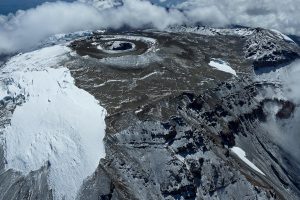
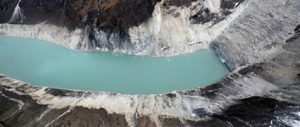
In the town of Heishui, in northern Sichuan province, the effects of climate change are being felt firsthand by the people who reside in this south-eastern corner of the plateau. The Dagu glacier which sits above the town lies at over 5,000 metres. But it’s quickly retreating due to rising temperatures in the region. Just 50 kilometres downstream, the water run-off from the glacier slows and stagnates behind one of the country’s largest and newest hydropower constructions, the 147-metre high Maoergai Dam.

At the beginning of July, the Chinese central authority activated an emergency response plan in order to cope with severe flooding in Sichuan Province, which receives its water from the rivers that originate on the Tibetan Plateau. State media reported that more than 4.6 million people were affected, with flooding damaging more than 37,000 homes and leaving over 250,000 hectares of crops unusable.   

In the summer and autumn of 2012, photographer Sean Gallagher, whose work focuses on environmental issues across Asia, was awarded his fifth grant from the Pulitzer Center on Crisis Reporting to travel to the Tibetan Plateau and document the effects of climate change on the “roof of the world”. You can learn more about this work on the Pulitzer Center website

Cookies Settings

Dialogue Earth uses cookies to provide you with the best user experience possible. Cookie information is stored in your browser. It allows us to recognise you when you return to Dialogue Earth and helps us to understand which sections of the website you find useful.

Required Cookies

Required Cookies should be enabled at all times so that we can save your preferences for cookie settings.

Dialogue Earth - Dialogue Earth is an independent organisation dedicated to promoting a common understanding of the world's urgent environmental challenges. Read our privacy policy.

Cloudflare - Cloudflare is a service used for the purposes of increasing the security and performance of web sites and services. Read Cloudflare's privacy policy and terms of service.

Functional Cookies

Dialogue Earth uses several functional cookies to collect anonymous information such as the number of site visitors and the most popular pages. Keeping these cookies enabled helps us to improve our website.

Google Analytics - The Google Analytics cookies are used to gather anonymous information about how you use our websites. We use this information to improve our sites and report on the reach of our content. Read Google's privacy policy and terms of service.

Advertising Cookies

This website uses the following additional cookies:

Google Inc. - Google operates Google Ads, Display & Video 360, and Google Ad Manager. These services allow advertisers to plan, execute and analyze marketing programs with greater ease and efficiency, while enabling publishers to maximize their returns from online advertising. Note that you may see cookies placed by Google for advertising, including the opt out cookie, under the Google.com or DoubleClick.net domains.

Twitter - Twitter is a real-time information network that connects you to the latest stories, ideas, opinions and news about what you find interesting. Simply find the accounts you find compelling and follow the conversations.

Facebook Inc. - Facebook is an online social networking service. China Dialogue aims to help guide our readers to content that they are interested in, so they can continue to read more of what they enjoy. If you are a social media user, then we are able to do this through a pixel provided by Facebook, which allows Facebook to place cookies on your web browser. For example, when a Facebook user returns to Facebook from our site, Facebook can identify them as part of a group of China Dialogue readers, and deliver them marketing messages from us, i.e. more of our content on biodiversity. Data that can be obtained through this is limited to the URL of the pages that have been visited and the limited information a browser might pass on, such as its IP address. In addition to the cookie controls that we mentioned above, if you are a Facebook user you can opt out by following this link.

Linkedin - LinkedIn is a business- and employment-oriented social networking service that operates via websites and mobile apps.