Philippine President Rodrigo Roa Duterte is in China this week to soothe relations with Chinese President Xi Jinping and try to attract new trade deals.
Upon arrival in Beijing, Duterte will immediately notice the incredible blend of modernity and the past that China is determined to leave behind. The brimming sense of enterprise and economic might is manifest in 12-lane roads, layers of mass transport above and below ground, and massive buildings.
It is also the start of smog season, when the factories around the capital ramp up operations for winter. With luck, Duterte will have a front seat view of what many call the “Airpocalypse”.
Besides the trade deals, the Philippine president will gather long-term investment insights. Ultimately, what will matter is not the size of economic cooperation Duterte’s state visit will produce, but the economic model he chooses to embrace. Wasteful, power-guzzling development dependent on heavy industry that is choking China’s very citizens; or a new Asian model thrumming with innovation and efficiency.
Years ago, skeptics said China would not sign up to international efforts to fight climate change until it had caught up with the developed world in terms of per capita GDP. They argued, as a matter of climate justice, that reductions should come exclusively from those responsible for the problem.
But now that China is the number one emitter of greenhouse gases and one of the countries to be severely affected by global warming, its leaders have realised no realistic agreement can be crafted without credible emissions reduction commitments from the country itself. It was a matter of self-interest.
President Duterte would do well to approach the relationship he seeks to build with China with similar self-interest, with a keen eye to how Chinese leaders are transitioning to a more efficient and sustainably-powered economy.
China has already reached peak coal, notes Bloomberg New Energy Finance (BNEF), with an oversupply of the most carbon intensive fossil fuels for the next 15 years. The country is now under pressure to look for new markets in which to offload its surplus coal capacity. One of the options under consideration by China is to extend cheap loans for dirty coal-fired power plants to the Philippines.
The Philippines could quickly become a coal dumping ground, which brings to mind unsavoury memories of mendicancy. In the form of trade, the Philippines accepted Canadian waste. And in the guise of aid, the country received defective Huey helicopter discards from the United States.
However, unprecedented collaboration between the world’s clean energy superpowers has opened up huge investment opportunities that the Philippines can take advantage of.
When China and the US clasped hands and approved the Paris Climate Agreement last December, it signalled a new global polity intent on pursuing low carbon development pathways. But was the new Duterte government paying attention? We are hopeful the Philippine president took notice.
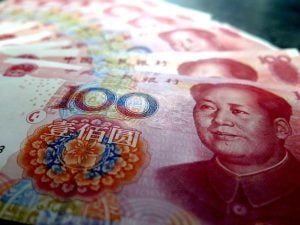
According to BNEF, China invested over US$100 billion (672 billion yuan) in renewable energy by 2015. Industry observer Lauri Myllyvirta noted how in 2015, all of China’s new power demand was met by wind and solar power alone. In fact, China’s power generation from just wind and solar already produced energy equal to twice the entire electricity demand of Ireland for that year.
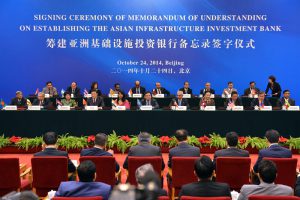
China’s financial sector likewise presents an opportunity for collaboration. Financial institutions China helped set up, such as the Asian Infrastructure Investment Bank (AIIB), can play a huge role in helping the Philippines transition to a sustainably-powered, energy-secure economy, according to Sara Ahmed, energy finance analyst of the Institute for Energy Economics and Financial Analysis.
“The bottom line to spurring investments in the Philippines is to de-risk and incentivise. AIIB is critical to addressing risk allocation and increasing bankability in project-financed transactions. Since the AIIB is not a commercial bank and does not have a credit rating limitation to observe such as that of typical multilateral banks, it is best placed to absorb risks via grants, guarantees, and insurance facilities,” she said, adding:
“This can only drive more investment from the private sector including commercial banks and multilateral banks, bilateral agencies, and export-import banks. With the right policy signals from the Philippine government, Chinese finance can spur inclusive growth and focus on clean energy, modern mass transport, and urban services.”
With the early entry into force of the Paris Agreement, the Philippines needs to ratify the climate pact it championed last December. The Duterte administration should use the opportunity to show it remains ready to play the role not only of a responsible country but of a global leader too.
President Duterte vowed in his first State of the Nation Address in July that climate change will be a top priority of his government. To realise this, he needs to urgently integrate climate ambition into the development plans of the Philippines while seeking out the kind of investments China itself is presently fostering.
Which option in the Chinese menu will President Duterte choose? The polluting path China wishes to shed, or the clean, viable future China is determined to pursue?
Renato Redentor Constantino is the Executive Director of Institute for Climate and Sustainable Cities, a climate and energy policy group based in the Philippines.