“When our boats are stranded onshore, our kitchens remain empty,” says Lateefa Nasir. “My children haven’t been to school for a month and we live on loans now.”
Nasir is a member and beneficiary of the Ormara Cooperative Society, a local NGO advocating for the improvement of fishers’ livelihoods and welfare. She and her family live in Ormara, a town in Gwadar district, along the coast of Pakistan’s south-western Balochistan province. Her husband is a fisher and like many fishing households in the area they are in crisis due to the Iran-Israel conflict.
The war has led Pakistan to close its border with Iran, disrupting both the inflow of fuel and the export of fish. This double blow has crippled fishing communities already suffering from the impacts of climate change and overfishing.
Balochistan boasts an approximately 770km coastline along the Arabian Sea which plays a significant role in the country’s fisheries.
Allaudin Kakkar, a senior official from the Balochistan Fisheries and Coastal Development Department, told Dialogue Earth that the province’s fishers contribute around 340,000 tonnes of catch annually, with a market value of nearly PKR 19.9 billion (USD 70.1 million). This includes high-value species such as tuna, Spanish mackerel, croaker, Indian oil sardine, and Indian mackerel. With over 16,000 registered and 6,000 smaller, unregistered boats operating in its waters, fishing provides livelihoods to tens of thousands of families in the province.
“Despite this valuable contribution, the sector remains poorly regulated, underfunded, and deeply exposed to external shocks,” says Kakkar.
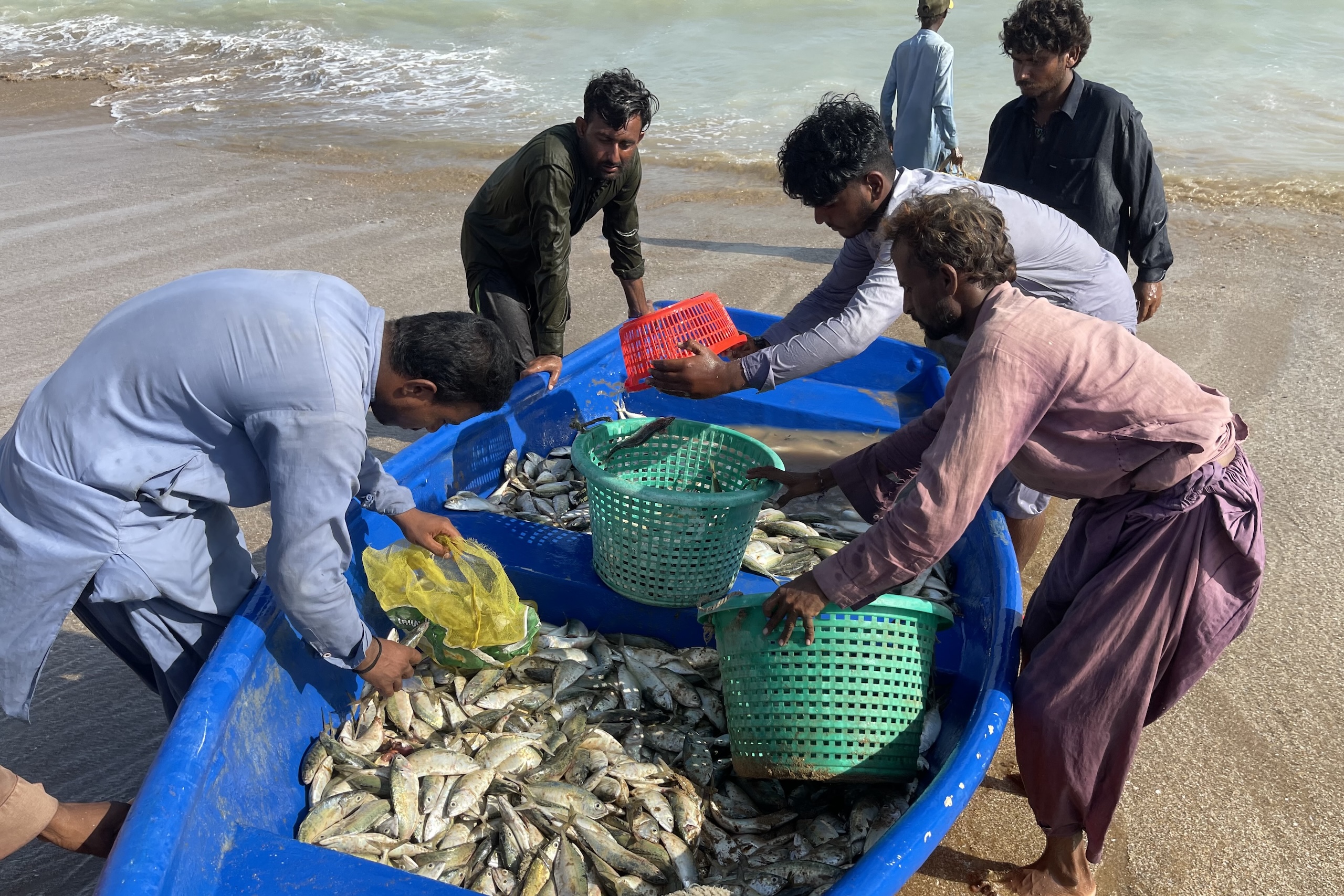
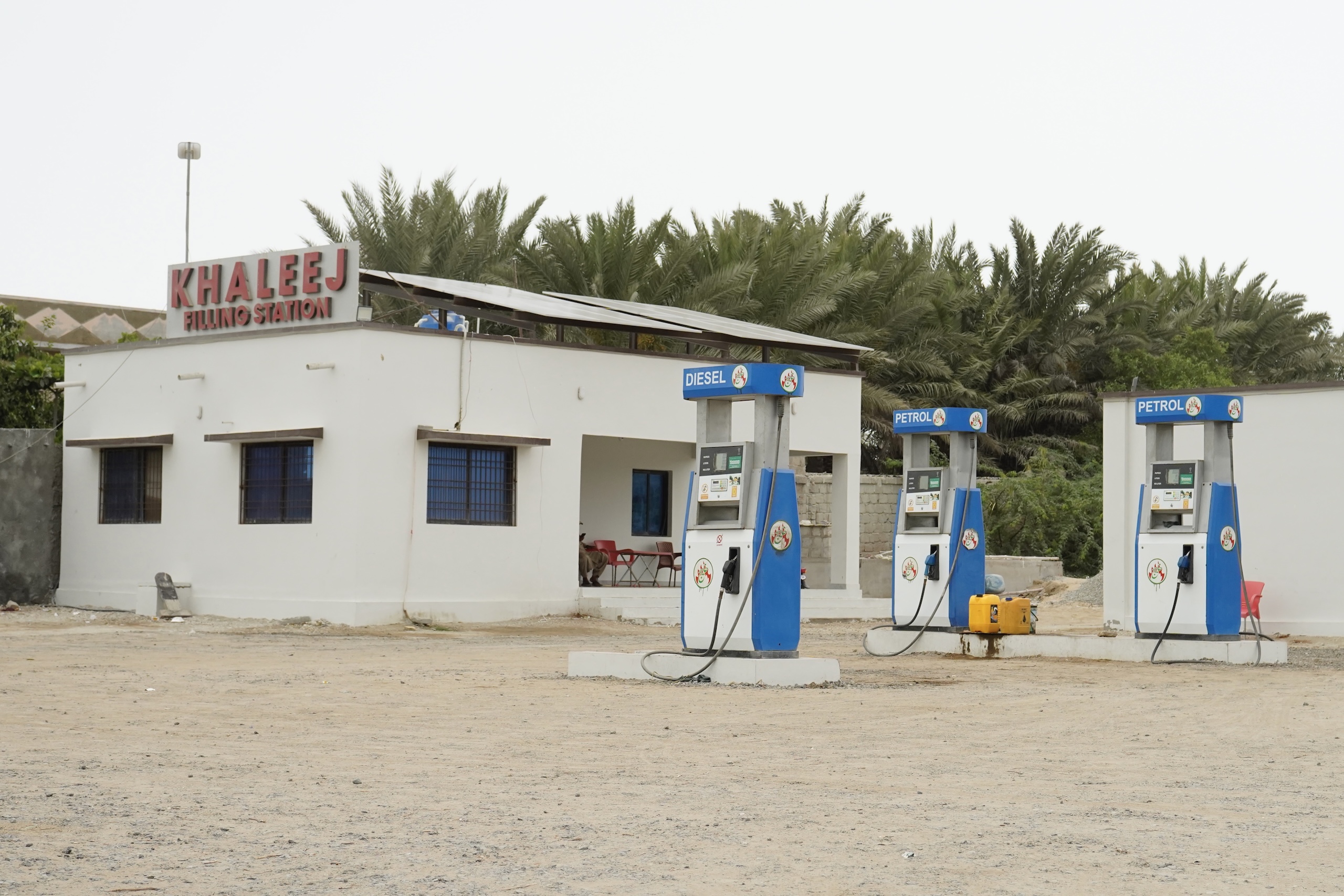
Such a shock arrived when tensions escalated between Iran and Israel during the 12-day war. Before the conflict, fishers relied heavily on Iranian petrol and diesel, which although imported illegally by smugglers, was both affordable and easily accessible. With the closure of the borders, which remains despite a ceasefire, this supply chain collapsed. Now, fuel is either unavailable or sold at PKR 180-200 (USD 0.63-0.70) per litre instead of the PKR 150 (USD 0.53) it cost before, notes Shams ul Haq Kalmati, chair of the Gwadar Chamber of Commerce.
A local source told Dialogue Earth that daily imports of Iranian fuel into Balochistan have plummeted from 600,000 to 140,000 barrels. Other local sources say that before the border closed, more than 300 large oil depots, 1,000 pumps and 2,000 shops were almost exclusively selling Iranian fuel in the port city of Gwadar and surrounding areas, with only two pumps that sold Pakistani petrol.
Despite these developments, Gwadar deputy commissioner Hamood Ur Rehman maintains that there is no major problem and the situation has normalised.
Impacts on industry
“This crisis is not only economic, it’s ecological as well,” warns Muhammad Moazzam Khan, technical adviser on marine issues at WWF-Pakistan.
He fears that the sudden halt in fishing due to the fuel-price increase, especially the catching of top predatory fish such as tuna, could disturb the balance of the marine ecosystem.
The current geopolitical tension is severely impacting Pakistan’s coastal and pelagic fisheries, particularly tuna, says Khan. Every year, Pakistani fishers harvest approximately 50 to 60 tonnes of tuna and tuna-like species, most of which is sold directly to Iran. Although this export is illegal, like the fuel that moves in the opposite direction, the fish fetch high prices over the border.
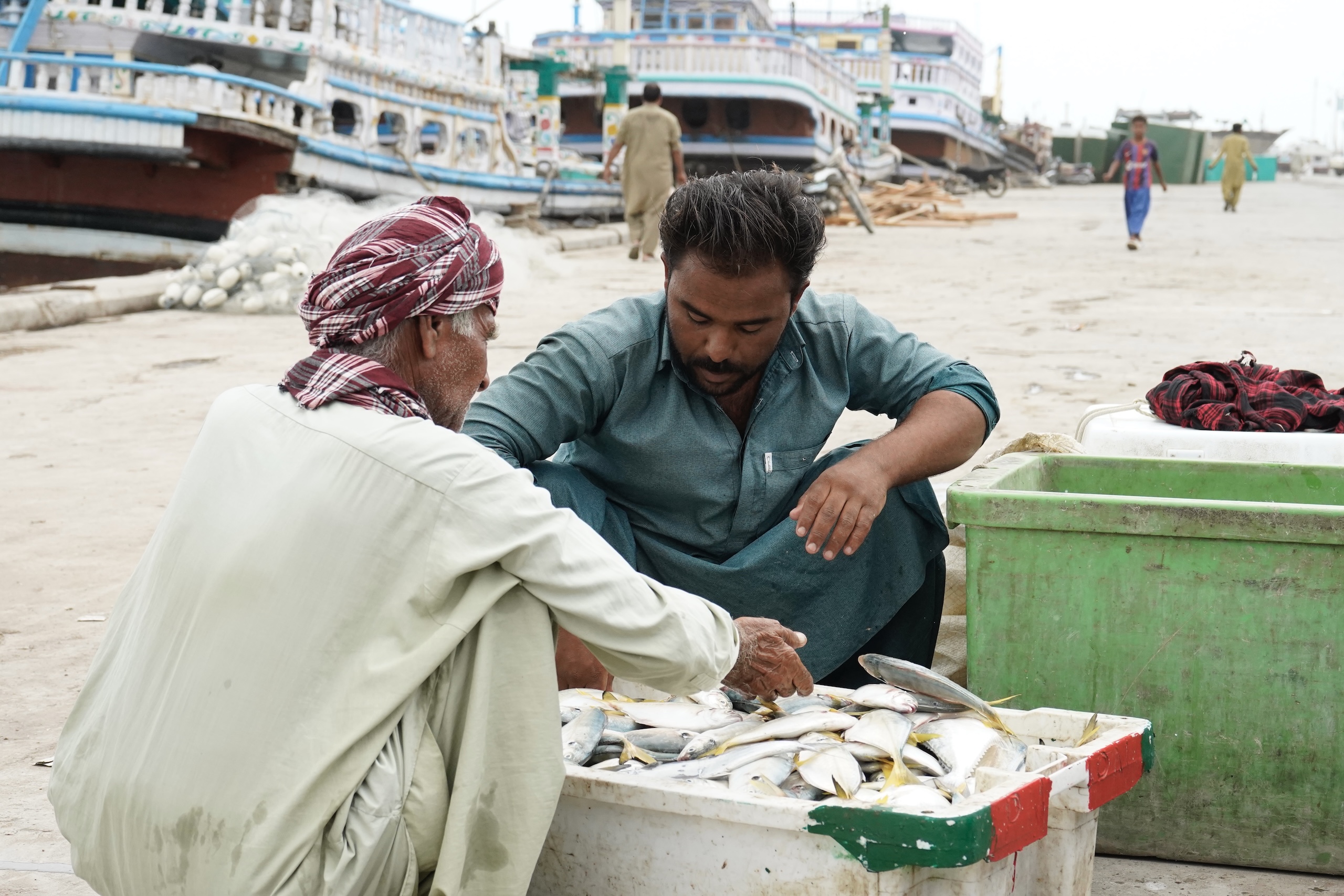
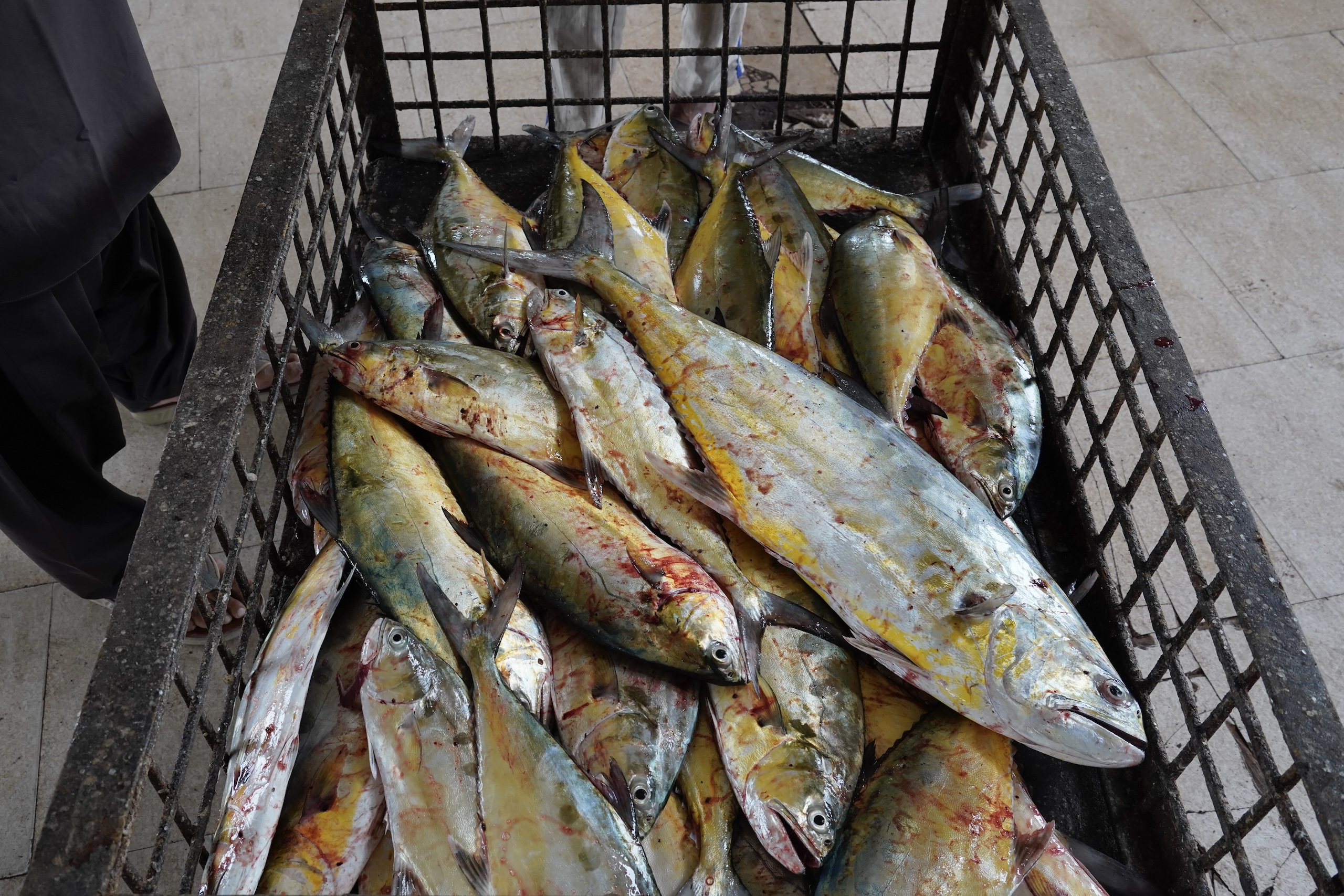
Balochistan tuna is generally not high enough quality for most international markets, says Khan, leaving Iran one of the few places willing to pay well for it. Iran offers prices ranging from PKR 300 to 700 (USD 1.06-2.47) per kg, and the total annual value of this export trade is estimated at around PKR 15-35 million (USD 52,900-123,300).
“Without access to the Iranian market, the entire tuna fishery is on the brink of collapse, threatening both income and employment for the affected communities,” says Khan.
Tahir Rasheed agrees. He is the CEO of Balochistan Rural Support Programme, an NGO that supports rural poor and marginalised people in the province.
“Most of the tuna and other commercial [fish] are exported from Balochistan to Iran through barter trade, where fishers often exchange their catch, including tuna, for petrol and diesel,” says Rasheed. The barter trade typically operates through Iranian speedboats that are registered in both Iran and Pakistan. They obtain fish from Pakistani fishers by journeying offshore to locations around the border of the two countries, as well as landing sites in Balochistan such as Gwader and Jiwani.
Already poor fishers now poorer
In addition to tuna sales, the swim bladders of some fish caught in the region are sought after as a delicacy in East and Southeast Asian markets. With fuel prices surging due to the border closure leading to higher land and sea transportation costs, thousands of kilograms of high-value fresh catch are going unsold. The domestic market is too weak to absorb the surplus, and cold-storage facilities are extremely limited, especially in remote coastal towns, notes Nakuda Dad Karim, a fisher from Gwadar. A lack of ways to preserve fish for exports – such as canning or freezing – means the crisis is rippling through the Balochistan economy.
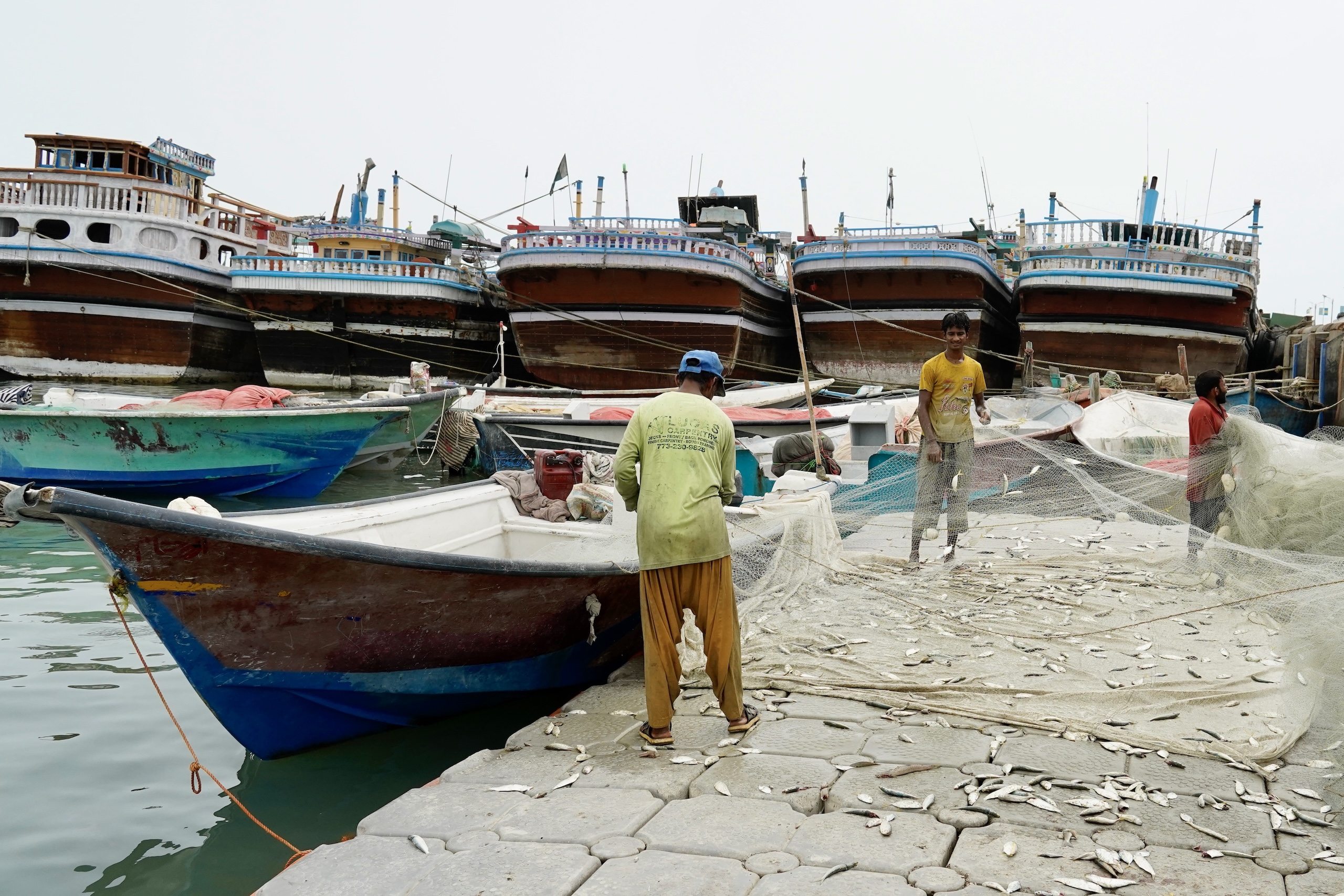
“Without formal trade routes or preservation infrastructure, the entire supply chain is collapsing,” says Kalmati. “Ice factories, fish transporters, fish-processing owners, boat mechanics … everyone is affected. This isn’t just a fisheries crisis. It’s a full-blown economic emergency.”
All this has further depressed the price for fishers’ catches.
“I have been going to sea for over 40 years,” says Karim. “But I have never seen it this bad. We used to spend PKR 15,000 (USD 53) on a trip and return with enough fish to make a small profit. Fuel cost alone has now exceeded PKR 30,000 (USD 106) and we can’t even sell our catch at a good price. Each trip feels like gambling our future.”
Many like Nakuda Dad Karim are now struggling to feed their families. His younger son, a crew member on the same boat as him, is considering moving to construction work, where prospects are better.
Jumait Jangir Baloch is a fisher and “mole holder” – someone who is certified as a fish trader by the government – in Gwadar.
“Some of us have stopped going to sea. It’s not worth the loss,” he says. “We used to sell Spanish mackerel, barracuda, large croakers, and tuna to Iranian buyers. They paid us good rates in cash. Now, no one is buying, and even local traders offer half the price.”
On land, women suffer
While those who go to sea are mainly men, women are also affected by the crisis.
“Women here don’t fish, but we grade, dry and sell them,” explains Haleema Baloch from Gwadar, who does such work. “With [business] down, we are losing our wages.”
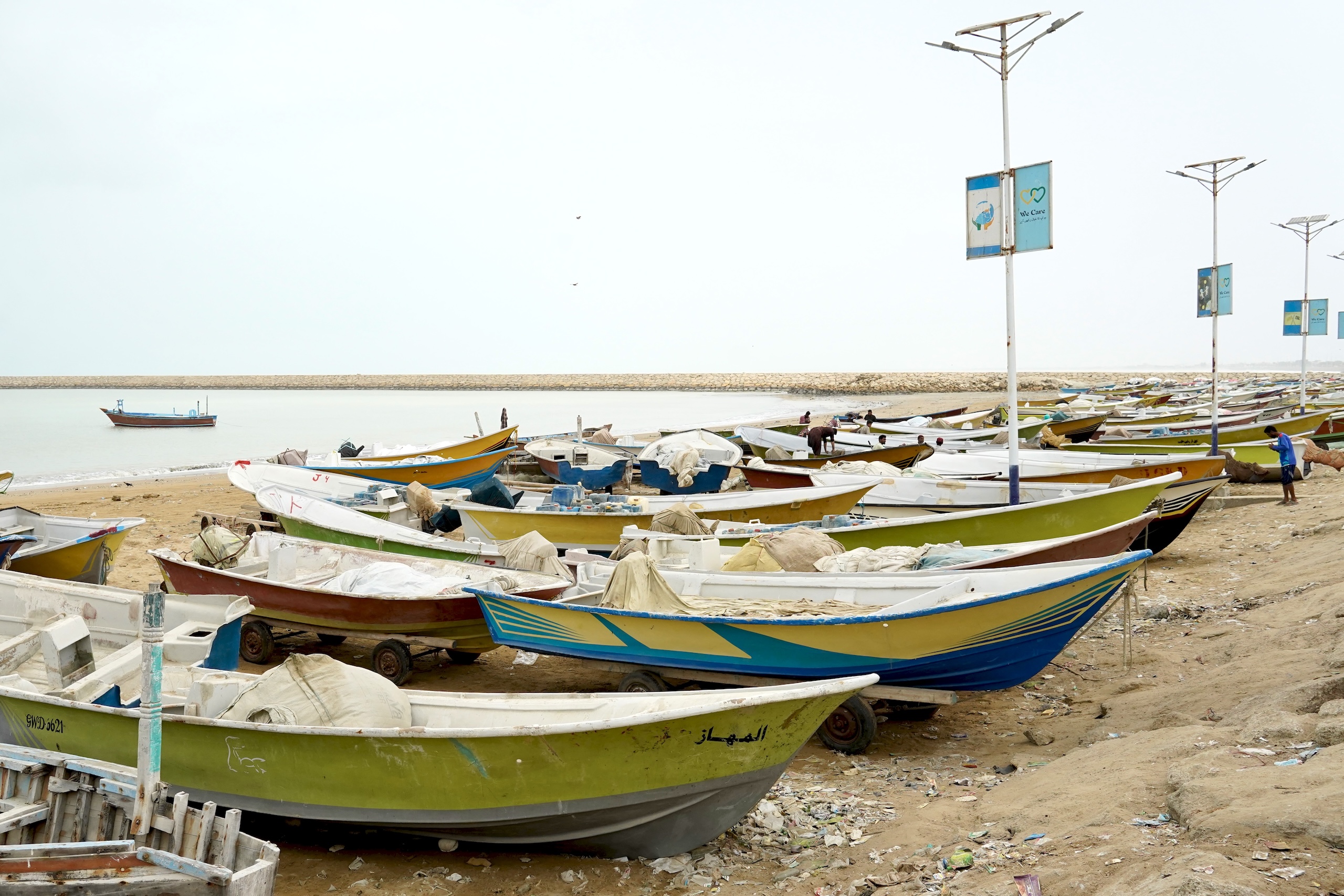
Fuel prices and the collapsing export market for catches have stopped many boats going to sea, depriving coastal communities of the cheaper fish they relied on for food and jobs.
Talib Katchi from the Pakistan Fisherfolk Forum, an NGO advocating for fisher communities, tells Dialogue Earth that communities are losing sustenance as well as money. Women who work as independent fish retailers “can no longer buy affordable species like sardines and Indian mackerel, cutting off food access for low-income communities”, he says.
“Women in fish processing are facing wage cuts, and small vendors can’t find cheap fish to sell,” adds Sami Gull, general secretary of the Fisherfolk Cooperative Society, Gwadar. “The poor can’t afford poultry or meat either. If this continues, it could trigger a serious food security and nutrition crisis.”
Kalmati, of the Gwadar Chamber of Commerce, wants federal and provincial governments to intervene swiftly with fuel subsidies and reopen the border to properly regulated trade.
Provincial official Kakkar acknowledges the severity of the crisis. “We’ve submitted a proposal for a PKR 380 million (USD 1.34 million) endowment fund to support emergency fuel subsidies, welfare schemes, and compensation for affected fishermen,” he says.
Rasheed, from the Balochistan Rural Support Programme, says that with cold-storage and canning facilities and other modern infrastructure, the province could transform its fishing industry into a lucrative export sector. This would reduce dependency on bartering and boost the economy. But “we must act quickly”, he says.
Balochistan’s fishing industry, once a pillar of its coastal economy, teeters on the edge. Without swift and coordinated action, its collapse could reverberate far beyond its shores.