As contaminated floodwater gushed into their home in Buner, north-western Pakistan, Khalid (name changed) and his wife helped their three children up to higher ground. Amid the chaos, the couple had one more crucial thing to rescue: their life-saving HIV drugs.
They trudged through neck-deep water inside their home to save their antiretroviral treatment pills from being swept away, ignoring all other valuables.
“The waist-deep mud left behind by floodwaters had cut off our village for more than eight days,” Khalid recalls. “Thankfully, my wife and I still had our HIV medication with us,” says the daily wager, who contracted the virus while working abroad five years prior.
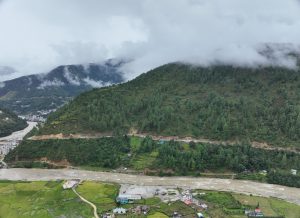
This happened last monsoon, in August 2025, when the skies opened on Pakistan, causing widespread flooding. Devastating riverine floods affected places like Buner, a district in Khyber Pakhtunkhwa, and Punjab province.
The floods claimed over a thousand lives, with 808 of these casualties reported in the two provinces alone. They displaced three million people and damaged nearly 230,000 houses.
For people living with HIV and Aids, their illness was an added risk factor.
During last year’s floods, many people with HIV got sick because they were cut off from antiretroviral therapy centres and couldn’t access drugs, Asma Nasim tells Dialogue Earth. Nasim is head of the Department of Infectious Diseases at the Sindh Institute for Urology and Transplantation.
In Pakistan, antiretroviral treatment for HIV/Aids is provided free of cost at dedicated centres. Such therapy enables persons with HIV “to live healthy lives by suppressing the virus and preserving immune functions,” explains Asghar Ilyas Satti, national coordinator for the Association of People Living with HIV-Pakistan.
This year, as monsoon rolls in, Pakistan is on high alert, and has warned citizens of heavy rainfall, urban flooding and more weather-related risks.
On 1 July, the country’s National Disaster Management Authority (NDMA) issued a glacier lake outburst flood alert in two valleys in Gilgit-Baltistan, a region bordering Khyber Pakhtunkhwa. Rising river water levels damaged roads and bridges across several parts of the region, media outlet Dawn reported. Soon after, heavy rains lashed Pakistan, claiming at least 14 lives across the country, according to The Nation.
These warnings and recurring floods coincide with Pakistan recording a dramatic increase in the incidence of HIV.
Waheed (name changed), a teacher living with HIV in Khyber Pakhtunkhwa’s Swat district, worries about the impacts of this year’s monsoon on his health due to his experience last year.
While guiding his elderly mother, wife and three children to safety during the floods, he had to return to the house, but struggled to explain why. “Due to the stigma associated with the disease, I have kept my illness a secret from everyone, even from my spouse,” Waheed tells Dialogue Earth. “I had only nine tablets left and was worried about facing a gap in treatment due to [loss of] access to [the antiretroviral] centre,” he recalls.
Eventually, he managed to rush back to his submerged house to extract his antiretroviral drugs from a hidden spot.
“Gaps in treatment have severe health consequences including viral rebound, immune system damage and progression to Aids,” Satti tells Dialogue Earth.
“For HIV patients, who are already navigating stigma and fragile health systems, climate disasters are not only destroying their homes and livelihood, but also endangering access to essential medication, a disruption that could have life-threatening consequences,” Satti notes.
HIV spikes amid floods
On World Aids Day in December 2025, the World Health Organization (WHO) reported that new infections in Pakistan had risen by 200% in 15 years – from 16,000 in 2010 to 48,000 in 2024. Hospitals in Karachi recently reported a “dramatic increase” in the number of paediatric HIV cases over the last nine months alone, noted Dawn.
“During the last three months, I have seen more children who are HIV positive than I have seen in the last ten years,” says Nasim. “It isn’t just that more people are being tested. It is that there are more people being infected,” she adds.
Unsafe medical practices appear to have been the main cause of these spikes, Samreen Sarfaraz, chair of infection control services and consultant infectious diseases at Indus Hospital, told Dawn.
In April, the BBC published a story on how 331 children had tested positive for HIV between November 2024 and October 2025 in the city of Taunsa, Punjab. Their story, confirmed via undercover filming, linked the outbreak to a hospital where children were being injected with reused syringes.
Waheed believes he contracted the virus while getting dental treatment where non-sterile instruments were used.
After the 2019 HIV outbreak in Larkana, auto-disable syringes were introduced, which lock or break the plunger after one use. But more recently, such syringes have been discovered to be fake or substandard in some areas, she notes. “This virus has reached epidemic proportions in Pakistan,” says Nasim.
These are troubling developments as the monsoon season and the potential for dangerous floods arise yet again. At a press conference in November, chairperson for Pakistan’s NDMA Inam Haider Malik cautioned that the 2026 monsoon could result in 22-26% more rainfall than last year’s.
At the same event, Prime Minister Shehbaz Sharif endorsed a five-year plan for flood preparedness. This is significant in a country where no relief fund has ever been legally secured, climate and water expert Ali Tauqeer Sheikh noted in a recent Dawn op-ed.
In May, Sharif ordered authorities to strengthen monsoon preparedness. He also issued a directive to ensure comprehensive screening of all patients in public hospitals for hepatitis and HIV.
Memories of the catastrophic floods of 2022 are still fresh for many, when Pakistan suffered damage worth USD 10 billion, with more than 33 million people affected. In Sindh, the floods cut people with HIV off from treatment centres. “The devastating floods in 2022 disrupted our contact with a large number of HIV patients,” says Robina, the province’s head of the Association of People Living with HIV-Pakistan (APLHIV).
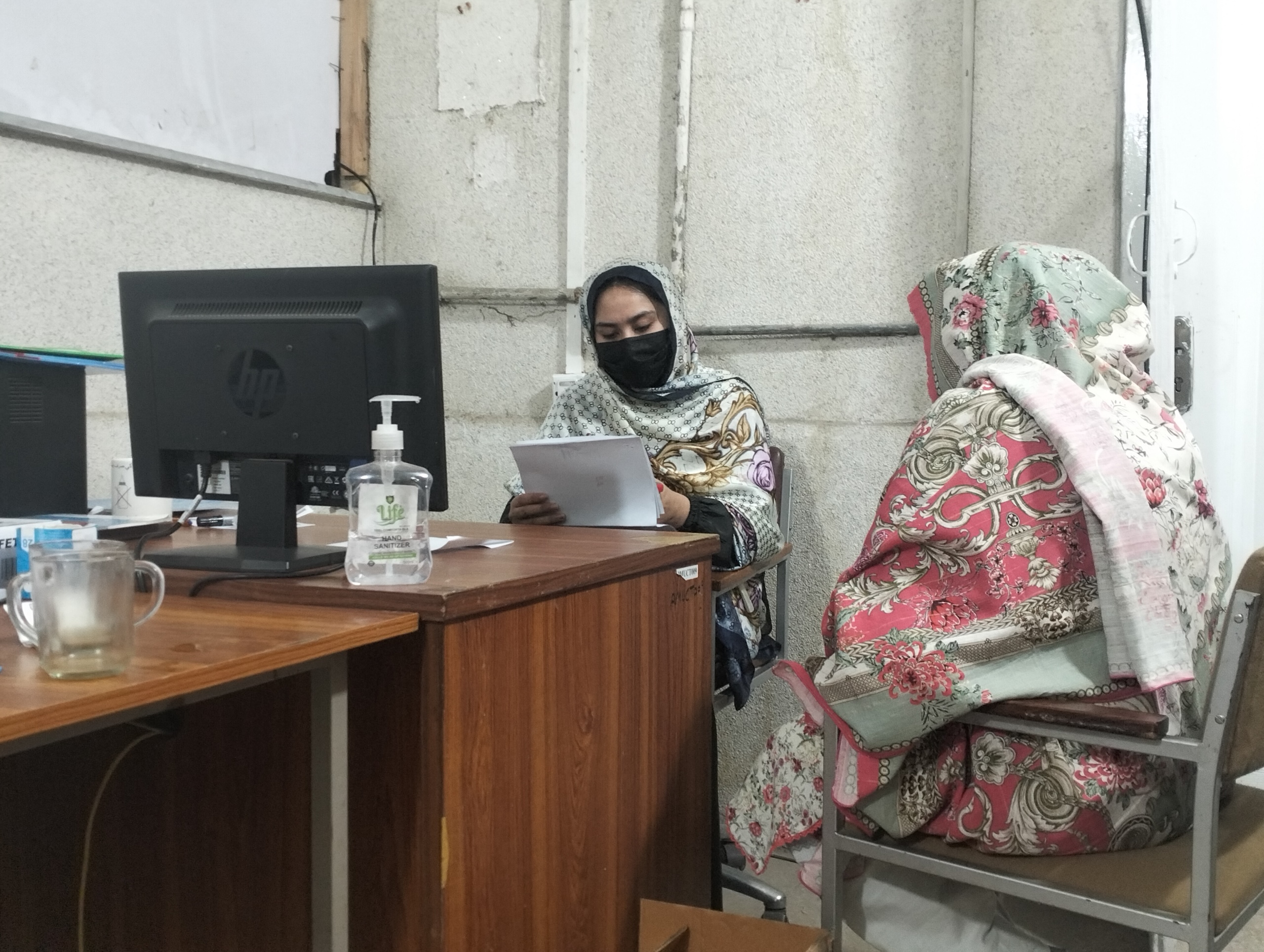
When communication networks are disrupted due to climate-related disasters, treatment delays become more common, says Pulwasha (name changed), a person with HIV who has volunteered to deliver medicine to patients at their homes in Peshawar. Many patients prefer having medicines delivered to avoid being seen at antiretroviral therapy centres, she notes.
Robina, who goes by a single name, tells Dialogue Earth that after six months of sustained efforts tracking patients lost to follow-up (LTFU) – those who drop out of treatment before it is complete – many patients came back to the treatment network. These were individuals who had stopped attending scheduled appointments or seeking care due to mental trauma and financial losses including of property and livelihoods.
“The LTFU also indicated that several HIV patients were completely missing [and] presumed dead, either due to drowning or interruptions in treatment, as vast areas of interior Sindh remained submerged under floodwaters and [were] cut off from major cities for several months, severely restricting patients’ access to treatment centres,” she says.
Nearly 20,000 patients who initiated treatment at antiretroviral therapy centres for HIV/Aids were considered missing by Pakistan’s health ministry as of May 2026. This finding raised serious questions about follow-up, counselling and patient retention, noted the Standing Committee on National Health Services, Regulations and Coordination in a press release.
Who can help?
Realising the health risks faced by HIV patients during the August 2025 floods, APLHIV activated an Emergency Response Cell to ensure uninterrupted treatment for affected individuals in Buner, Swat and Mansehra districts of Khyber Pakhtunkhwa, Satti says. Using its national registry of 25,000 people with HIV, APLHIV identified about 1,000 individuals residing in these flood-affected areas, over a hundred of whom were confirmed as directly affected by climate-induced disasters. Immediate coordination with centres, case managers, provincial and national programmes ensured urgent re-supply of medicines to the flood-affected patients, Satti adds.
Sobo Malik, an activist working closely with people living with HIV at the NGO Khawaja Sira Society in Lahore since 2015, says that while the government provides treatment, crucial follow-ups such as voluntary confidential counselling and testing are carried out by community-based organisations.
Sadly, erratic weather patterns, extreme heat and last year’s flood have all impacted people’s access to medication especially in rural areas
“There are no special programmes for HIV-positive persons in case of disasters. Last year during floods, [people] living in or near the cities received nutritional packages plus treatment, but we are not so sure those in rural areas get the same facilities,” she tells Dialogue Earth. “General aid in climate disasters, like medical camps and ration, is not specific to people with HIV. In flood relief camps, only verbal history is taken, and basics are checked like sugar [levels] and blood pressure. But no specific blood tests for HIV are conducted.”
Confidentiality is also an issue with people with HIV, Malik says. “Because of the stigma, they usually don’t want to tell anyone. And in mainstream society… testing is rare.”
Diagnosis is important, but treatment, follow-up and counselling are just as important, she notes. “Their immunity is obviously compromised. The viral load needs to be brought down through medication, plus nutrition needs to be maintained to strengthen immunity. If that isn’t done, then severe weather conditions… will impact their health more than an average person.”
Sara Malik, deputy director of media at the NDMA, tells Dialogue Earth that the government body hopes to address the needs of people with HIV “over time”.
While there are no policies specific to these individuals, NDMA has partner NGOs that are active in the health sector, so they must be indirectly benefiting from their initiatives, she says.
NDMA, she says, “ensures that vulnerable populations are supported during its post-disaster response”, adding that it is now “expanding scope of its relief activities to reach maximum number of vulnerable people during emergencies”.
Risk of other diseases
Environmentalist and social activist Zulfikar Ali Bhutto Jr, who advocates for the rights of people with HIV, says that access to medicines can make the condition quite manageable.
“While in many countries the onus falls on the general population to remain safe, in Pakistan it is the government that must now act to ensure medical malpractice does not take any more lives,” Bhutto tells Dialogue Earth. “Thankfully [antiretroviral] medication can be obtained for free in Pakistan. This is a good system that can work, it just needs to be utilised,” he says.
“Sadly, erratic weather patterns, extreme heat and last year’s flood have all impacted people’s access to medication especially in rural areas.”
In the event of floods this year, APLHIV will expand the services of its Emergency Response Cell to Punjab and Sindh provinces, Satti says.
The government of Punjab, another province hard hit by last year’s floods, has committed to flood preparedness initiatives this year. Dialogue Earth made multiple attempts to contact the Punjab Aids Control Program, a provincial government initiative, but got no response.
APLHIV staff, meanwhile, remain on alert and are prepared to respond swiftly and take all necessary measures to provide assistance to people with HIV in the event of a disaster, Satti says.
International agencies like the World Bank, Unesco and UN Development Programme, in collaboration with developed nations, have pledged support to Pakistan in disaster-preparedness and to help with early-warning systems. But experts remain cynical about whether this will result in ground relief for vulnerable communities.
When asked about patients whose disease has progressed to Aids, Nasim says that immunocompromised patients suffer much more in extreme weather events. “Post-floods, areas with floodwater are infested with mosquitoes, which means more malaria and dengue. In addition, after floods, water is often contaminated. How can Aids patients survive that?”