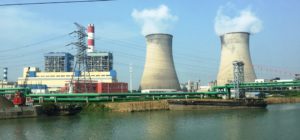
You can’t go very far in Zimbabwe without seeing signs of the vast amount of Chinese investment in the country. From the huge Longcheng Plaza shopping mall in the capital Harare, to reports of Chinese contractors and funding used in the construction of Zimbabwe’s new parliament, Chinese money plays a prominent and important role.
Zimbabwe’s diamond industry, focussed on an area in the east of the country known as Marange, is no exception. However, recent developments in this sector have clearly highlighted the potential risks facing Chinese investors in the country.
The website of Chinese company Anhui Foreign Economic Construction (Group) Co, Ltd (AFECC) still displays proud claims about its investment in Marange diamonds through two companies it has a 50% stake in: Anjin and Jinan.
However, last year, after less than half a decade, AFECC’s interests in the industry ground to a sudden halt. Following company resistance to government efforts to amalgamate the diamond sector into a single company, February 2016 saw the government ordering all Marange companies—including Anjin and Jinan—to cease work and vacate the diamond fields.
The following month, President Robert Mugabe stated that private companies had “robbed” Zimbabwe of its diamond wealth. AFECC, amongst others, launched court challenges, but their resumption of operations in Marange looks unlikely. AFECC declined to respond to Global Witness’ request for comment, citing ongoing litigation in Zimbabwe linked to the amalgamation.
A new Global Witness report released on 11 September 2017 and titled: An Inside Job: The state, the security forces and a decade of disappearing diamond wealth, looks at the factors that contributed to the current situation.
It examines both the role of the Zimbabwean state and the overseas investors that have dominated the industry since diamonds were first discovered a decade ago. New evidence of security sector involvement in Marange joint venture companies reveals the risk involved for companies involved in Zimbabwe’s diamond sector.
Since the discovery of a huge source of diamonds in Marange in 2006 Global Witness has expressed numerous concerns about the sector, not least the veil of secrecy which shrouds it and facilitates powerful elites, army, and security forces to operate without scrutiny and exploit the diamonds.
Mismanagement of such a precious natural resource is particularly disappointing given that Zimbabwe is currently in the midst of an economic crisis. Almost three quarters of the population live beneath the poverty line on less than US$1.5 a day. Instead of playing a key role in Zimbabwe’s development, the potentially multi-billion dollar industry has failed to deliver on its early promise.
As a basic measure to guard against this kind of risk, any aspiring private investors should conduct checks, known as due diligence, on potential business partners and broader governance of the sector they are proposing to enter into. Where there are warning signs, investors should give serious thought to whether and how these risks can be mitigated before progressing their interests.
Guarding against the risk of financing conflict or serious human rights abuses—including ones perpetrated by government institutions or security forces—is now a must for all companies, and requires careful risk-based supply chain due diligence to recognised global standards.
The conversation around this kind of due diligence has moved quickly in recent years. The United Nations Guiding Principles on Business and Human Rights explicitly recommended due diligence as the method by which companies can avoid adverse human rights impacts. In 2011 the OECD published a guidance on how to carry out due diligence within the mineral sector.
Chinese companies now also have access to a specially tailored guidance from a mining industry Chamber associated with the Chinese Ministry of Commerce which can help to guide their efforts to do business responsibly and avoid causing harm. Robust standards help companies in trying to assess the business risks and potential impacts posed by third parties linked to their operations, helping them to avoid running into costly problems further down the track.
The latest happenings in Zimbabwe make a clear case for carrying out due diligence, both for investors and those trading in natural resources. Chinese investors considering potential opportunities need to conduct such checks if they are to make informed choices about their business conduct, not only to avoid being linked to human rights abuses, but also from the point of view of their own business interests.
Recent developments in the diamond industry are a clear warning of what can happen if international companies ignore these responsibilities.
Read the Global Witness report, An Inside Job, here.


![View of Pul Doda from the road above, a half submerged structures of a mosque, a temple and a few houses can be seen [image by: Majod Maqbool]](https://dialogue.earth/content/uploads/2017/10/A-view-of-the-Pul-Doda-area-from-the-road-above.-The-half-submerged-structures-of-a-mosque-a-temple-and-a-few-houses-can-be-seen-here.-300x184.jpg)