A train rolls through the Springfield city seal in front of smokestacks with tails of pollution drifting into the industrial landscape. For over 100 years, this is how Springfield saw itself: as a hub of transportation between Boston and New York with strong roots in the manufacturing industry – home to the Indian motorcycle factory and Rolls-Royce.
But in the second half of the 20th century, many of the big manufacturers left Springfield, taking away a great part of the city’s core economy. At the same time, the US highway system had expanded rapidly and pervasively to the point that the city’s rail hub advantage was rendered obsolete. By the end of the century, the city had garnered a reputation for crime and cronyism.
While lawbreaking and unemployment in Springfield are significantly higher than state averages, nearby Boston has continued to thrive. This has led to a widespread sentiment in Springfield, and across the deindustrialised regions of western and central Massachusetts, of being left behind by state and federal governments.
But in recent years, one big change has returned Springfield to its locomotive and industrial roots, promising what could be a reversal of its fortunes. In 2014, the China Railroad Rolling Stock Corporation (CRRC) won a contract to build trains for Boston’s Massachusetts Bay Transportation Authority (MBTA) at a new facility in Springfield.
Establishing its first subsidiary in North America, known as CRRC MA, the Chinese state-owned corporation beat three competing companies. Superficially, it would seem that CRRC MA’s bid was appealing only because of its low price – a result of lack of experience with US projects and eagerness to enter the market. Critics have latched onto this as a way to criticise what they see as Chinese encroachment into the US rail industry. But this view fails to consider the other important reasons CRRC MA won the contract and the many positives aspects of its US presence.
The first issue when it comes to US passenger trains is that there are no domestic manufacturers, so all of the companies involved in the MBTA tender were foreign. Apart from CRRC, Bombardier is Canadian, Hyundai-Rotem is South Korean and Kawasaki is Japanese.
Among US citizens, it is common knowledge that the nation’s transportation infrastructure is in an especially poor state. It is one of the only bipartisan agenda items under President Trump, who has emphasised the need to repair the country’s crumbling infrastructure. The replacement of Boston’s MBTA railcars is a testament to this. The cars in use are over 40 years old, and the transit authority has difficulty supplying replacement parts.
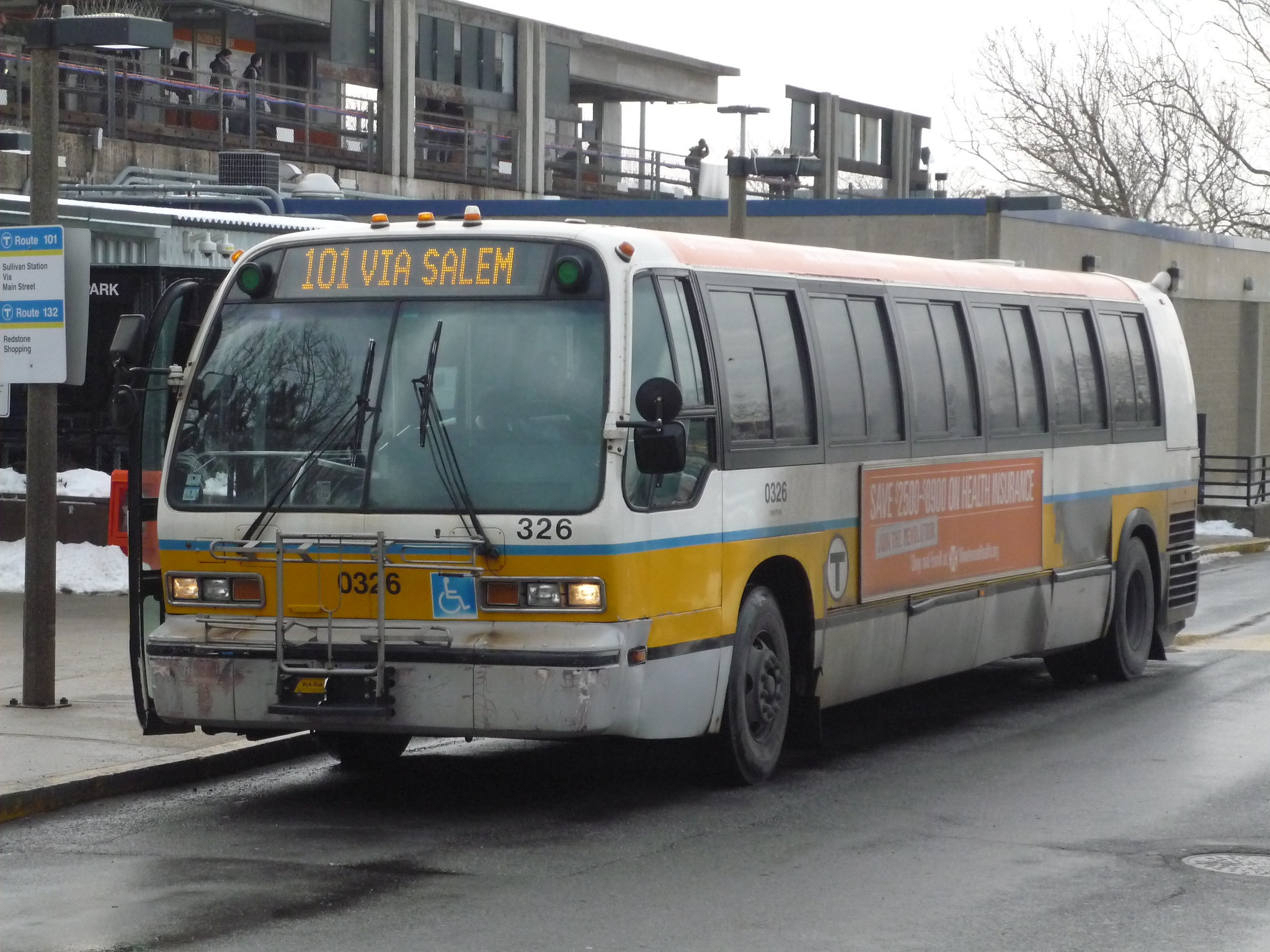
A bus belonging to the Massachusetts Bay Transportation Authority (Image: Jason Lawrence )
There are a number of reasons why public transportation is in this state, but most relate to the nation’s car culture and politics. Driving is often considered more convenient, and despite horrific traffic in many major US cities, there are no limits in place to discourage driving. Interest groups with stakes in the auto industry and historical public investment in highways over public transport have also perpetuated the perception that buses and trains constitute a “welfare system for those who can’t afford to drive”.
From an environmental perspective, this has created a dire situation. A recent report from the US Environmental Protection Agency (EPA) announced that in 2017, transportation accounted for nearly 30% of the nation’s greenhouse gas emissions. Although the growth in popularity of electric cars may begin to redress this problem, uptake is still limited by the lack of charging points and batteries that struggle in cold climates. But even electric cars are inefficient compared to mass public transportation, which, when developed properly, can also alleviate many other problems such as urban congestion.
The shoddy condition of public transport infrastructure, combined with Springfield’s lack of economic development, created the perfect conditions for CRRC to step in. Its strategy in the US follows the same pattern as many of its overseas investments in developing countries – a plan for global expansion that is being supported by billions of dollars of credit from China’s Export-Import Bank (admittedly with mixed results). And just like in developing countries, it is providing cities with high-quality transit railcars while also supplying jobs and stimulating the local economy.
The emphasis on local development is one of the key reasons CRRC MA won the MBTA bid. Its offer to invest US$95 million to build its new assembly plant in Springfield greatly appealed to authorities, as it promised much-needed new jobs and competitive wages.
Since CRRC MA began operating, it has followed through on its promises. Springfield Mayor Dominic Sarno said that the company’s investment has created hundreds of jobs and revenue spin-offs for local businesses. He praised it also for reviving local pride. “It’s ‘back to the future’ – bringing back manufacturing.”
Several employees at CRRC’s Springfield facility agree. Electrician Lou Santiago said he appreciates having a set schedule and steady work for the same company, and is grateful for the new local opportunity. In 2017, Santiago was one of more than 20 new hires given the opportunity to spend four months at CRRC’s headquarters in the Chinese city of Changchun for training in mechanical and manufacturing processes. In a local news interview, employee Eric Anderson stated that his current salary is double what he was earning previously as a cook. Another employee, Ian Bessette, said the same of his salary increase over his previous factory job.
State Senator Eric Lesser, known for championing improved rail transit, hopes the CRRC facility will encourage other investors. The facility has transformed a site that was empty for years and a symbol of Springfield’s decline.
Another important reason CRRC is having success in the US is the high quality of its trains. In 2016, two years after winning the MBTA contract, the company won another to produce up to 282 new train cars for the Los Angeles Metro. According to the LA Metro authorities, CRRC beat the only other bidder, Hyundai-Rotem, “in every technical category including past experience and project management”. CRRC’s Springfield facility is also set to supply 45 new commuter railcars to the Southeastern Pennsylvania Transportation Authority, part of a contract the company won on similar merit in 2017.
But the recent US-China trade war has posed new challenges for the company. Despite repeated pleas from local development agencies, city politicians and Massachusetts Congressman Richard Neal, the US Trade Representative refused to grant tariff exemptions on 16 of the train parts that CRRC MA imports from China. Security fears among US legislators, as well as exaggerated fearmongering reports on CRRC’s operations, have also led to the proposition of two bills that would restrict the ability of Chinese companies to win contracts in the transport industry.
CRRC MA spokeswoman Lydia Rivera brushes these concerns off as outrageous. Trained American workers are the ones installing many of the technical components of CRRC MA’s railcars. Under such conditions, she argues it would be very difficult to install anything that could potentially serve as spyware.
Rivera says the company is determined to remain in the US and follow through on its commitment to Springfield. But with the added burden of 25% tariffs, there is no assurance that it will be able to maintain current salary or employee levels. The tariffs could also set a dangerous example for future potential investors in US infrastructure.
The country is in desperate need of new transport infrastructure. It lacks the capacity to manufacture its own passenger railcars. And it contains large regions that would benefit greatly from outside investment. CRRC’s presence in the US positively addresses these problems. Given the depth of experience China has in manufacturing quality trains, it makes sense that CRRC should be allowed to continue investing in the US, with all the right security safeguards in place. But future investments could be jeopardised if policymakers continue to barricade themselves against foreign investments out of fear, without analysing the local and infrastructural benefits they can bring.