The China–Pakistan Economic Corridor (CPEC) is one of the most ambitious components of China’s Belt and Road Initiative to build infrastructure abroad. Its goals were set out in a long-term plan published last year by Pakistan’s Ministry of Planning, Development and Reform.
That plan mentions “environment” ten times but not in the context of the natural world. These are geopolitical, external, macro, market and financing environments. The word “sustainable” is used four times, but only in the context of economic growth, guidelines and the transport industry. And the plan refers to the climate crisis just once, and that too in the context of the “possible effect of climate change” (italics added).
Has anyone even done an analysis of CPEC and the climate crisis? A number of pieces in the Pakistani press raise the environmental impacts of CPEC as a rhetorical question. But no one appears to have tried answering it definitively. The question of how CPEC will benefit Pakistan has been answered with a strong national narrative of game-changing industrialisation and economic development. But this seems to be getting in the way of a clear and honest answer.
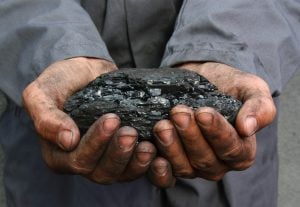
What is the main purpose of CPEC? It’s in three phases, we’re told. The first was to remove infrastructure and communication bottlenecks, which involved building a number of coal, hydro and other renewable energy projects. According to the latest coal report from the International Energy Agency, Pakistan has over 4GW of new coal power plants commissioned and about the same again under construction. Coal consumption is expected to grow at 9% per year to 2024.
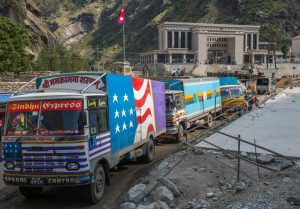
In addition to the energy projects, there is also a new highway from Gwadar on the southwestern coast across the length of the country to the Khunjerab pass on the northern border with China.
The second phase, which has commenced, focuses on industrialisation and agriculture amongst other things. New industrial parks are in various stages of completion. Alongside joint ventures in agriculture, they will hasten Pakistan’s economic boom. Or so we are told. There is little information to be found on a third phase.
But do any of these CPEC projects factor in the climate crisis?
Earlier this year, the Mauna Loa observatory in Hawaii recorded atmospheric carbon concentrations in excess of 400 parts per million. The last time there was so much carbon in the earth’s atmosphere was over 2.5 million years ago. The climate crisis is so bad that global biodiversity loss is accelerating at an unprecedented rate.
The Hindu Kush Himalayan region is more sensitive to temperature increase than previously reckoned. The difference between a global average temperature rise of 2C and 1.5C could be 50% of their glacial volume melting instead of 35%.
Carbon emissions must fall by 2.7% every year by 2030 just to reach the less ambitious Paris Agreement target of 2C. These cuts are three times faster than what countries have agreed to. And the difference between 1.5C and 2C of warming is no less than 150 million deaths, mostly in African and Asian cities, according to a study in Nature.
Pakistani cities already suffer from toxic air pollution resulting from the diesel, petrol, furnace oil and coal that we consume as a non-industrial economy. Pakistan’s air-quality crisis will be worsened by the coal-fired power plants that comprise a substantial portion of CPEC’s first phase. And if the government doesn’t crack down on the poor-quality diesel and petroleum products available in the country, the ageing trucks on the planned Khunjerab–Gwadar highway will remain a major contributor to this public health crisis.
Global temperatures may rise by as much as 4.9C by the end of this century. There will be no agriculture possible in most of Pakistan by then, and there will be nothing left of the people and culture of the country’s northern areas, let alone the glaciers.
Where, then, is the concern for the climate crisis in CPEC? China urged global leaders at the 2017 World Economic Forum to “stick to” the Paris Agreement. But there is no commitment to do this in the CPEC long-term plan document.
CPEC seeks to give China a road to the Arabian Sea in case it’s route through the South China Sea is ever compromised. The Pakistani state wants to run this highway through the roof of the world and put diesel trucks on it in the name of regional cooperation and economic development. But there’s another name for this sort of thing in the climate world: ecocide.


![Two fishermen on the Brahmaputra, a river that winds through four countries [image by: Sumit Vij]](https://dialogue.earth/content/uploads/2020/01/Brahmaputra-river-300x200.jpg)