Peter Brabeck-Letmathe chairs Nestlé, the world’s 44th-largest company, which last year earned US$10.5 billion in profits on US$121.1 billion in revenues. He is the consummate international businessman, bargaining hard, overseeing 280,000 employees, outflanking competitors and at ease with heads of state. Yet Brabeck remains incapable of negotiating one simple and irreplaceable ingredient without which his company ceases to exist: water.
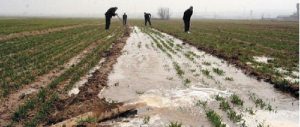
He hardly seems a gloomy Malthusian, yet Brabeck foresees “limits to growth” because our global fresh water supply is both finite and being rapidly, stupidly, depleted. The world can sustainably use 4,200 cubic kilometres of water, he notes, but it consumes 4,500 even as aquifers plummet and rivers run dry.
A few years back, he called water scarcity “the other inconvenient truth,” one riskier than climate change, and predicted that the cost of staple cereals would rise as the world exhausted its water. Time proved him right. Grain prices spiked 90%, triggering widespread urban food riots like those roiling much of Asia. Why is this happening? “Put bluntly,” he explains, "water has no price. When we see and treat water as a free good, we waste it."
Brabeck is the latest victim of the oldest, most widespread and First Paradox of Water: in China and throughout the world, the liquid matrix of all life is both figuratively and literally “priceless”.
In 1776 this paradox stumped Adam Smith, whose book The Wealth of Nations noted how diamonds are utterly worthless in use yet invaluable in exchange, while the converse was true for water. Without water, humans can’t exist, yet our species devalues nature’s precious liquid asset into a vague liability.
This paradox troubles water whether rural farm or urban factory, firm and family. Annual shareholder reports discount water as a negligible “cost” to be “managed”. Accountants consider it a line item to absorb into spreadsheets. Chief financial officers regard water as a material risk to avoid. Any country can quickly provide its exact mineral wealth, human resources, arable land, energy potential, gross domestic product and federal monetary budget; none can tell you the annual water reserves that keep its economy alive. No official knows the full cost of providing water because no individual can know it; water’s value is subjective, varying by time, place, conditions and seven billion water users, half of whom live in cities.
The First Paradox of Water ensures that what individuals each intuitively grasp as a priceless asset we must collectively debase into a liability that is inherently worthless.
Why does this paradox of value arise, and how can we resolve it?
The brilliant conservationist Aldo Leopold famously warned urban readers about “two spiritual dangers in not owning a farm. One is the danger of supposing that breakfast comes from the grocery, and the other that heat comes from the furnace.” As self-interested stewards, we value only natural assets we own. We ignore what we can’t.
Since our food and energy trace their existence to water, our compound danger lies in not owning a well or creek. Instead, we suppose water comes from a faucet, toilet tank or pipe. We lose interest in water throughout the urban supply chain. Unable to own or trade our share, we produce an urban, deeply tragic, commons.
A few “exchanges” of water occur between neighbours sharing a river or well, but these are rare, rural, informal (perhaps even illegal) and inequitable. For exceptions to become the rule, China’s city dwellers must formally have an equal opportunity to own and trade water. It may seem a logistical nightmare for our urban world to literally “own” a real well and distribute the vital wet stuff. But thanks to the Internet and ubiquitous cell phones, such barriers don’t prevent ownership.
Frequent-flier miles let us virtually “own” physical airline seats. Likewise, each of us can now transparently “own” a defined virtual share of water, distributed automatically, daily, digitally and equally to all by the water monopoly that unites us. We may call this virtual share a right, credit or a privilege, but it now is ours to earn and accumulate, to use and exchange however we choose.
Urban “H2Ownership” leads to investment and care. As we buy and sell our unused shares, water accrues real worth and allows a slum dweller or Nestlé executive to negotiate its relative local price. Thus together we can at last resolve this paradox of water, as its value in exchange can rise to the level of its value in use.
NEXT: The paradox of efficiency
James G Workman and Montgomery F Simus are co-authors of the forthcoming book H2Ownership vs The Three Paradoxes of Water and co-founders of SmartMarkets LLC, an online, utility-based system that they say could unleash a widespread, egalitarian race to conserve water and energy in cities worldwide. Workman is also the author of Heart of Dryness: How the Last Bushmen Can Help Us Endure the Coming Age of Permanent Drought, excerpted by chinadialogue in 2010. The authors can be reached at [email protected] and [email protected].
Homepage image from World Bank Photo Collection