Business

Green credentials of China’s new ruling committee gives cause for hope

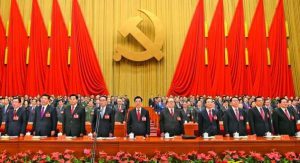
From the new generation of leaders, three out of the seven members of the Politburo’s Standing Committee have a previous “green” track record that is noteworthy and provides hope for China’s future low carbon policies.
English


All of the current seven members of the Politburo’s Standing Committee have previously been in charge of regional politics, except Liu Yunshan whose remit has always been focussed on ideology.

Xi Jinping and Li Keqiang ended their terms as senior local officials many years ago, and Zhang Dejiang held an office in the State Council until 2008 when he was given the position of Chongqing Party Secretary following the Bo Xilai incident in 2012. The other three, until recently, all acted as leaders in provinces and municipalities.  

During Yu Zhengsheng’s term in Shanghai, the 2010 Shanghai World Expo was held and, for the first time, the concept of a “Low Carbon” Expo was born. As well as measures such as the architectural integration of photovoltaics and the installation of public benches made from recycled material, many different low carbon methods and technologies were tested, such as pneumatic waste conveyance and, borrowing ideas from ancient Chinese landscaping, channelling natural wind to reduce the need for air conditioning. 

Wang Qishan once held the posts of chairman of the Beijing Olympics Organising Committee, and party deputy secretary. The slogan of “Green Olympics” has since become widely-known.

He also pushed a move towards natural gas as part of Beijing’s Coal-to-Gas Initiative. Despite continuously promoting the construction of a gas pipeline from Shaanxi to Beijing, Wang Qishan was tested in the winter of 2004 when a supply bottleneck in natural gas led to a heating shortage. He said that the move from coal to gas had not taken into account the amount of gas needed for suburbs and newly completed building projects.

After the completion of four natural gas pipelines in 2012, Beijing announced the final shutdown of the four remaining coal power plants.

In Tianjin, the area headed by Zhang Gaoli, there is the Tianjin Economic Development Area (TEDA) Low Carbon Zone and the Sino-Singapore Tianjin Eco-City, which gave birth to the TEDA centre of low carbon economy promotion that has long been at the forefront of research in low carbon industrial parks.

In addition to focusing on the implementation of low carbon strategies, these three areas also entered the first Chinese pilot scheme for carbon emissions trading.

Translated and edited by chinadialogue volunteers Jonas Borchers and Hope Loudon respectively.
Cookies Settings

Dialogue Earth uses cookies to provide you with the best user experience possible. Cookie information is stored in your browser. It allows us to recognise you when you return to Dialogue Earth and helps us to understand which sections of the website you find useful.

Required Cookies

Required Cookies should be enabled at all times so that we can save your preferences for cookie settings.

Dialogue Earth - Dialogue Earth is an independent organisation dedicated to promoting a common understanding of the world's urgent environmental challenges. Read our privacy policy.

Cloudflare - Cloudflare is a service used for the purposes of increasing the security and performance of web sites and services. Read Cloudflare's privacy policy and terms of service.

Functional Cookies

Dialogue Earth uses several functional cookies to collect anonymous information such as the number of site visitors and the most popular pages. Keeping these cookies enabled helps us to improve our website.

Google Analytics - The Google Analytics cookies are used to gather anonymous information about how you use our websites. We use this information to improve our sites and report on the reach of our content. Read Google's privacy policy and terms of service.

Advertising Cookies

This website uses the following additional cookies:

Google Inc. - Google operates Google Ads, Display & Video 360, and Google Ad Manager. These services allow advertisers to plan, execute and analyze marketing programs with greater ease and efficiency, while enabling publishers to maximize their returns from online advertising. Note that you may see cookies placed by Google for advertising, including the opt out cookie, under the Google.com or DoubleClick.net domains.

Twitter - Twitter is a real-time information network that connects you to the latest stories, ideas, opinions and news about what you find interesting. Simply find the accounts you find compelling and follow the conversations.

Facebook Inc. - Facebook is an online social networking service. China Dialogue aims to help guide our readers to content that they are interested in, so they can continue to read more of what they enjoy. If you are a social media user, then we are able to do this through a pixel provided by Facebook, which allows Facebook to place cookies on your web browser. For example, when a Facebook user returns to Facebook from our site, Facebook can identify them as part of a group of China Dialogue readers, and deliver them marketing messages from us, i.e. more of our content on biodiversity. Data that can be obtained through this is limited to the URL of the pages that have been visited and the limited information a browser might pass on, such as its IP address. In addition to the cookie controls that we mentioned above, if you are a Facebook user you can opt out by following this link.

Linkedin - LinkedIn is a business- and employment-oriented social networking service that operates via websites and mobile apps.