China’s extractive companies will find it difficult to remove the stain of corruption that envelops many of the resource-rich countries it does business with, according to observers.
A report from the NGO Global Witness highlighted a number of recent cases of corruption that affect Chinese interests in the Democratic Republic of the Congo, Angola and Sudan.
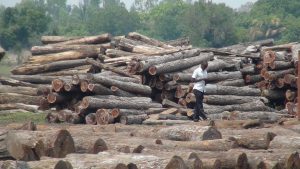
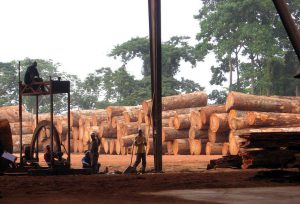
A separate report from the Environmental Investigation Agency also criticised Chinese involvement in illegal logging in Mozambique, which has seen the government miss out on millions of dollars of potential tax revenue.
Both urged greater transparency on the part of companies working overseas. However, experts within China suggest tackling corruption will be difficult.
Growing investments, shifting politics
2012 was a significant year for China’s foreign ventures, according to Zhang Chunyu, a researcher at the Chinese Academy of Social Sciences’ Institute of World Economics and Politics. The tumult of the Arab Spring and a high number of elections in Africa that year made risks to China’s overseas investments more apparent.
In fact the past decade has been a period of rapid change. China’s direct overseas investments have risen from US$1.8 billion dollars in 2004 to US$65.1 billion dollars in 2011. It has investments in more than 180 countries and territories. About one-seventh of direct investment goes to the mining sector.
Guang Rong, deputy director of the Ministry of Commerce Asia and Africa Research Department, said that “experience in recent years shows that non-market risks are a major threat to the overseas investments of Chinese companies.” He has attempted to group these risks into eight categories, two of which are corporate ethics risks – such as bribery and social responsibility – and political unrest in the host nation.
Sudan is a typical example. China came in for constant criticism from the international community while helping the African nation build up its oil industry. But the arrival of PetroChina in 1995 started a period of rapid economic growth, while China has obtained resources in exchange for its loans.
Read also: China strives to keep South Sudan’s oil flowing
Other African countries, such as Chad and the Republic of Niger, hope to replicate Sudan’s experience. But there are concerns that unfair distribution of the benefits of that growth has worsened existing regional, ethnic and religious tensions within Sudan. What’s more, the split between Sudan and South Sudan, and the ongoing conflict between the two neighbours, has forced China into some uncomfortable diplomacy in a bid to keep oil flowing from the region.
Breaking the vicious cycle
In the resource-rich countries themselves, campaigners complain that, while officials benefit from backroom deals and extractive companies win mining contracts, nothing is done to relieve poverty and environmental damage in local communities.
The more the sale of resources is relied upon for income, the more control industry has and the worse the “resource curse” becomes. This is a vicious cycle that campaigners want to break.
“More transparency would bring mutual benefits for companies, investors and local populations in resource-rich countries and in China,” said Gavin Hayman, director of Global Witness. “We’re seeing Chinese respondents in particular recognise the long-term value for companies that comes from improving the transparency of their corporate governance and social responsibility practices.”
Zhang Chunyu points out that China is not the first to struggle with problems around corruption and welfare in Africa. “All the mistakes Chinese companies are making now have been made by Western countries in the past.”
But there may be reasons why Chinese companies in particular are often found working in corrupt and violent regions. As Li Zhibiao, a professor at the Chinese Academy of Social Sciences’ Institute of West Asia and Africa Studies explains, “Worldwide oil extraction is still mostly in the hands of the US and EU giants, with Chinese firms unable to acquire large oilfields. Chinese companies work mostly in problematic or expensive regions, or by acquiring stakes the western companies have sold off due to a shortage of funds.”
Li Li, a professor at the China Research Centre for Technical Barriers to Trade at the University of International Business, said: “Resources in conflict-free regions have been almost entirely acquired by US and EU nations. The overseas investment environment for China has always been very challenging.”
A bigger problem in breaking this pattern may be the host governments themselves. As one researcher said, “If Chinese companies decide to be transparent, the governments may pull out.” The argument is some regimes will prevent information getting out in order to maintain stability.
Li stressed the need to think carefully about local politics so as not to bring more instability to these volatile regions: “If we bring about more conflict, the local communities and people will suffer more.”