China’s shift to a US-model of intensive farming is likely to be accelerated by the $4.7 billion takeover of the world’s largest pork producer, US-based Smithfield Foods by Shuanghui International.
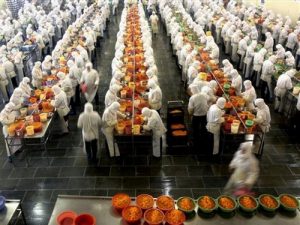
As China’s biggest pork producer, Shuanghui has risen on the back of a growing domestic market for meat and now produces more than 100 million sausages a day.
Although still subject to approval from US state officials, the takeover signals a new era of Chinese agribusiness, both in terms of international scale and also in how the food industry is developing in China.
Ongoing food safety scandals are highlighting the challenge of creating larger-scale farms and safer production processes. However, campaigners warn this shift is bringing its own environmental consequences that the public may not be aware of.
The boom in domestic meat consumption in China is creating a rising dependency on imported animal feed. By 2030, China is expected to consume 72 million tonnes of soybeans from overseas – more than one-quarter of the world’s total soybean production.
In a bid to secure global commodity supplies, Chinese state-owned feed importers are spending millions of dollars building soybean processing facilities in Brazil, which exports two-thirds of its soybeans to China.
The purchase of Smithfield represents a good deal both for US producers, who have seen falling domestic meat consumption since 2007, and for China, which would gain access to imports of pork and expertise.
There is another increasingly important driver of foreign acquisitions: food safety.
From rat meat sold as mutton to tainted baby milk and dead pigs illegally sold into the food chain, China has had a near constant stream of food safety scandals that has left consumers understandably weary. Shuanghui itself was caught two years ago selling pork produced with clenbuterol, a banned food additive, used to accelerate growth and produce leaner meat.
Shuanghui’s management have been keen to emphasis the food safety benefits to its Chinese customers, with Chairman Wan Long talking of importing "high-quality meat products from the US" as well as "Smithfield’s best practices and operational expertise" to provide "safe products to consumers".
International observers expect more acquisitions to follow. "This may indicate there are more deals around the corner given the issues facing China’s agriculture, especially with regard to ensuring a safe and adequate food supply," says Colin Carter, professor of Agricultural and Resource Economics at the University of California.
Others remain less sure about the food safety benefits of the deal.
"Shuanghui may benefit from such perception and reestablish its reputation after the clenbuteral scandal, and the Chinese customers getting rich may indeed be willing to pay more for this, but for China’s own meat industry, the food safety problem will remain unless efforts are taken to address the root of the problem," says Wanqing Zhou, a research intern at the Worldwatch Institute.
Following the announcement of the deal, Chinese media reports have already raised concerns about the high levels of antibiotic use in US pork production. KFC faced a media backlash in China last December after excessive amounts of antibiotics were found to have been used in its chickens.
"The US system of farming is seen as safe and progressive, but it isn’t. They have a lot of issues with overcrowding and antibiotic use," says Mia MacDonald, executive director of the think tank Brighter Green.
"It’s not a surprising deal," she adds, "as there has been Chinese investment in Smithfield before, but the scale is a signal of future trends. It further embeds this model of producing food without due care to the animal, environmental and water impacts."
Shuanghui has openly stated it wants to copy the Smithfield "vertical farming model", but MacDonald says the Chinese public should remain sceptical that intensive farming practices will bring safer and healthier food.