Business

Ghana arrests Chinese citizens on suspicion of illegal gold mining

Arrest of suspected illegal miners highlights challenges posed by China's growing presence in Africa
English
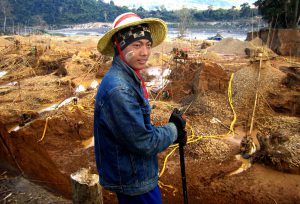
Ghanian authorities have arrested 124 Chinese citizens for illegal gold mining in the resource-rich west African country, highlighting the social and environmental challenges posed by China’s growing presence on the continent.
 
Local police arrested the suspected illegal miners in the country’s capital, Accra, China’s state newswire Xinhua reported on Thursday, citing Francis Palmdeti, the head of the Ghana immigration service. Many of them are likely to face deportation.
 
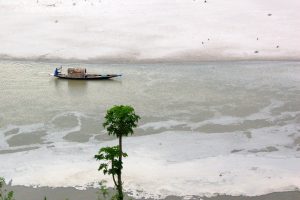
Ghana, the continent’s second-largest gold producer, has forbidden foreigners from working in its small-scale mines since the 1980s. Locals have criticised Chinese miners for taking local jobs, polluting lakes and rivers, and wielding weapons such as AK-47 rifles to ward off robbers.
 
"In certain areas, people don’t even get clean drinking water, and in some areas you can see that most of the forest cover has been destroyed," Brigadier General Daniel Mishio, chairman of Ghana’s national security commission for lands and natural resources, told The Guardian in April. "This poses a very big danger to our future."
 
Yu Jie, the spokesperson for China’s embassy in Ghana, cautioned Chinese citizens in the country to "strictly abide by the related laws and regulations", Xinhua reported. Yu urged Ghana to exercise "strong discipline" in enforcing its laws. Beijing has sent diplomats to visit the detainees.
 
Ghana’s president, John Dramani Mahama, formed a political committee to crack down on illegal mining last month.
 
More than 50,000 Chinese gold miners have been to Ghana since 2005, according to the South China Morning Post. Two-thirds of them come from Shanglin, an impoverished county in southern Guangxi province where news of the gold rush spread by word of mouth.
 
"There are about 180 households in our village and more than 100 young men are in Ghana," 24-year-old Shanglin villager Wen Daijin told the newspaper. "Many borrow money from local banks and relatives to go there. In my township, only men with physical problems don’t have plans to go to Ghana."
 
Wen continued: "You need at least one excavator to dig sand and rocks, some trucks and two high-powered sand-pumping machines to dredge for alluvial gold. The pumps are a special design, produced in our hometown." Some Shanglin residents have returned home because of the recent crackdown, the newspaper reported. 

Copyright © Guardian News and Media Limited 2013


Cookies Settings

Dialogue Earth uses cookies to provide you with the best user experience possible. Cookie information is stored in your browser. It allows us to recognise you when you return to Dialogue Earth and helps us to understand which sections of the website you find useful.

Required Cookies

Required Cookies should be enabled at all times so that we can save your preferences for cookie settings.

Dialogue Earth - Dialogue Earth is an independent organisation dedicated to promoting a common understanding of the world's urgent environmental challenges. Read our privacy policy.

Cloudflare - Cloudflare is a service used for the purposes of increasing the security and performance of web sites and services. Read Cloudflare's privacy policy and terms of service.

Functional Cookies

Dialogue Earth uses several functional cookies to collect anonymous information such as the number of site visitors and the most popular pages. Keeping these cookies enabled helps us to improve our website.

Google Analytics - The Google Analytics cookies are used to gather anonymous information about how you use our websites. We use this information to improve our sites and report on the reach of our content. Read Google's privacy policy and terms of service.

Advertising Cookies

This website uses the following additional cookies:

Google Inc. - Google operates Google Ads, Display & Video 360, and Google Ad Manager. These services allow advertisers to plan, execute and analyze marketing programs with greater ease and efficiency, while enabling publishers to maximize their returns from online advertising. Note that you may see cookies placed by Google for advertising, including the opt out cookie, under the Google.com or DoubleClick.net domains.

Twitter - Twitter is a real-time information network that connects you to the latest stories, ideas, opinions and news about what you find interesting. Simply find the accounts you find compelling and follow the conversations.

Facebook Inc. - Facebook is an online social networking service. China Dialogue aims to help guide our readers to content that they are interested in, so they can continue to read more of what they enjoy. If you are a social media user, then we are able to do this through a pixel provided by Facebook, which allows Facebook to place cookies on your web browser. For example, when a Facebook user returns to Facebook from our site, Facebook can identify them as part of a group of China Dialogue readers, and deliver them marketing messages from us, i.e. more of our content on biodiversity. Data that can be obtained through this is limited to the URL of the pages that have been visited and the limited information a browser might pass on, such as its IP address. In addition to the cookie controls that we mentioned above, if you are a Facebook user you can opt out by following this link.

Linkedin - LinkedIn is a business- and employment-oriented social networking service that operates via websites and mobile apps.