Since 2010 a potentially massive free trade agreement known as the Trans-Pacific Partnership (TPP) has been quietly taking shape. Though negotiations have been taking place behind closed doors, last month Wikileaks released a leaked version of the text of the TPP’s “Environment Chapter,” the latest of a handful of chapters to be brought to light.
While negotiators prepare to convene for another round of talks later this month, environmental advocates have been loudly criticising the lack of ambition and enforceability of the environmental provisions in the text.
“We were extremely disappointed with the status of the Environment Chapter,“ said Ilana Solomon, Director of the Sierra Club’s Responsible Trade Program. “It is essentially so weak, it steps back from the trade agreements negotiated by George W. Bush in 2007.”
The trade deal
The expansive trade deal would govern roughly 40% of the world’s gross domestic product and one-third of global trade.
According to Kevin Gallagher, co-director of the Global Economic Governance Initiative at Boston University and author of "Free Trade and the Environment,” the TPP would be the “the biggest North-South trade deal in world history.”
The deal today involves a cast of twelve Pacific Rim nations — Australia, Brunei, Chile, Japan, Malaysia, New Zealand, Peru, Singapore, Vietnam, Canada, Mexico, and the United States — and is seen in the US as a crucial component of President Obama’s so-called “Asia pivot” in foreign policy.
It is also supposed to represent an “ambitious, 21st-century trade agreement” that President Obama heralded in his first official speech on trade in 2009, one that prioritises labour rights and environmental protections.
Critics argue that the TPP falls far short on the environmental front, and actually backtracks and conflicts with a major recent piece of US domestic trade policy.
In 2007, President George W. Bush signed a landmark agreement with Congress that ushered in a new era of environmentally-conscious free trade. According to Solomon, the May 2007 deal stated that “all US free trade agreements should include an Environment Chapter that is not just aspirational but is legally enforceable and binding in the same way that are other commercial chapters of the agreement.”
The provisions in a deal’s Environment Chapter matter, says Solomon, because “as trade expands as a result of free trade agreements, there is often stress on natural resources and forests or wildlife or fisheries.”
Historically, as was the case in the North American Free Trade Agreement (NAFTA), environmental protections were handled in a separate, non-binding aspirational side-agreement, that had no enforcement measures whatsoever. The May 2007 deal ensured that environmental provisions would be included in the agreement.
The May 2007 agreement also states that countries are required to uphold their own domestic environmental laws in the course of trade, and fulfill any commitments made in multilateral environmental agreements, like the Montreal Protocol ozone treaty.
The TPP, argues Vanessa Dick, a senior policy officer specialising in trade at World Wildlife Fund, sends the US “back to a pre-2007 world.” If one country raises a complaint about another’s compliance, explains Dick, “parties agree on a mutually satisfactory ‘action plan.’ And that’s the end of the text. There’s a final report, but no recourse.”
“Full enforceability,” says Dick, “would mean there are steps beyond that … the extreme being sanctions.”
Illegal logging, wildlife trade and overfishing
The alleged purpose of the TPP’s Environment Chapter is to address the core conservation challenges of the Asia Pacific region, with regards to trade. In response to the leaked text, experts at the Natural Resources Defense Council, Sierra Club, and World Wildlife Fund (WWF), identified three major problem areas.
First, illegal logging is rampant in many of the TPP countries, and the deal as written does little to curtail the trade of illegally harvested timber.
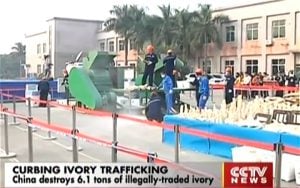
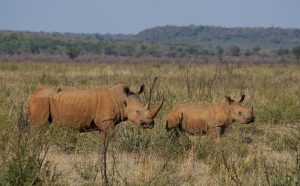
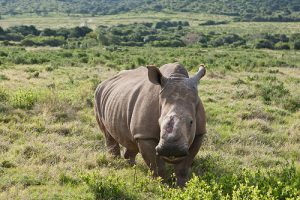
Second, there are major problems with the illegal wildlife trade. Solomon points to rhino horns and tiger pelts, both of which are supposedly protected by international endangered species laws, but are still vulnerable to black market trading. The TPP should, advocates say, introduce stronger enforcement of those laws.
Finally, the environmental groups say that the TPP does little to discourage overfishing, a serious omission considering that the countries engaged in these negotiations account for roughly one-third of global fish production. “There’s tremendous stress on fisheries” says Solomon, “and some of these countries offer subsidies that lead to overfishing.” Conservation advocates also want to see an outright ban on shark-finning to be included in the text.
Though the text does mention these conservation challenges, Solomon says that in “all of the provisions that were supposedly designed to protect timber and wildlife and fisheries, the language is full of caveats like ‘shall strive to’ and ‘shall endeavor to’ that essentially make them meaningless,” as they are not legally enforceable.
Dick worries that without ambitious obligations that are fully enforceable, countries will actually suffer in the long term. “A fully ambitious and enforceable Environment Chapter is actually in the interest of all countries. It’s beneficial to the US. It’s beneficial to Vietnam. It’s beneficial to Chile. Ultimately, scarcity is not helpful for economic opportunity.”
There’s bad news for the environment beyond the Environment Chapter itself, warns Solomon. She points to the Investment Chapter, leaked in 2012, which includes provisions that allow foreign corporations to sue governments over laws and policies that allegedly reduce their profits or the value of their investments. “Similar language was included in NAFTA,” Solomon explains, “and it’s been used by ExxonMobil, Chevron, and Cargill, to challenge public interest and environmental policies.” She gives a recent example of a US energy firm, Lone Pine Resources that, citing NAFTA law, sued Canada for US$250 million over the Quebec moratorium on fracking.
The TPP would also legally require the US to automatically approve all exports of natural gas to other countries in the agreement, including Japan, the largest natural gas importer in the world. In the US, this little-publicised rule would eliminate the Department of Energy’s legally-mandated review of any potential natural gas exports.
US forced to back down?
The Obama administration has pushed back against some of the criticism of the leaked text. In a blog post, United States Trade Representative Michael Froman wrote that "environmental stewardship is a core American value, and we will insist on a robust, fully enforceable environment chapter in the TPP or we will not come to agreement."
According to Solomon, the US position going into the negotiations was indeed ambitious. Supplemental reports leaked alongside the negotiating text, says Solomon, “do show that the US put a stronger draft forward.” But when other countries pushed back on the environmental issues, the US didn’t hold firm.
“It just shows that the commitment really isn’t there,” says Gallagher, who also served on an advisory committee to President Obama on trade, and describes himself as “very familiar with these negotiations.”
“One of the key things that these countries want is a safeguard to prevent a financial crisis,” says Gallagher. “If [the US] gave them that, they’d be more than happy to take the environmental provisions.”
Gallagher believes that the Obama administration is now rushing to ratify the TPP as China works on the ASEAN+6 trade deal. “This is an attempt to get a foothold in Asia to put a counterweight against China.”
Although the TPP has notoriously missed a number of self-imposed deadlines, President Obama has said that he hopes to conclude the agreement this year, possibly at the Asia-Pacific Economic Cooperation meetings in April.