Like millions of Chinese people, Sun Wenzhou and Chen Leifeng like to upgrade their mobile phones regularly. But, unable to find an official recycling centre, they used to wonder what to do with their old devices. The two Fudan University graduates and internet entrepreneurs think they’ve found the answer in a website trading old cellphones and computers.
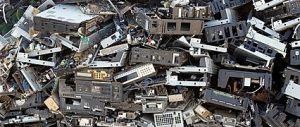
Unless you have an older relative to pass it on to, getting rid of an old phone in China can be problematic: there’s no point keeping it, but selling it on to a street trader – who will fix it up and sell it cheaply – isn’t lucrative, while the private information you may have inadvertently left on there can be a worry. One result has been steadily rising piles of electronic waste.
Sun and Chen are offering a different choice.
Three years ago they founded Aihuishou.com (meaning “love recycling”), China’s first competitive customer-to-business ecommerce site focused on electronic products such as mobile phones and laptops. The site has its own logistics staff, who collect the used devices. Recycling firms then bid to buy them in batches, before processing the items for recycling or disassembling them as electronic waste.
“Users tell us about the state of their phone online or over the phone, and we estimate a price. In Beijing and Shanghai we can have someone visit to assess the phone, elsewhere you can post it in. We do some simple tests and an approved recycling firm assesses it, before we discuss a final price with the customer. Once it’s all agreed, they get the funds right away.”
Competitor sites have since sprung up, but Aihuishou’s model has so far allowed it to keep them at bay. The key is the competitive bidding by recycling companies.
The second-hand phone trade in Chinese cities has tended to be inefficient, as street traders buy in phones one by one, in varying conditions. By working with Aihuishou.com, recycling companies can obtain reliable and tested devices, while the phone’s original owner gets the best price. The phones are sent to legitimate companies for recycling, to be disassembled, or for metals processing. Mobile phone recycling, until now scattered around China’s cities, is being brought onto a single ecommerce platform.
“We’ve got over 20 recycling companies registered, each quoting a price. We take those prices and do the deal at the best one,” explained Yuan Guoquan, the company’s chief media officer.
For a 16-gigabyte iPhone 4S that’s fully functional and in good condition, Aihuishou will currently offer around 1,300 yuan. Two other recycling sites chosen at random, Taolu and Huishouquan, offered just 977 yuan and 580 yuan respectively. Traders on the street offer less than 500 yuan.
The sidebar of the website features a constantly updated list of completed deals, giving the time of the transaction and type of phone. “We have about 1,000 transactions a day at the moment, and our services have been used six million times.”
“Since we started, we’ve done 100-million yuan’s worth of business, and we’re growing at 30-50% a year,” said Yuan, adding that in September Aihuishou started working with JD.com, China’s biggest online direct sales site. Shoppers can trade in their old phones for new ones, and Aihuishou gets more customers and phones. They expect to see turnover grow by 70% this year. There are similarly large markets in China for flat-screen TVs, laptops and digital cameras.
According to data from the Ministry of Industry and Information Technology, China had 1.24 billion mobile phone users as of February this year, with 100 million phones discarded annually. Less than 1% of these are recycled.
It’s not easy to recycle mobile phones, and poor quality recycling pollutes the environment and harms public health.
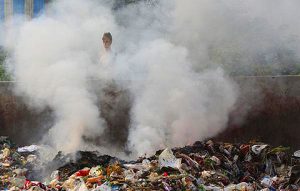
Mobile phones are made mostly out of plastic and metal. Plastics do not break down naturally and when burned release noxious gases, which have been linked to cancer. Copper, lead and zinc can be toxic and if not properly handled pollute the soil, groundwater and the environment.
The street traders often take a blunt approach to recycling: reusable components are stripped out and the rest is dumped or burned, spreading the amount of electronic waste and making further processing more difficult.
In 2004, China’s economic planning body the National Development and Reform Commission launched trials of recycling systems for domestic appliances and electronics in Zhejiang province and Qingdao city. But televisions, refrigerators, washing machines, air conditioners and computers made up the bulk of the items recycled. That’s also the case in most of China’s electronic waste recycling firms – they don’t do phones.
In mid-2012, the Shanghai Central Waste Electrical and Electronic Equipment Recycling Co. ran a promotion collecting 1,500 mobile phones over four months. But chinadialogue learned that the owners had to pay to have their phones collected. And no phones currently feature in the daily lists of recycled goods on the company’s website.
But there is plenty of business out there and China’s electronics recycling firms are becoming more interested in mobile phones, said Yuan. “Aihuishou is currently going all out, and we’re sure future markets will be even bigger.”