Economic interests are set to play an increasingly important role in shaping development in the Arctic. Yet prominent members of the mining industry, familiar with the economic and reputational perils of impatient investment, remain cautious. They can – and should – play a pivotal role in guiding responsible industrial activity in the region.
Corporate development of the Arctic appears to be a foregone conclusion and this is reflected by the development of major transnational agreements. For example, with Arctic shipping projected to increase massively in the coming years, the UN Maritime Safety Committee (MSC) will adopt the Polar Code, international guidelines for the safety of ships operating in polar waters.
On the back of such recognition, countries are making longer term economic commitments. China, for instance, has just agreed to purchase oil and gas from the Russian Arctic over the next decades, while at the same time having secured stakes in Russian oil platforms in the region.
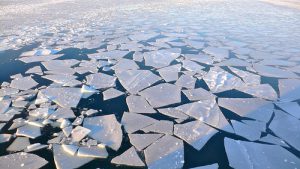
The Arctic is rich in oil, gas, and metals such as nickel, copper, gold, uranium, or tungsten. It even has large diamond reserves. Rapidly shrinking sea ice exposes new shipping routes through the Arctic Ocean that will save time and money for companies moving goods from Asia to Europe, while also providing new opportunities for tourism and fishing.
Strong leadership
Mining companies have a big opportunity here, and some of the planet’s northernmost mines are already making an impact. Alaska’s Red Dog mine is one of the world’s biggest producers of zinc and lead, whereas Greenland’s Ilimaussaq complex is estimated to meet a quarter of global demand for rare earth elements, critical components in a wide range of electronic devices, over the next 50 years. With Arctic mining in its infancy, many non-Arctic states, including China and the UK, are lining up to invest in future projects.
In spite of these riches, mining companies, particularly the mega-multinationals such as BHP Billiton or Rio Tinto, remain cautious about the Arctic. This is partly because mining companies have had their fingers burnt by high-profile environmental accidents, such as the 2006 lead poisoning of the Australian town of Esperance or the discharge of over two billion tons of untreated mine waste, over nearly three decades, into the Ok Tedi river in Papua New Guinea. Mining accidents have also killed or disabled workers. For example, around 170 miners are killed each year in the South American gold industry. Expensive mining projects built in a hurry have hit the industry’s reputation.
Yet these companies can only avoid the Arctic for so long. Climate change, coupled with the global decline of ore quality,has already made life difficult for extractive industries. They find themselves having to operate in increasingly remote environments where mining companies encounter heightened competition with local inhabitants for water and energy.
In addition, most major mining companies are part of the International Council on Mining & Metals (ICMM), founded in 2001 with the specific aim of addressing sustainable development challenges. As members, major mining companies commit to a set of principles designed to maintain sustainable development standards. This arrangement is unique for large-scale industries; for example, the equivalent global oil and gas industry association for environmental and social issues (IPIECA) allows any company to join regardless of environmental performance.
As the Arctic opens up for business, mining has taken an important step towards a leadership position in private-sector environmental stewardship. At the recent Arctic Circle Assembly in Iceland, ICMM president Anthony Hodge urged other industries to follow mining’s lead in endorsing full sustainability perspectives in the Arctic, taking into account the well-being of the region’s people and the broader natural environment.
Arctic online
Admiral Robert Papp, the newly appointed US Special Representative for the Arctic, believes social media has completely changed how the US government interacts with remote communities in Alaska, increasing pressure for accountability by establishing a transparent two-way dialogue. It’s a lot harder to put a zinc mine next to a village in the middle of nowhere if the residents are able to tweet their concerns.
Modern communication has also pushed industry transparency and disclosure policies to the top of the agenda. This bottom-up approach to whistleblowing has contributed to rapidly improved standards of accountability among extractive companies, suggested within the broader Global Reporting Initiative (GRI) and the more recent industry-specific Initiative for Responsible Mining Assurance (IRMA).
Operating in the Arctic is challenging, whatever industry you’re in. But mining firms have already made many of the mistakes, and learnt many of the lessons, that lie ahead of the oil, gas and shipping industries. Before these mistakes are repeated by others, mining representatives must step up to facilitate the sensible economic development of Earth’s northernmost latitudes.
This article was first published by The Conversation