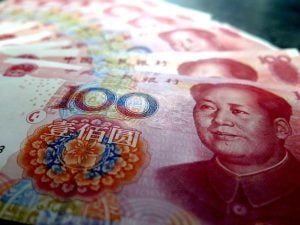
Two Chinese banks now provide as much international development finance as the next six biggest multilateral lenders combined – but are greatly exposed to political, social and environmental risks, new research says.
In almost doubling the global capital base available for development projects, China has enabled developing countries with less to access international finance to bridge gaping infrastructure and energy shortfalls, according to a study by Boston University’s Global Economic Governance Initiative and the Chinese Academy of Social Sciences.
“Such a stepwise increase arrives just in time,” the paper says, pointing out that Western multilateral Development Banks (MDBs) appear to be stagnating in expanding their portfolios.
China Development Bank and the Export-Import Bank of China (CHEXIM) together lent some US$684 billion between 2007 and the end of 2014. The next six biggest lenders, which include the World Bank, the Japan-led Asian Development Bank and the Inter-American Development Bank, have provided finance worth US$700 billion. During the same period, China’s policy banks increased energy-related finance to national governments by US$117 billion, representing a two-fold increase in the total amount.
Yet despite the impressive figures, China’s loan portfolio is subject to considerable risks. With 66% of energy-related finance concentrated in coal-fired power, the associated costs of these loans, known as externalities or social costs, are a real concern.
“Using conservative estimates of the climate and local health costs of coal plant emissions, we calculate that the yearly social costs [the health costs of increased pollution plus the costs associated with social conflicts] of Chinese overseas coal-fired power plants amounts to US$29.7 billion,” the report’s authors say.
Furthermore, the ability of countries to service their debt to China – which is often repaid with commodities such as coal and oil – is threatened by fluctuating market prices.
In order to curb emissions and reduce risk, China should diversify its investment portfolio towards cleaner energy projects, the report says. Doing so would also help bring China’s overseas investments in line with international sustainable development goals.
Also see: Chinese banks: time to go green
Risks
While China has lent to borrowers who face difficulty accessing finance from elsewhere, this has drastically increased its exposure to economic downturns in recipient countries, which impacts their ability to repay loans.
Venezuela, whose troubled president Nicolás Maduro recently announced a 60-day state of emergency, is currently in debt to China to the tune of US$65 billion. The Venezuelan government recently announced it had negotiated better repayment terms with China, saying the move “gave oxygen” to an oil-dependent economy asphyxiated by the crash in global prices.
A number of other countries to which China has lent significantly for energy projects are considered high risk by the Organization of Economic Co-operation and Development (OECD). Ethiopia, Niger, Sudan, Pakistan and Bosnia & Herzegovina all rank alongside Venezuela as the most risky destinations for China’s energy investments.
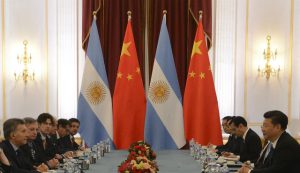
Argentina also features in this group but the election of pro-market president Mauricio Macri has led to a downgrading of the country’s risk rating by other agencies.
Only marginally less risky is Ecuador, which defaulted on its sovereign debt in 2008 and has since borrowed upwards of US$8 billion from Chinese banks for energy projects.
In addition to the risk of non-repayment, the consequences of exacerbating climate change by increasing carbon emissions are almost inestimable. The study estimates that the coal-fired power plants included in China’s overseas investment portfolio emit 594 million metric tonnes of CO2 annually, equivalent to 11% of US total annual emissions and 6% of China’s.
Furthermore, China’s financing of coal overseas is increasingly out of step with its domestic policies as domestic consumption has fallen for two consecutive years, according to China’s National Bureau of Statistics.
Experts predict China will reduce its current over-supply of coal by around one billion tonnes this year as it attempts to bring CO2 emissions in line with commitments made under the Paris Agreement.
Environmental campaigners recently told chinadialogue that curbing coal at home whilst promoting it abroad was “hypocritical”.
Renewables
China devotes 28% of its total energy finance to renewable energy, whereas the MDB’s allocate an average 88%. However, these figures include hydropower projects, which have major environmental consequences.
Scarcely 1% of China’s development finance goes to non-hydro renewables. The MDBs invest 27%.
Given the high proportion of investments in coal and hydropower, shifting investments to cleaner technologies represents a big challenge for China’s big policy banks and 13 new regional development funds.
Nonetheless, China’s emergence as major player in international development finance and within new multilateral development banks means it is “uniquely placed” to steer the transition to a low-carbon economy.
“This finance is very welcome and could not come at a better time,” the report says.