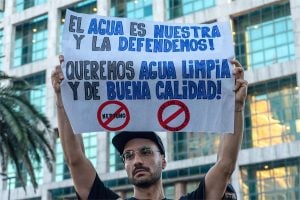
The agreement to create the world’s largest trading bloc could worsen environmental protections, experts warn. They point to a lack of clarity over environmental compliance and the incentivising of extractive projects or trade in “emissions-intensive” food products.
Last week, the European Union and the bloc of five South American countries, Mercosur, finally penned a trade agreement after more than two decades of negotiating.
The agreement still needs to be ratified by both the European Parliament and Mercosur member states, which experts estimate will happen by the second half of the year.
However, on Wednesday the deal was referred to the European court of justice to rule on its compatibility with EU treaties, which could delay it further. Once approved, it will gather countries with a combined population of more than 700 million into a single free-trade area.
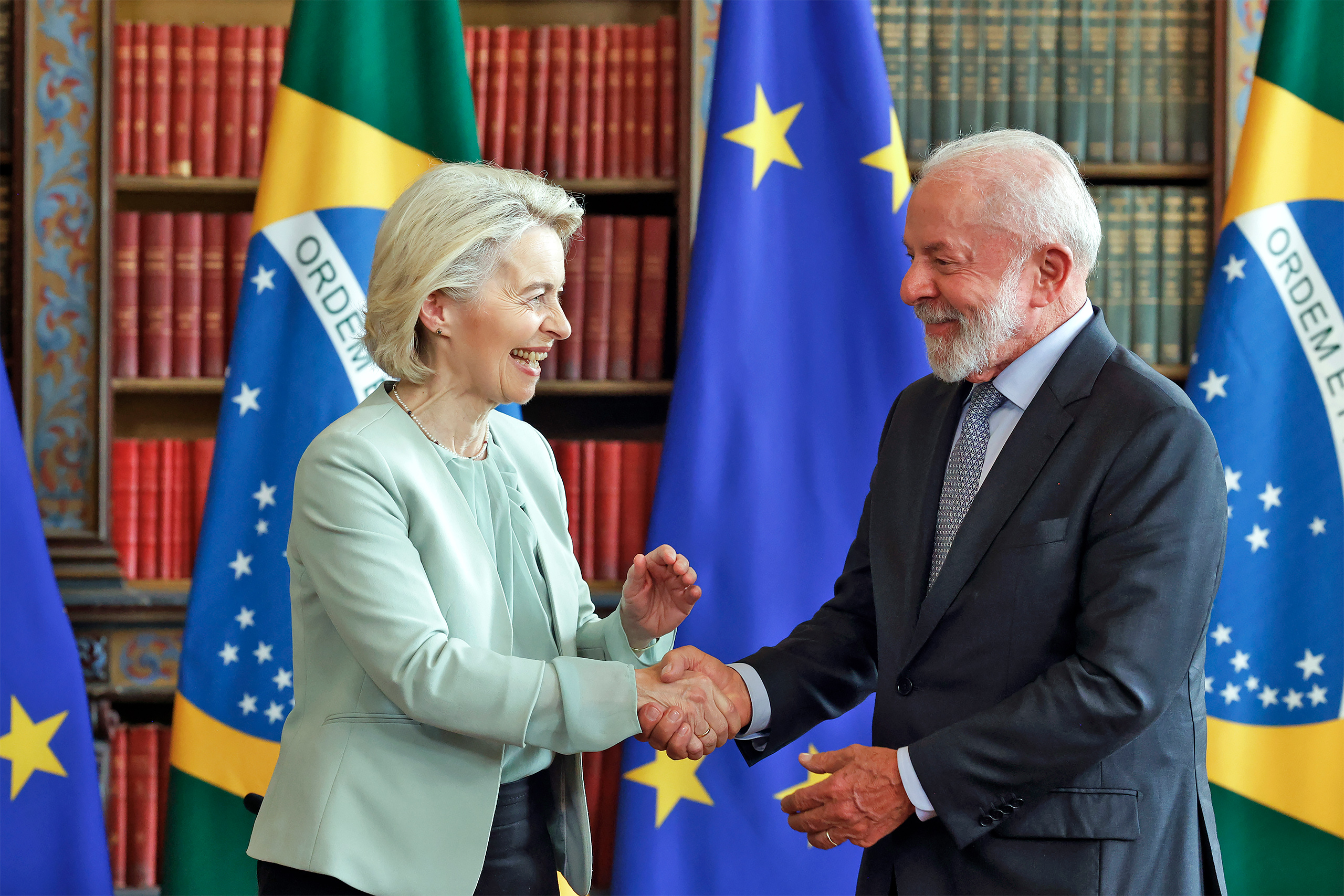
Brazil’s president Luiz Inácio Lula da Silva called it an “historic day for multilateralism”. Other analysts and commentators hailed it as a boost for Europe’s industries and geopolitical positioning.
However, several environmental experts told Dialogue Earth the agreement is the result of unbalanced negotiations that will leave environments unprotected.
“This is a harmful agreement that will undermine countries’ efforts to address the climate emergency and pursue a just transition,” says Rômulo Batista, who co-leads Greenpeace Brazil’s forest solutions campaigns.
Dialogue Earth also consulted Ignacio Bartesaghi, who directs the Institute of International Business at the Catholic University of Uruguay: “This agreement matters more for what it represents than for what it actually contains. It is a limited agreement, but it is the most significant thing that has happened to Mercosur since its creation.”
What does the agreement say?
The free-trade agreement has been 25 years in the making. The European Union began negotiating with Mercosur’s bloc of five (Brazil, Argentina, Bolivia, Paraguay and Uruguay) in 1999. That process was finally completed with the signing on 17 January in Asunción, Paraguay.
The deal has been agreed amid rapidly changing geopolitics. Under President Trump, the US has been stepping back from international cooperation. Two weeks ago, his administration withdrew from 66 international agreements, including the UN climate change convention.
“The world is not the same as it was in 1999,” says Magdalena Bas, associate professor of public international law at the University of the Republic of Uruguay (Udelar). “The EU is seeking to position itself as a defender of international law and a rules-based order, in contrast to Donald Trump’s view that ‘deals’ should replace rules.”
This is especially important considering Trump’s use of tariffs as a negotiating tactic. “The European Union is looking to lower tariffs, establish common standards, and safeguard international trade,” Bas adds.
According to the European Commission, the deal will lower tariffs on a range of goods, including cars, machinery and pharmaceuticals. It will also secure the EU’s access to critical raw materials, including minerals needed in clean energy tech, and allow European firms to bid on South American public works contracts. Some estimates put the economic growth the deal will bring to the EU and Mercosur by 2040 at 0.1% and 0.7% respectively.
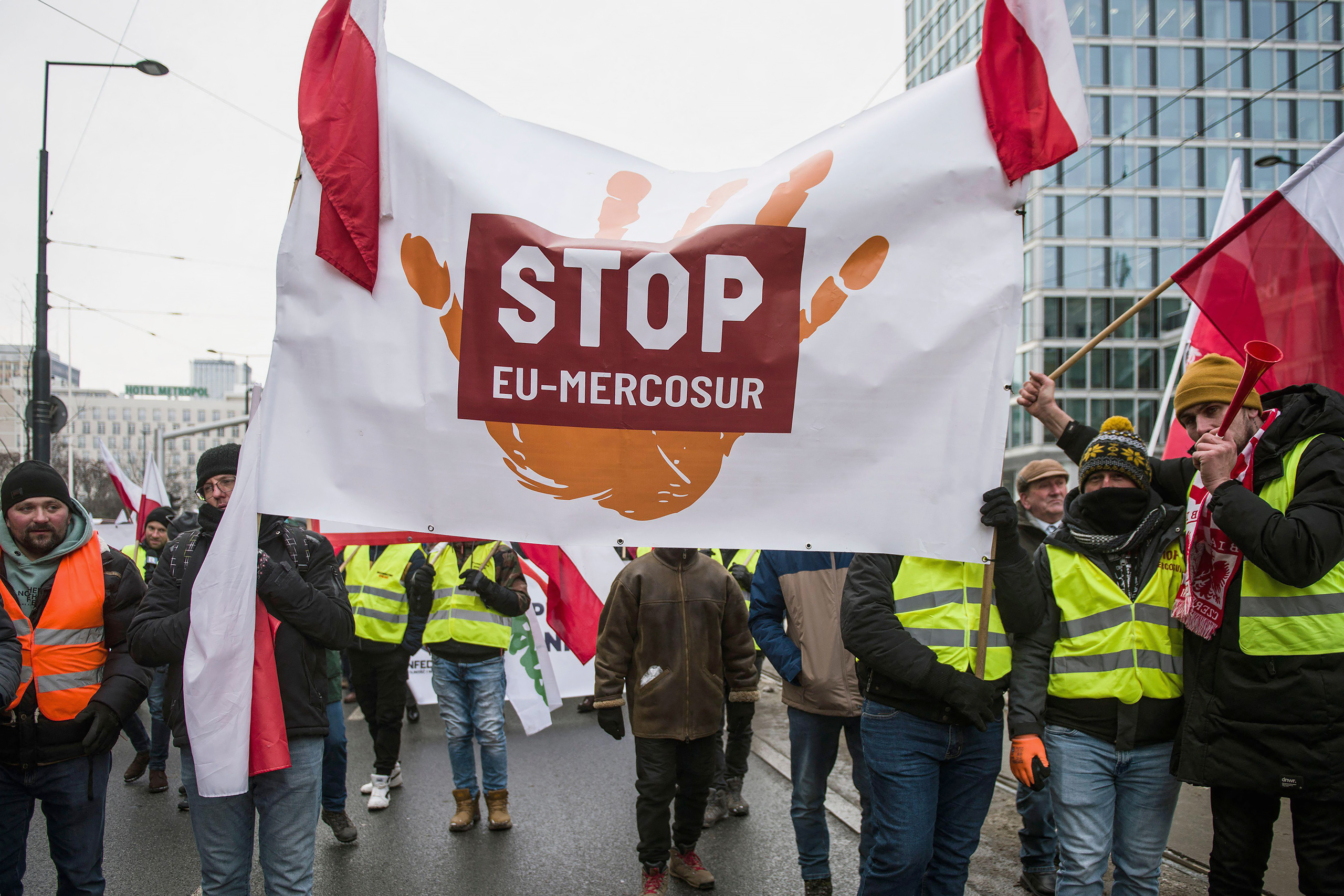
The European Commission projects the agreement will increase the EU’s GDP by more than EUR 77.6 billion, and exports by up to EUR 50 billion. It says this will boost Europe’s farmers, many of whom held last-ditch protests. The protestors argue the deal will in fact undermine domestic produce; France has consistently opposed the deal, fearing its impact on local farmers.
There is also a “rebalancing” mechanism, enabling the EU to suspend parts of the deal if it feels Mercosur is not honouring environmental commitments; the Mercosur states have been granted less power to suspend trade in this way. For example, the EU may raise a dispute regarding deforestation, which has been touted as a potential boost for international environmental protection. Experts tell Dialogue Earth that such a boost is far from guaranteed.
‘Ambiguous’ environmental protections
Bartesaghi says any move towards universalising Europe’s high environmental standards would be a step forward: “The European Union demands environmental clauses that do not exist in Mercosur. On trade and the environment, the EU is largely acting alone and pushing very high standards.”
The deal encourages the import into Latin America of highly polluting and health-damaging productsRômulo Batista, who co-leads Greenpeace Brazil’s forest solutions campaigns
A 2024 study by a group of Brazilian researchers concluded that, despite its limitations, the deal could be a “useful additional tool for improving sustainability governance” in trade between the regions: “The [deal] could set a positive benchmark for future free trade agreements that Mercosur might negotiate with other countries that are larger importers of agricultural commodities.”
However, others point to the ambiguity surrounding environmental compliance in the deal. While the agreement allows for action in the case of a “serious breach” of environmental standards, it is not made clear what these standards are, or how things like deforestation should be measured. That is according to Igor Olech, an agriculture and food economics researcher at Poland’s National Research Institute (IAFE-NRI) in Warsaw.
“That ambiguity is one of its main problems,” says Olech, whose research on the agreement was published last month. “It opens the door to endless legal disputes. If the European Union believes the Amazon is not adequately protected, it can claim a serious breach. Brazil will argue that it is not. The agreement does not clarify who would be right.”
Olech says this would benefit large producers, which are more able to afford certification, over smaller ones. He adds that it risks making producers “judges of their own compliance”.
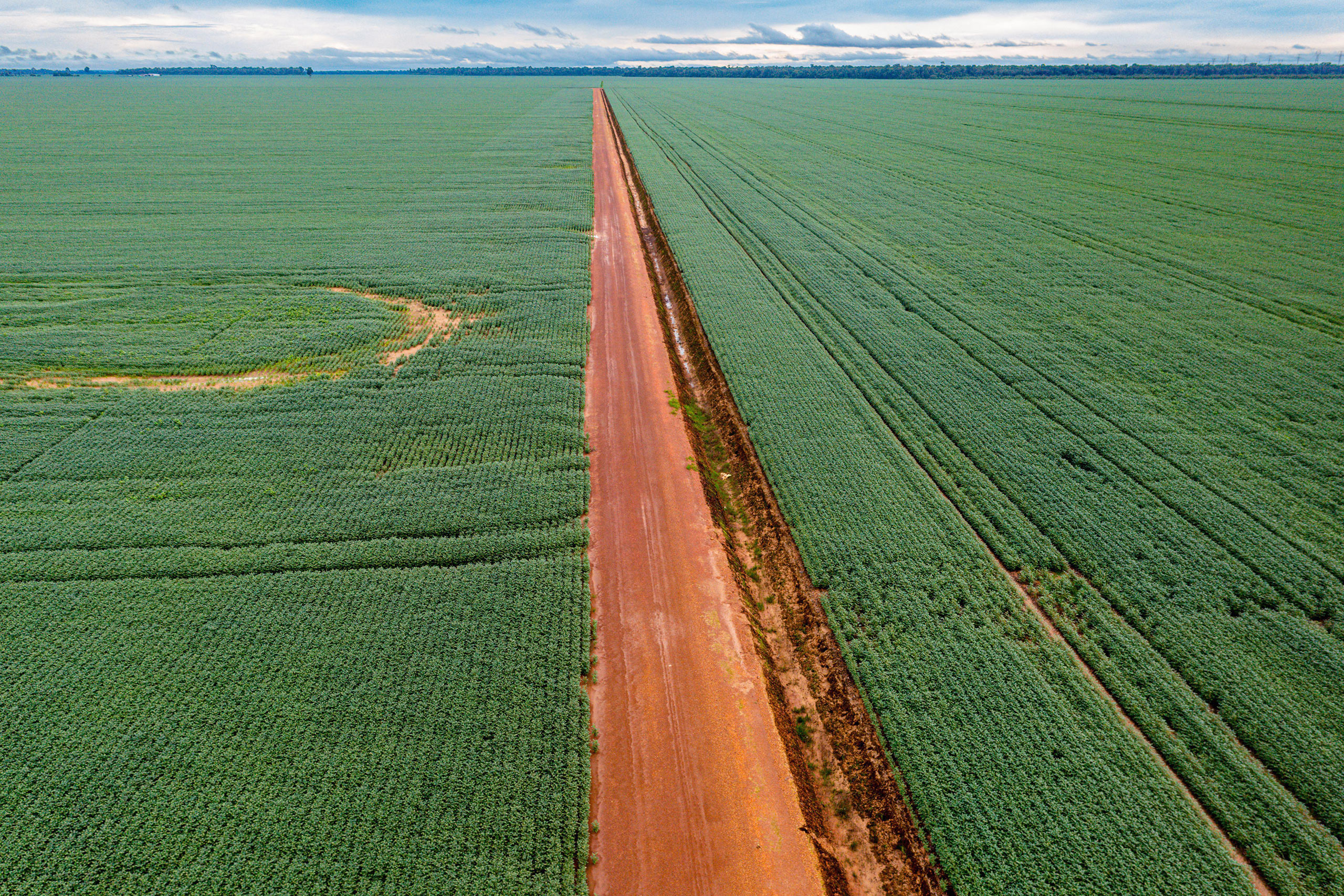
There are also concerns that the liberalisation of trade could lead to an increase in deforestation or “dirty” extractive industries, like mining. Batista says: “The deal encourages the import into Latin America of highly polluting and health-damaging products, such as cars, plastics and pesticides from Europe, in exchange for commodities often sourced from deforested areas.”
An analysis conducted by European law academics working at the University of Amsterdam, and published by Climate Action Network (CAN) Europe, warns the agreement could “facilitate trade in some highly emission-intensive food products” like beef or soy. This would contribute to global emissions. Audrey Changoe, a trade expert at CAN, says the rebalancing mechanism could become a “tool to pressure EU countries into weakening green regulations”, which should be regarded as a “red line” by lawmakers.
The deal could also encourage a reliance on longer food supply chains, thus increasing the overall carbon footprints of goods – studies show transport accounts for nearly 20% of food industry emissions.
‘Neocolonialism in disguise’
Some observers have expressed concern that the deal also entrenches postcolonial relationships between Europe and the Global South, while delivering little in the way of trade benefits.
Changoe calls the deal “neocolonialism in disguise”, adding: “Higher value EU goods are being exported to South America, intensifying deindustrialisation and job losses there, while condemning South America to the eternal role of exporter of low-value raw materials with massive ecological impacts to the EU.”
Laura Restrepo Alameda, an advocacy officer at CAN Latin America, says the deal risks “reinforcing an agribusiness model based on exports of large-scale monocultures, dangerous pesticides and the concentration of power” in the hands of a few large companies. She points out that these companies are already pushing to roll back environmental protections.
Not all in South America are so critical. “The agreement will bring trade benefits for Mercosur countries but we must be prepared to take advantage of them,” says Bas. “Countries should consider the policies that will be required to reap the benefits of the agreement and neutralise any negative effects on trade.”
Brazil’s environment minister, Marina Silva, has also defended the pact. In a ministry statement, she asserts that the negotiations have produced “a balanced text” aligned with “contemporary environmental, social and economic challenges”. The statement also says the EU-Mercosur agreement is anchored in a confidence that Lula’s government is pursuing a “serious” environmental agenda.