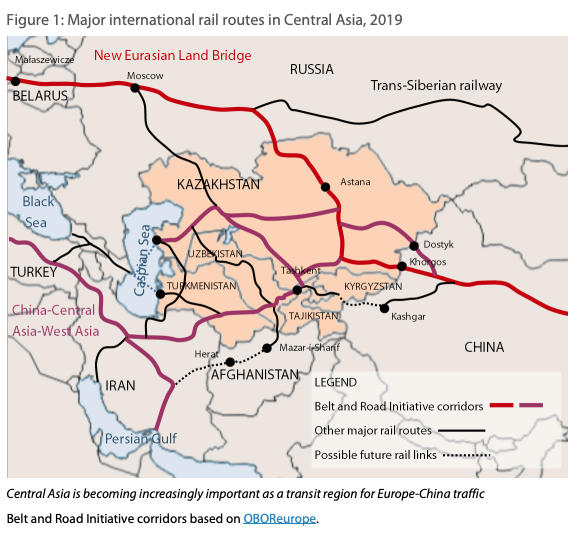
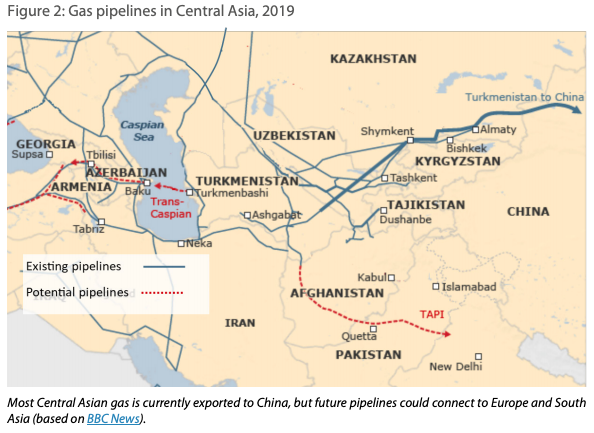
Since the announcement of its ambitious Belt and Road Initiative (BRI) in 2013, China has overtaken Russia to become the largest investor in Central Asian economies, attracted by the region’s mineral deposits and hydrocarbons, economic opportunities for Chinese products and the desire to ensure stability and security in its western Xinjiang region. Reflecting these motivations, Chinese investment has mainly been in infrastructure and extractive industries, which has brought an array of negative environmental impacts and social tensions to the region.
It is in this context that experts and environmentalists in Central Asia have raised grave concerns over the potential ecological and social impacts of China’s growing Belt and Road Initiative (BRI) and the lack of adequate assessments in the developing region.
See:Belt and Road countries will make or break the Paris Agreement
Also see:Pakistani military in charge, provinces sidelined in a revived CPEC
The first major assessment of China’s environmental impact in the region was published in Russian this year by Socio-Ecological Fund (SEF), a civil society organisation focusing on climate change, journalism and the environment in Central Asia, with the support of the Civil Society Development Association (ARGO). The report aims to provide an overall assessment of the environmental impact and problems arising from BRI projects in the region, bringing together contributions from environmentalists in Kazakhstan, Kyrgyzstan, Tajikistan and Uzbekistan. The group also offers recommendations for the governments of Central Asian countries and China, as well as companies and civil society groups.
One of the main problems is the lack of information about BRI projects within the framework of the environmental assessment procedures. Furthermore, in general, there is no open forum to discuss investment programmes and cooperation agreements with China. Recipient countries, as well as scientific institutions, businesses and public associations in Central Asia, have also failed to provide information and prepare properly for investment projects.
Sergey Solyanik, a consultant at NGO Crude Accountability and the coordinator of the “Ecological Evaluation of the Belt and Road Initiative” project, which this report is part of, highlights how Sinophobia has become a pressing issue in the implementation of BRI projects. In the report, he describes how fears are rooted in a lack of information and stakeholder consultation. Institutions and societies in Central Asia have failed to demand a balance of economic and environmental interests because there is almost no public participation in the decision-making process for projects implemented with China. This lack of participation combined with environmental problems, especially land-use issues, has mobilised waves of anti-Chinese sentiment.
This is also emphasised by Oleg Pechenyuk from the NGO Independent Ecological Expertise, who describes a case in Toguz-Toro district, in the Jalal-Abad region of Kyrgyzstan, where locals attacked and burned down a Chinese-invested gold processing factory being developed. They were motivated by environmental concerns: water contamination, damage to ecosystems and mercury pollution, to name a few.
The case highlights a lack of due diligence. In 2018, villagers repeatedly protested against the construction of the factory and demanded to be shown construction permits and the environmental impact assessment (EIA). Inspections confirmed that no EIA had taken place, which meant that there had been no approval from Kyrgyz government’s ecological experts, thus ignoring the possible environmental impacts.
Inadequate legislation
Other sections in the report highlight legal and administrative problems. Umidjon Uluhov, a professor of business law at Russian-Tajik University, describes how environmental regulations related to the BRI are not legally binding, and that across the board, Chinese companies in Central Asian countries do not attach due importance to environmental requirements, do not inform the population about their intentions and do not report the results of environmental monitoring of their activities. Eugene Simonov from the Rivers Without Borders Coalition adds that growing geopolitical competition between the EU, India, the US and China to invest in Central Asian infrastructure also hinders constructive cooperation, as any criticism is perceived by China as political rather than substantive.
The opacity of Chinese companies is compounded by government legislation. Uzbek journalist Natalia Shulepina highlights how Uzbek legislation has simplified procedures for approving investment projects by bypassing environmental concerns and regulations. In Tajikistan, which is undergoing a radical transformation into a market economy, policymakers view environmental concerns as merely an obstacle to the decision-making process, writes Uluhov.
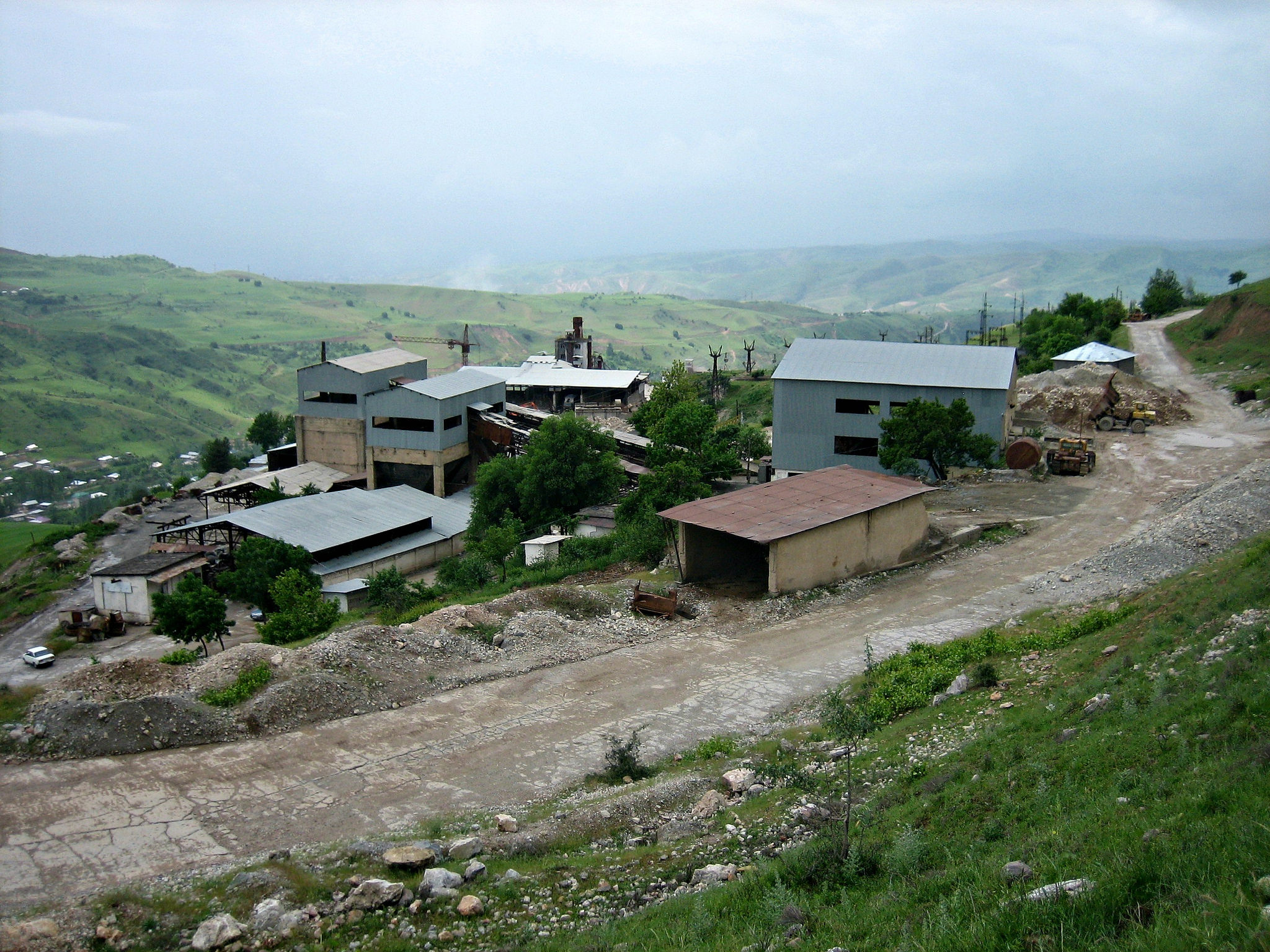
The Central Asian experts also confirm that heavily polluting Chinese industries are being transferred from China to Central Asia. For example, Solyanik describes a huge rise in Chinese companies producing cement in Tajikistan, where there are no uniform standards for pollutants or mercury emissions from cement kilns. This has led to irreparable harm to the environment and local health.
See: China shifts polluting cement to Tajikistan
The lack of uniform standards and regulations also applies to the agricultural sector. In Tajikistan, for example, there are no rules and regulations governing the use of pesticides and agrochemicals. This has resulted in damaging use of pesticides. Vadim Ni, a member of the SEF board of trustees, describes Chinese companies’ illegal use of unregistered pesticides in an agro-industrial complex in rural Kazakhstan, which resulted only in a small fine, further incentivising such practices.
See: World’s largest stockpiles of toxic pesticides buried in Central Asia
Call to act
The report concludes with a series of recommendations for China and recipient BRI countries in Central Asia. It calls on Central Asian governments to support, implement and apply strict environmental laws and regulations for BRI projects. The first step is to disseminate public information and conduct open and effective environmental impact assessments for all BRI projects, as well as strategic environmental assessments for infrastructure and cross-border projects.
Chinese embassies in the region should disclose BRI project information more openly, including environmental impact issues. Embassies should engage in dialogue with the public and respond promptly and openly to violations by Chinese companies, helping to resolve conflicts quickly. This could reduce local anger and improve China’s public image in recipient countries. Chinese companies implementing projects in the region should also incorporate green BRI standards in practice and engage local people. Chinese government agencies should strictly monitor the implementation of green BRI development policies in Central Asia and promptly respond to conflicts, both through Chinese embassies and Chinese state-owned companies operating in the region.
Finally, more stakeholder engagement is needed, especially with local populations. The report is clear that without environmental assessments and greater public participation, China’s BRI faces a troubled road ahead in Central Asia.