


![<p>Demand for medical supplies is at an all time high, and China is a major supplier [image: Alamy]</p>](https://dialogue.earth/content/uploads/2020/03/China-coronavirus-2400x1600.jpg)

Just a few days after Pakistan president Arif Alvi’s visit to China, where he shook hands with Xi Jinping in this time of physical distancing, the Chinese government has sent medical supplies that have already arrived in Karachi. The planeload of supplies included the most sought-after item in several countries today: 500,000 face masks, including 50,000 N-95 masks, donated to the provincial government of Sindh by China.
President Alvi’s visit, the first by any country head to Beijing after the Covid-19 outbreak, was seen by diplomacy experts as an expression of Pakistan’s solidarity at a difficult time for China.
We not only showed confidence in our friendship but this was a medically correct decision as there isn’t a single case in Pakistan of Covid-19 that came from China.Mushahid Hussain
“Pakistan was one of the few countries [which decided] not to get its nationals out of China,” said Michael Kugelman, senior associate for South Asia at the Washington DC-based Woodrow Wilson Centre. He added that in all likelihood, it wanted to “telegraph a message of solidarity” which indicated that China was Pakistan’s “top ally”.
China-Pakistan friendship
Mushahid Hussain, chairman of the Pakistani Senate’s standing committee on foreign affairs, told thethirdpole.net, “We not only showed confidence in our friendship but this was a medically correct decision as there isn’t a single case in Pakistan of Covid-19 that came from China.”
The decision appears to have produced results. China is giving preferential treatment to Pakistan in the provision of urgently needed medical supplies. The medical equipment sent by China is on the wish-list of all doctors across the world today and in high demand in Pakistan. By the morning of March 30, there were 1,593 confirmed cases of coronavirus in the country.
In January, when that figure was zero, the shadow of the Coronavirus outbreak in China loomed heavy on Pakistan. A report published by thethirdpole.net at the end of January noted that the large movement of people enabled by the China-Pakistan Economic Corridor would be severely affected by the pandemic.
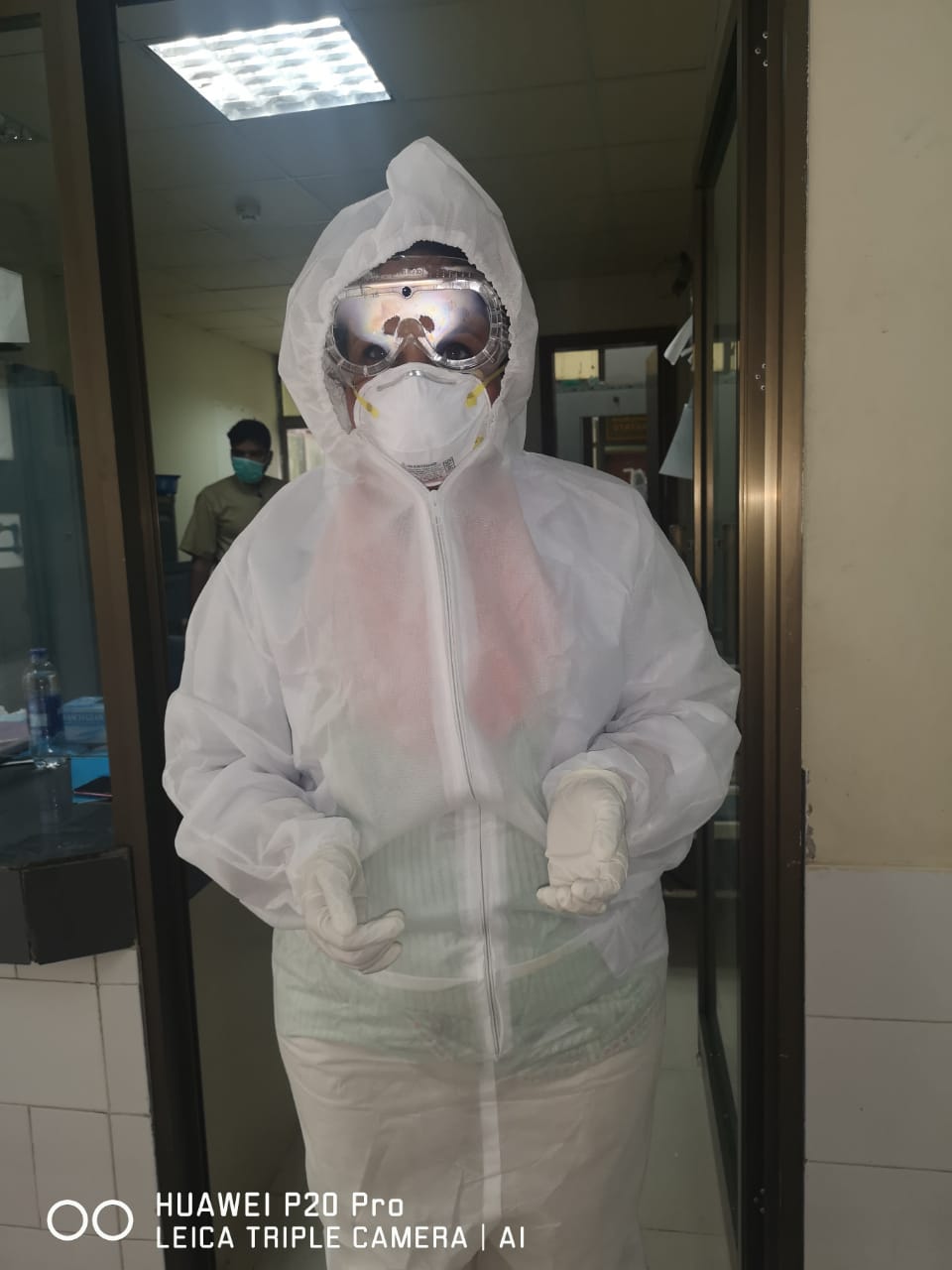
According to Aamir Jafarey of the biomedical ethics and culture centre at the Sindh Institute of Urology and Transplantation (SIUT), Pakistan desperately needs personal protective equipment (PPE). “[We need real PPE], not jugaad [improvised] ones that we are using in this country,” he said.
Gap in supplies persists
Infectious disease specialist Syed Faisal Mahmood at Karachi’s Aga Khan University Hospital is leading the medics from the front and said he hoped the government had also put an order for the purchase of ‘viral transport media‘ — a system suitable for collection, transport, maintenance and long-term freeze storage of clinical specimens containing viruses. “Even if you have thousands of test kits, you can’t do the test if you can’t collect the samples,” he pointed out.
Ventilators are another major requirement. The province of Sindh, which has the highest number of confirmed Coronavirus cases in Pakistan, has 484 ventilators, of which 353 are working, 52 are out of order and 43 yet to be installed. While the chief minister has approved the purchase of 290 more, he acknowledged that at least 5,000 are needed.
But these purchases and donations failed to calm Aamir Jafarey. “Machines don’t save lives; doctors do and a dead doctor, or even a sick one, is of little help,” said the academic. “We can import thousands of ventilators but we don’t have trained personnel in Pakistan who can run all of these. We have to realise that these ventilators can’t just be plonked anywhere and hooked on to humans. The environment needs to be conducive for these machines which means intensive care units with the correct sort pressures and so on,” he said.
And that is where China can come to Pakistan’s aid, said Senator Hussain. Speaking to thethirdpole.net, he said, “Right now, China has turned the tide on Covid-19 and is in a better position to help us in specific areas where Pakistan needs help — equipment and trained personnel.”
While the equipment has already arrived, Hussain said the pandemic is of such a proportion that the country’s own medical brigade would not be enough. “We would require a huge number of trained technicians and specialist personnel to do the testing on a mass scale as well as operate the ventilators. I hope China could help out in training the trainers.”
China’s incentive
Kugelman said China is going out of its way to demonstrate its willingness to help those in need around the world, with the added goal of strengthening its soft power. “It would make sense to dispatch medical staff to Pakistan, where they would receive a hero’s welcome,” he said.
According to him, there was also the geopolitical rationale to consider. China is a close ally of Pakistan, and Islamabad did send a large numbers of supplies to its much wealthier and better-equipped friend when China was in the throes of the virus. There’s also the practical rationale: China appears to have turned the corner on curbing the virus at home, and it has the will and capacity to deliver relief to those now suffering.
However, he added that while China has the capacity to mass-produce supplies that have run out, it will be cautious and “won’t go overboard in its overseas assistance” as it may need to maintain an adequate stockpile of supplies in anticipation of a potential new wave of Covid-19 cases at home.
Pakistan lacks a central coronavirus plan
Despite the frantic buying and gifting, Jafarey points out that Pakistan lacks a central plan. “It’s generally each institution for itself.”
Roomi Aziz of P2Impact, a think-tank working on health and related development priorities, said her wish-list of things from China includes advice and training. “[We need] technical advice on response planning, lockdown management, quarantine management, points of entry controls, exemplary contact tracing and use of technology in doing all this.”
Aziz highlighted that the problem is worsened by a lack of coordination between the federal and provincial governments of Pakistan,
Rather than rely solely on China, she said the government must adopt a multi-pronged approach to the crisis. This strategy should include support for the poorest of the poor, back-up of the health workforce and the mobilisation of local vendors and manufacturers to design equipment and supply critical gear for hospitals.
And while there is a lot of fund-raising going on privately for food and livelihood supplies as well as procurement of medical equipment, Aziz feels where the nation may feel helpless would be at “enhancing our system’s capacity to raise the bar while flattening the curve”. She said local manufacturers need to step forward for the production of ventilators, critical care equipment and even PPEs.
At the same time, Pakistan is faced with a “gazillion non-health issues,” said Aziz, including the huge challenge of social protection of the vulnerable and ensuring that trade routes and supply chains remain intact.
The government is speedily clearing and approving budgets for education, health and social protection, said Aziz, but “due to a lot of other noise the vital bits of information get lost somewhere in between.”
![Lower Subansiri Hydroelectricity project, March 2020 [Image by: A.N. Mohammed]](https://dialogue.earth/content/uploads/2020/04/Lower-Subansiri-Hydroelectricity-project-March-2020-by-A.N.-Mohammed-Consultant-NHPC-300x146.jpg)
