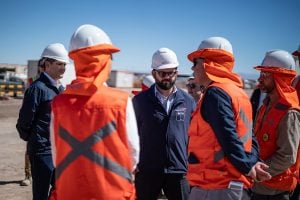
Indonesia’s next president, Prabowo Subianto, will be inaugurated in October. In May, at the Qatar Economic Forum, he promised to achieve 8% GDP growth within two or three years – ambitious given this year’s growth is around 5%. The nickel industry would be a major driver of the increased growth, he said.
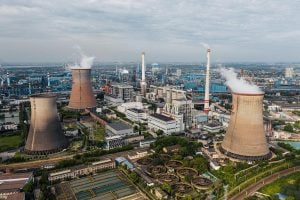
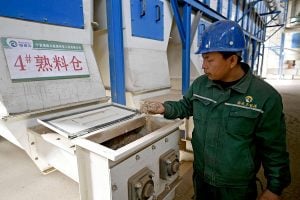
For the past few years, Indonesia has made regulatory changes to try and capture more value from its natural resources, particularly nickel and aluminium ores. Rather than continuing to sell the ores to be processed abroad, there has been a push to refine them in domestic facilities for export, or for use in making more valuable products like EV batteries. Most of Indonesia’s refining facilities are based in industrial parks, largely owned by Chinese companies. As these parks are usually powered by “captive” coal-fired power stations, which are operated off-grid specifically for industrial use, they cause air pollution and emit a lot of CO2.
This plan to add value has faced several other challenges, too.
First, Indonesia’s nickel products are mostly low grade; known as Class 2, they contain less than 99.8% nickel. These lower-grade products are primarily utilised in stainless steel production rather than in EV batteries. As a result, the country’s ambition to become a leading battery powerhouse in Southeast Asia may still be a distant goal.
Second, 89% of Indonesia’s nickel products, mostly half-processed, are exported to China. In other words, the domestic hi-tech industry is not greatly benefiting from nickel.
Third, massive tax incentives for nickel smelters are not accompanied by an adequate supply of nickel ore, with smelter companies having to import ore from the Philippines.
Fourth, environmental and labour practices in Indonesia have been subject to criticism, particularly when compared to standards in regions like the EU and US. Concerns have arisen due to numerous incidents involving environmental pollution, worker safety issues and social conflicts with local communities and Indigenous peoples.
Nickel’s economic benefits are exaggerated
Of the 26.6 gigawatt (GW) operating capacity of all captive coal-power stations in Indonesia, over 90% (24 GW) is dedicated to metals and mining, according to Global Energy Monitor. Of this, nickel alone consumes about half (11.6 GW).
A recent study estimates that by 2025, emissions from nickel smelters and the captive coal-fired power plants that supply them will cost the provinces of Central Sulawesi, Southeast Sulawesi, and North Maluku approximately USD 2.63 billion. This study, published in February by the Centre of Economic and Law Studies (CELIOS), where I serve as executive director, in collaboration with the Center for Research on Energy and Clean Air (CREA), highlights the significant economic impact of these emissions on the region.
Our research also indicates that if the nickel industry continues to expand without increased regulation, there will be more than 3,800 excess deaths in 2025 and nearly 5,000 in 2030.
There has been little effort made to replace the country’s existing captive coal-power plants by investing in renewable energy, such as hydro and new transmission networks from PLN (Indonesia’s state-owned electricity company). Investment to deliver renewables also appears to be slowing down.
New investment to transition from captive coal-power plants are considered costs that reduce the nickel industry’s competitiveness. This view is often supported by large government incentives to nickel smelter companies, such as tax holidays and tax allowances, without strict environmental requirements being made.
China can play a major role in improving the situation by increasing its labour and environmental standards. The question remains as to whether Prabowo will encourage this by revising regulations, such as Presidential Decree 112/2022, which still permits new captive coal construction. China’s president, Xi Jinping, has pledged not to build new overseas coal power plants, though it is unclear whether captive plants are exempted.
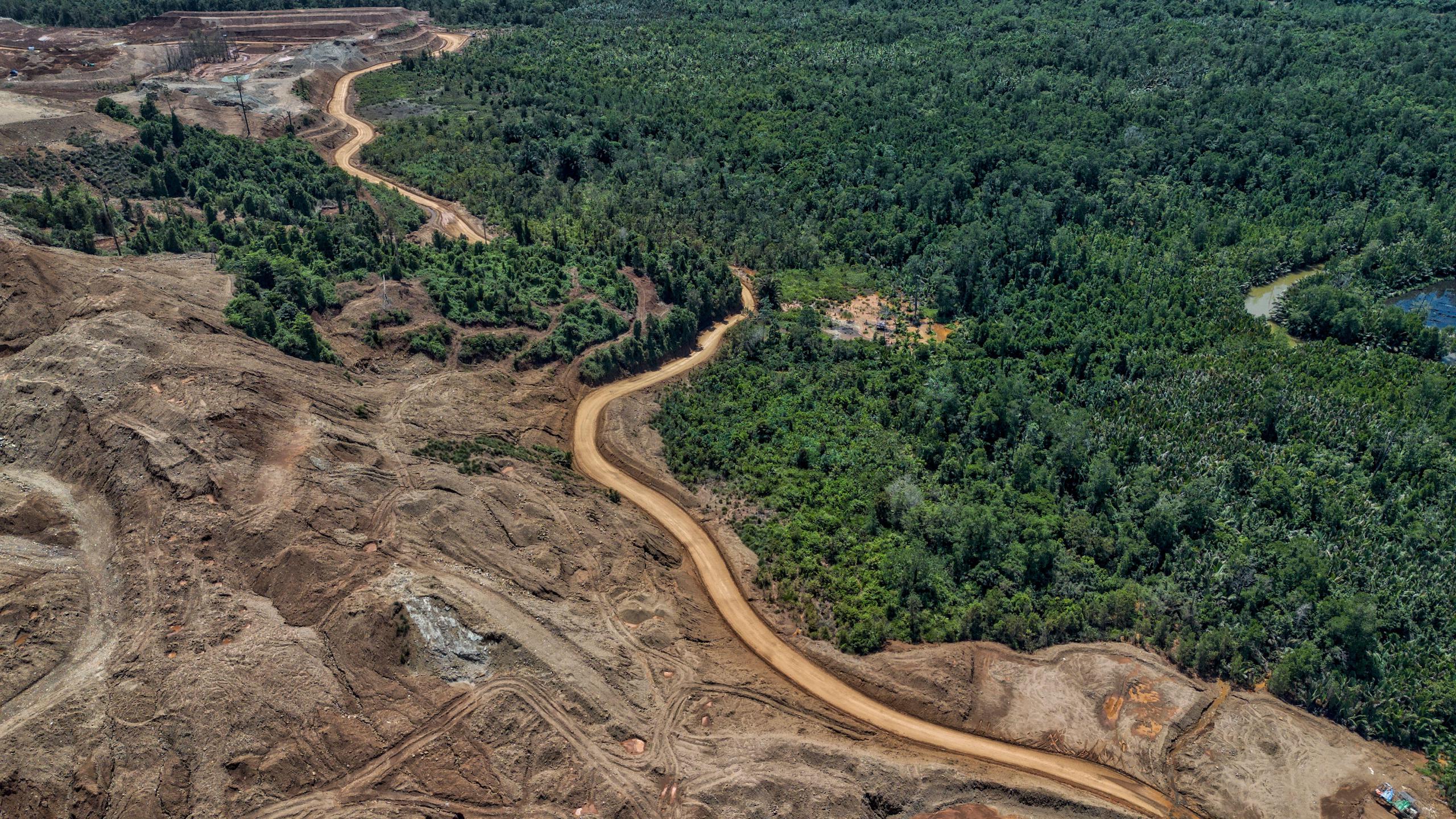
Another challenge is the environmental damage caused by smelters and nickel mining such as in Morowali Regency, Central Sulawesi. Waste from the smelter company warms coastal waters, pushing fish further out to sea, consequently increasing fuel costs for fishers, as our study notes.
According to our findings, over the next 15 years, nickel mining in the three studied provinces will cause losses of up to USD 234.84 million for farmers and fishers. The government has rarely acknowledged or acted to reduce such impacts.
The claim that nickel positively affects the economy, by increasing exports and GDP, also deserves scrutiny.
When a nickel smelter is being built, economic activity and employment do increase. However, during operation, our report predicted future economic downsides due to environmental and health impacts that have begun to affect GDP in producer regions, such as Morowali, Konawe in Southeast Sulawesi and North Maluku.
How can Prabowo approach nickel and its environmental issues?
Indonesia’s relatively low standards and poor record on environmental safeguards will make accessing global markets difficult. As an example, in Maluku the lives of the Hongana Manyawa Indigenous people have been upended by nickel mining, with mining companies destroying large ares of the rainforest they call home.
Export destination countries, including the EU and US, have been tightening up their regulations. The EU’s Critical Raw Materials Act, its Corporate Sustainability Due Diligence directive, and the US’s Inflation Reduction Act all make processed nickel products from Indonesia less attractive.
As a result, Indonesia will continue to depend on China. If China’s economy slows down, the nickel-industry ecosystem in Indonesia will be disrupted. The fall in nickel prices after the pandemic should reflect the importance of meeting higher standards to gain access to potential markets other than China.
In June, the European companies BASF and Eramet cancelled a USD 2.6 billion joint investment to build a nickel-cobalt refining complex in Weda Bay, North Maluku. This is a heavy blow to Indonesia’s downstream ambitions to invite investors from developed countries.
To attract more foreign investment, the Prabowo government can take steps to prevent environmentally damaging nickel practices.
First, it should stop permitting new nickel smelters and stop the construction of new captive coal-power plants. For smelters that already exist, the transition to clean-power generation should be supported.
Second, it should make a concrete plan to close all existing captive coal-power plants belonging to smelter companies within five years.
And third, mining-free areas should be encouraged, where Indigenous peoples and biodiversity can thrive.
To achieve premium nickel prices, the government must be able to guarantee the traceability of nickel products that are free of conflict with Indigenous communities. By limiting mining areas and smelter permits, Indonesia can keep nickel prices more stable, or even higher on the international market.
Regulating supply upstream, to optimise nickel prices in favour of Indonesia, would be more effective than the plan to form a critical minerals cartel between producing countries.
Prabowo likes to carry out diplomacy in international forums more than the current president, Jokowi. He can show that Indonesia is capable of processing nickel sustainably.
Let’s not let nickel repeat the resource curse tragedy that Indonesia has experienced with coal, gold, copper and logging. Prabowo has the opportunity to show that he can do better than Jokowi and does not depend on a single buyer, China.
Correction note: The original version of this article understated Indonesia’s total captive coal power capacity and the proportion dedicated to metals and mining. The figures were updated on 28 August.