In his masterful polemic, Winners Take All: The Elite Charade of Changing the World, the American journalist Anand Giridharadas takes a close look at how charitable giving by billionaires impedes rather than helps reform. His core thesis is simple: by giving (or even merely pledging) large sums of money to find solutions to global problems, the very rich not only gain prestige and tax breaks, but are able to shape the ‘solutions’ such that they avoid holding the wealthy to account.
There is perhaps no clearer example of the farcical idea that the people responsible for a problem should lead the change than that of fossil fuel companies and climate change.
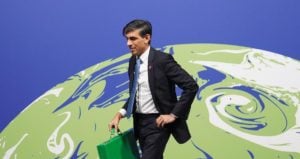
This year’s global climate summit, COP28, will be held in Dubai, United Arab Emirates. The COP28 president, Sultan Al Jaber, is also the CEO of the Abu Dhabi National Oil Company (ADNOC), which according to campaign group Global Witness is planning to spend more than USD 1 billion per month on oil and gas production this decade. (ADNOC disputes this analysis.)
Al Jaber addressed doubts over his suitability for the appointment at an oil conference in early October, telling industry figures, “This is your opportunity to show the world that, in fact, you are central to the solution,” and, “It is time to silence the sceptics by applying scale, capital and technology to deliver outcomes.”
The problem is that the only outcomes that oil companies have delivered at climate summits in recent years is to block progress. In an impassioned opinion piece published in July this year, Christina Figueres, who was the head of the UN Framework Convention on Climate Change from 2010 to 2016 and helped bring about the Paris Agreement, wrote bluntly that fossil fuel companies have failed to participate constructively in the energy transition, and instead continue to lobby against clean energy policies while exploring new fossil fuel sources. In short, they remain the problem and seem unable to change.
Well-worn tactics of suppression and delay
While Al Jaber may have stated that “the phase-down of fossil fuels is inevitable”, there is little hope that fossil fuel producers will be leading this charge. At the very conference that Al Jaber suggested oil companies could be part of the solution to climate change, Haitham Al-Ghais, secretary general of the Organization of the Petroleum Exporting Countries (OPEC) said calls to stop investing in oil were “counterproductive”.
No major industrial group in modern history has ever been part of the solution to the problems they have created
This should come as no real surprise. No major industrial group in modern history has ever been part of the solution to the problems they have created, except when accountability has been enforced. In the United States, tobacco companies suppressed information about the cancer risk of cigarettes for more than 40 years. Car companies have performed no better. In 1953, GM, Ford, Chrysler and the Automobile Manufacturers Association (AMA) agreed to jointly research technologies to reduce pollution, but then spent more than a decade blocking pollution control equipment. Following in the footsteps of this legacy, in 2015 the German carmaker Volkswagen was found to have created ways to ‘cheat’ tests intended to control harmful emissions in up to 11 million diesel vehicles.
If Big Tobacco and Big Auto behave like this, why would Big Oil be any different? In 2021, the City of New York sued several oil giants, including ExxonMobil, for “systematically and intentionally” misleading consumers about the role of fossil fuels in driving climate change, and engaging in “deceptive conduct”. An ongoing investigation has unearthed internal ExxonMobil documents from 2006 to 2016 – a year after the adoption of the Paris Agreement – that show how the company tried to create doubt over the science of climate change and its link with fossil fuels.
During this time, ExxonMobil was led by Rex Tillerson, who went on to become the US secretary of state under President Trump in 2017-18, when Trump announced the withdrawal of the United States from the Paris Agreement.
We need accountability at COP28
What movement has happened when it comes to cutting carbon emissions has been despite fossil fuel companies, not because of them. The simple fact that renewable technology is now often cheaper to install has been the main reason that carbon emissions may be starting to plateau. This is an industry that directly challenges fossil fuels, and the only possible role for oil companies is to provide some of the building blocks such as plastics.
If COP28 is not to be a complete farce, the centrality of an oil executive as its president will have to be matched with real action – not just science fiction like carbon capture. If Al Jaber can deliver that, it will be a notable achievement. Even if he does, oil companies still need to be held accountable for their promises. Like other big industries, they have proven that they will continue to peddle products that they know are causing harm.