As part of the first London Climate Action Week on 3 July China Dialogue hosted an event to discuss the future of the climate and the central role that both London and Beijing need to play. A panel of experts shared their views on the significant shifts in the climate conversation that have taken place over the past few years, the undeniable responsibility of London, as a global financial centre, to find solutions and the impact China’s Belt and Road Initiative (BRI) is having beyond the country’s borders.
The video has been edited for clarity and some parts removed in accordance with the wishes of panellists.
Event speakers:
- Sam Geall (chair), executive editor, chinadialogue.net
- Ma Tianjie, Beijing editor, chinadialogue.net
- Tom Burke, chairman, E3G (Third Generation Environmentalism)
- Farhana Yamin, climate change lawyer & Extinction Rebellion activist
- Wawa Wang, senior adviser, VedvarendeEnergi (Denmark)
Some interesting excerpts:
Ma Tianjie
8:38: “The narrative about climate change has been shifting quite dramatically in China in the past few years… At the end of 2012, top Chinese climate experts were still telling the world: ‘Don’t expect China to reign in carbon emissions, we still need to grow our economy.’… Things changed quite dramatically in 2012/2013, with a bunch of new factors being introduced into the equation. One of the most important factors was that we had new leadership in China… And things started to become very interesting.”
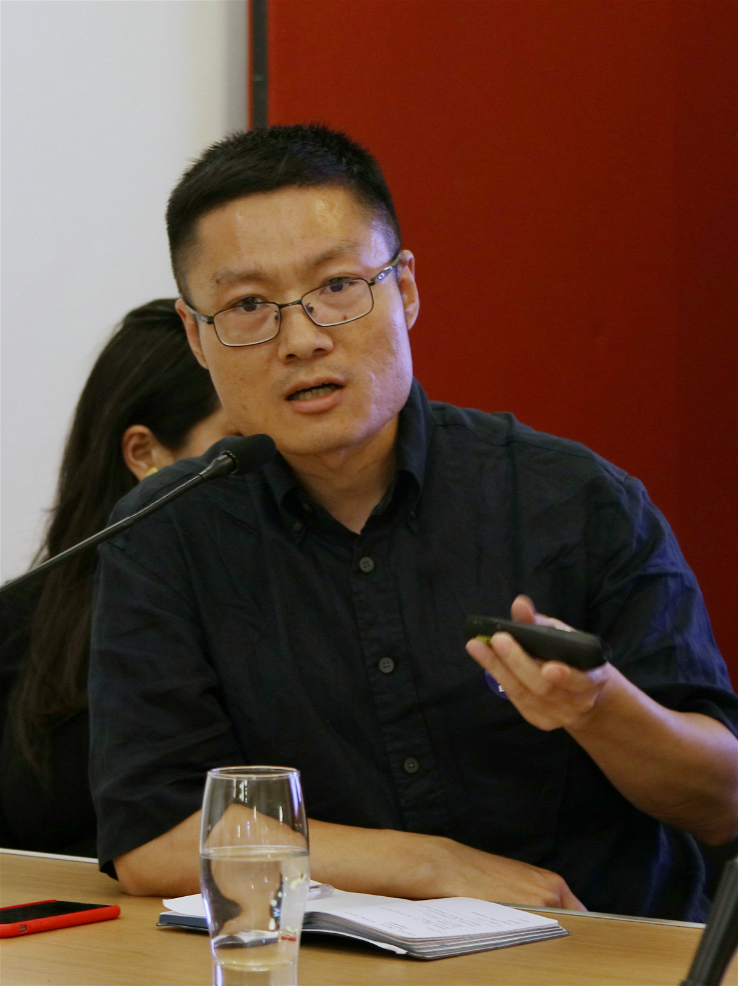 13:01: “Between 2013 and 2017, we’re actually seeing China’s carbon emissions plateauing for the first time in recent history. But this transition towards a new economic structure, towards a new growth model, towards a new environmental trajectory, is not unchallenged… A lot of those industries that the government wants to move away from, those heavy industries like coal, power plants, coal mines, cement factories, are vested interests within the Chinese state-owned economic system. And they employ a lot of people.”
16:49: “Right now, China is slowly moving towards the next cycle of economic planning… The government has already started talking about the 14th Five Year Plan, which is from 2021 to 2025. So 2019 is a key year, because a lot of the government ministries are moving into this pre-analysis phase, where they are starting to float ideas about what kind of targets to put in the next Five Year Plan. One of the ideas is a carbon emissions cap for China.”
01:10:43: “Yes, China is taking [over] the leadership vacuum left by the United States on climate change globally. But I think one of the issues that undermines China’s credibility as a new climate leader is this build-out of massive coal-power fleets overseas. Why is it doing it? I think, to put it simply, it actually provides a way out for some of the most powerful companies inside China.”
01:15:58: “Air pollution continues to be one of the key environmental policy drivers in China because it’s so visible, and also it affects one of the most vocal constituencies of current China, which is the urban middle class.”
Tom Burke
19:50: “Last year, one of the big stories that ran through the year was the story about Cape Town, ‘Day Zero’, running out of water. Because it’s a quite well-developed, well-organised country, it managed to avoid Day Zero. This year, Chennai in India has run out of water – literally run out of water – because it’s a less well-organised country, less able to adapt to the kind of change that climate change brings with it.”
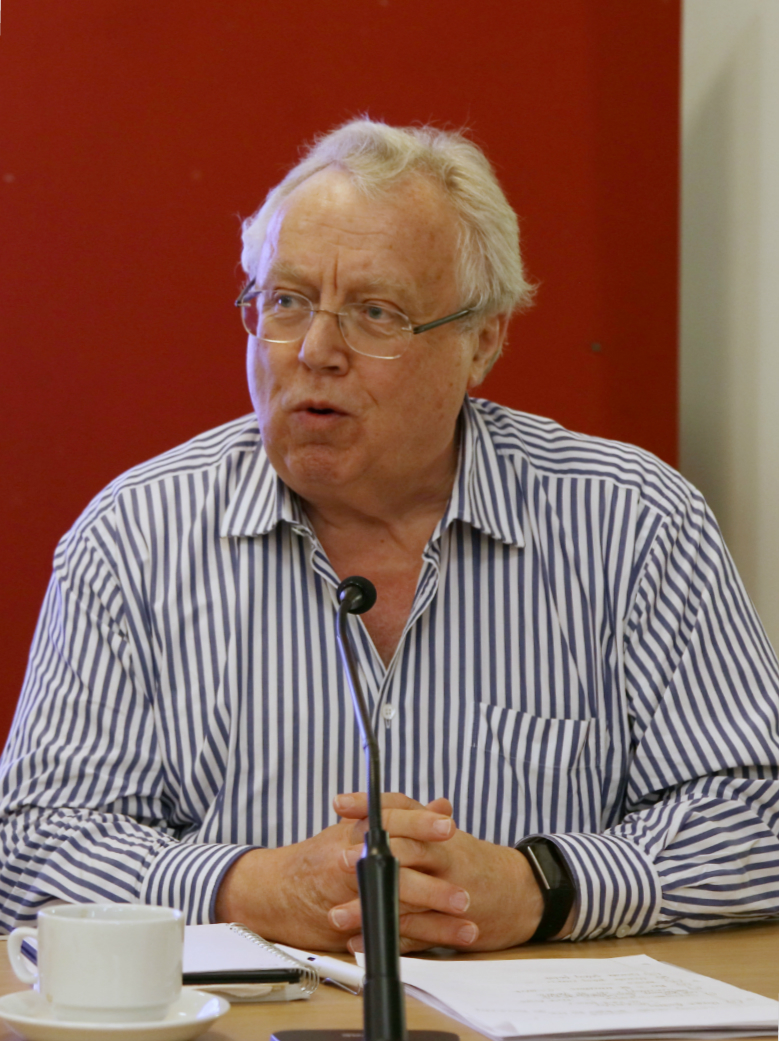 20:44: “This year was a pretty important change in the global conversation about climate change. There are a number of drivers for that change. Certainly events like the ones I’ve just described have been part of it. In a sense, what events have done is to confirm the much broader feeling of general anxiety in publics everywhere.”
25:36: “If we don’t cooperate, we can’t solve the problem, and so in that sense, the answer to the question is not London or Beijing. It’s going to be determined by each other, London and Beijing… between them, they’re going to determine the future.”
27:03: “The real problems are the political problems. The fact is, as you make the transition to low carbon, you change the pattern of winners and losers.”
Farhana Yamin
29:20: “London and the UK are the solution providers to the world. Frankly, we created the mess starting around 400 years ago when John Locke and many other philosophers of that era said that it was OK to privatise nature.”
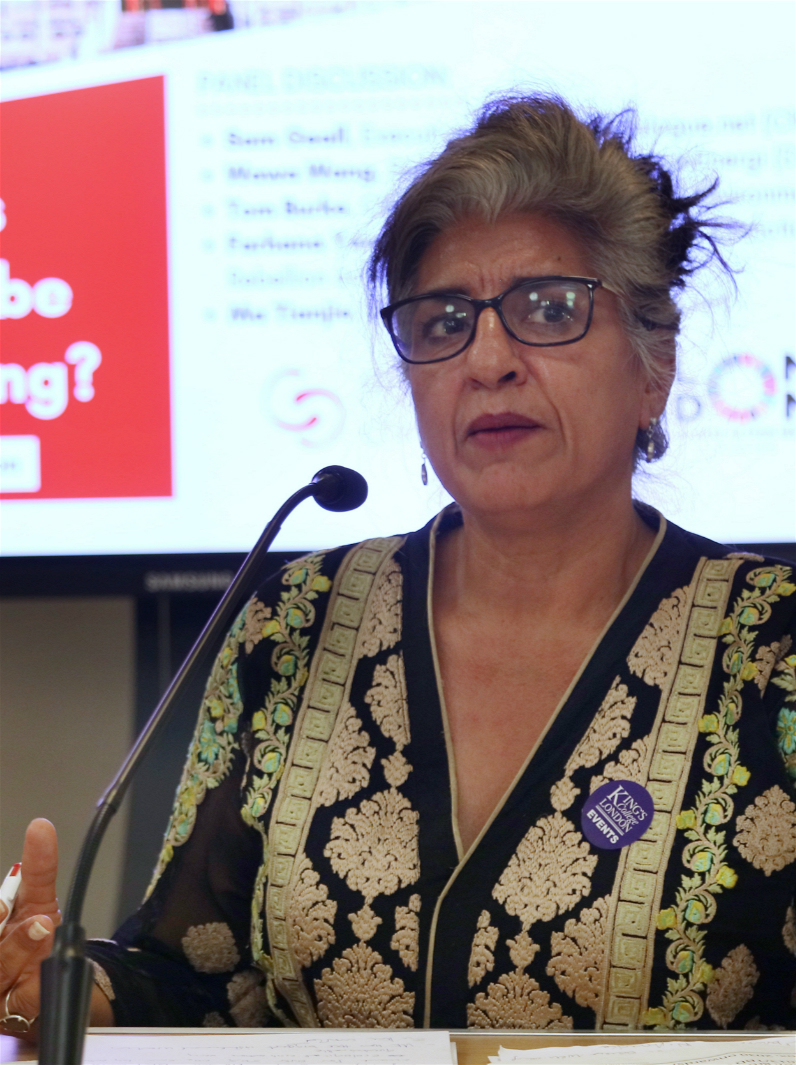 32:25: “[Climate change] is the most important, urgent moral issue of our time. It is the issue, frankly, where the maths, the real maths, is the huge, disproportional inequity we are dumping on future generations. It’s not about China, the US, Japan, Germany, what they bear, it’s actually, we have left virtually no carbon budget for children born after 1980.”
35:29: “So the good news is, I think the UK will be a centre for the sea change that we need, because it is going to host the next COP [Conference of the Parties] in 2020, and it has huge cultural power still.”
37:26: “So what do we need to do? … I think we need to, in essence, totally overhaul and contract the financial sector. That is the truth.”
01:00:37: “On China, my own experience is, they’re acutely sensitive to what other countries say about them. And they’re most acutely sensitive now to what smaller nations, developing countries, the countries where they’re trying to earn goodwill and where investments are taking place [are saying].”