The world’s 20 largest economies will fail to steer the planet away from dangerous temperature increases unless they act urgently to alter how they generate energy, new research has said.
Fossil fuel-powered electricity and transport contribute the largest chunk of greenhouse gas (GHG) emissions in the G20. As such, the group is wayward in meeting the 1.5C warming target identified by the Intergovernmental Panel on Climate Change (IPCC) as necessary to avert disastrous climate change.
With 82% of G20 economies’ energy coming from oil, gas and coal, the world is heading for 3.2C warming
“The world needs to ramp up action on climate change,” said Jiang Kejun, of China’s Energy Research Institute, who co-authored the report entitled Brown to Green. German-led coalition of international NGOs Climate Transparency coordinated the research.
With 82% of G20 economies’ energy coming from oil, gas and coal, the world is heading for 3.2C warming, the report said. Laggards Saudi Arabia, Australia and Japan generate 90% of energy from fossil fuels.
The 20 major economies play a vital role in meeting Paris Agreement goals since they account for 80% of global GHG emissions, which must halve by 2030 to get in line with a 1.5C pathway. Only India, which scientists project to be on a 2C pathway, is close.
However, the emissions profiles of member countries and the challenges in tackling high carbon-emitting sources differ greatly. In Argentina and Brazil, land use change remains a major source of GHGs.
South America in the spotlight
With capital Buenos Aires hosting the G20 summit later this month, global attention will focus on Argentina’s efforts at curbing emissions, said Enrique Maurtua Konstantinidis, climate change director at Environment and Natural Resources Foundation (FARN), an NGO.
“While doing well on renewable energy, Argentina needs to prioritise the transition away from dirty energy sources, dump fossil fuel subsidies, and start action on its very high forest loss,” he said.
172,639 hectares
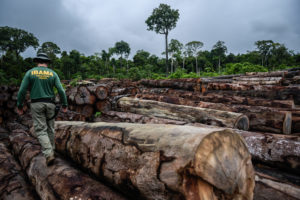
Argentina lost 172,639 hectares of forest last year, according to its latest State of the Environment report, released last month. The figure represents an 26% increase on the previous year. Conversion to agricultural land is one the biggest drivers of forest loss in Argentina, along with fires.
As an industry, Argentine agriculture generates a high proportion of emissions relative to its economic output. At 1.72 trillion tonnes of CO2 equivalent emitted per US$1000 of GDP, the so-called ‘emissions intensity’ of Argentina’s agriculture sector is almost twice the G20 average of 0.9 CO2e/$1000.
In September this year, Argentine President Mauricio Macri announced sweeping austerity measures to tackle the country’s stinging economic crisis. Drastic cuts saw the barely 2 year-old environment ministry relegated to the status of secretariat. Conversely, the government has continually promoted the agriculture sector.
Following turbulent elections last month, the world is also closely watching Brazil, which faces similarly pressing emissions challenges. At just over a third, agriculture is Brazil’s single largest source of GHG emissions, most of which are methane and nitrous oxide.
Far-right president-elect Jair Bolsonaro has pledged to slash funding for environmental protection and open up the Amazon to mining and other industrial activities.
“We hope our new President will keep Brazil in the leadership of climate negotiations and increase climate action within the country in order to get our GHG emissions in line with the Paris Agreement, ” said William Wills, of State University of Rio de Janeiro’s CentroClima.
Wills pointed out that while Brazil’s deforestation rate is on the rise and fossil fuel subsidies are increasing, its share of renewable energy is also growing. Here lie “tremendous opportunities,” he said.
Subsidies phase-out
In 2009, the G20 pledged to eliminate “inefficient” fossil fuel subsidies, but has failed to agree on a roadmap for abolishing them out at successive G20 meetings.
“At their summit in Argentina later this month, they would do well to live up to this promise and discuss how to finance the transition to a low carbon economy,” said Maurtua Konstantinidis.
Climate Transparency rated Argentina’s efforts at increasing its share of renewable energy in the national mix as ‘high’.
When Macri entered office, the Argentine government initially slashed subsidies for consumers and increased tariffs for electricity and natural gas. Yet at the same time, it has been actively courting international investment for giant shale site Vaca Muerta by granting subsidies to producers.
According to the report, the G20 spends more money driving climate change through subsidies for fossil fuels than it does generate cash from reducing it through carbon-pricing schemes.
Brazil handed out US$16.25 billion in subsidies in 2016, well above the G20 average. Only Canada and France buck the trend.
Report co-author Charlene Watson from the Overseas Development Institute, said:
“As global temperature rises, so will the risks to economies from climate disruption, and the need for adaptation and mitigation finance. It’s in the G20’s own economic interests to shift from brown to green energy.”




![The sea ice and mountains in Spitsbergen, Svalbard during the Arctic summer [Image by: Josh Harrison/Alamy]](https://dialogue.earth/content/uploads/2018/11/arctic-summer-sea-ice-300x200.jpg)