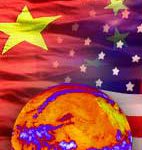
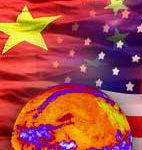
What impact will Barack Obama’s presidency have on climate-change cooperation between the United States and China? Will the level of cooperation move forward, continue as is, or go backwards?
I believe that greater cooperation is the most likely outcome, as Obama’s inauguration on January 20 will cause key factors hampering energy and climate agreements to weaken.
China-US cooperation in the energy and climate fields started in the late 1970s. In the past three decades, almost 40 bilateral agreements have been signed. Although there have been a few achievements, the majority of those agreements have not yielded impressive results. Cooperation between China and the United States appears limited when compared with that between China and the European Union and China and Japan. There is no lack of ability for China and the United States to work together – but the will to do so has been absent, in particular in the United States.
In the past eight years of George W Bush’s presidency, climate change has not been a priority. In 2001, Bush announced US withdrawal from the Kyoto Protocol, thereby holding back global efforts on climate change and earning worldwide condemnation. The United States also has not given climate change priority in bilateral relations with China. The European Union and Japan both proposed joint statements on climate change, demonstrating their intention to work together. The only major western country not to sign a similar agreement with China is the United States. Although 2008 saw the signing of the US-China 10-Year Energy and Environment Cooperation Framework as part of the Strategic Economic Dialogue process, the document lacked any concrete goals.
During the presidential campaign, Obama repeatedly emphasised the importance of energy and the environment. He pledged to reverse the unilateral climate policies of the Bush administration and to rebuild the United States’ reputation.
In a conversation with Chinese president Hu Jintao, Obama specifically expressed hope for more cooperation on climate issues. A number of US think tanks have produced detailed plans to achieve this aim for the Obama administration. All the signs indicate that the new US government will raise the importance of energy and environmental issues in the China-US relationship.
Also worth noting is the increased political appetite in China for international cooperation on climate change, including making agreements with the United States. China’s cooperative attitude at the 2007 United Nations Climate Change Conference in Bali, Indonesia, met with widespread praise. Also in 2007, the Report to the 17th National Congress of the Chinese Communist Party listed protection of the global environment as a goal for Chinese diplomacy.
In 2008, the Communist Party Political Bureau held its first discussions on climate change, with Hu Jintao stressing that climate change is of great importance both now and for future generations. These major changes in China’s climate change politics show that there is increasing political will for cooperation with the United States, which hopefully will match up with similar aims of the Obama government and provide new impetus for climate-change partnership between the two countries.
Mutual finger-pointing held back further cooperation. The Clinton administration’s signing of the Kyoto Protocol in 1998 indicated an acceptance of China’s stance on common but differentiated responsibilities. However, domestic political circumstances meant that the US Congress did not ratify the protocol.
A decade later there have been huge changes. The American public is much more aware and concerned about climate change, and US firms are eyeing the commercial opportunities presented by development of low-carbon technology. The new government urgently needs to promote international cooperation on climate change in order to improve the country’s image. Overall, the domestic voices calling for the United States to play a leading role in international climate change cooperation are getting louder. Obama himself is also enthusiastic.
Meanwhile, China is coming under greater international pressure because of increasing greenhouse-gas emissions. It is very likely that after Obama’s inauguration the United States and China will reach a compromise, with the United States committing to quantifiable reductions and China making a voluntary commitment to reduce greenhouse-gas emissions. If differences over common but differentiated responsibilities can be reduced, then significant advances will be possible.
Of course, none of these changes can be accomplished easily – many unknown quantities and uncertainties remain. The ongoing financial crisis will undoubtedly have a negative impact. Obama has made it clear that his first priority will be the rescue of the US economy. Meanwhile China has passed a 4 trillion yuan (US$586 billion) economic stimulus plan, giving full priority to combating the financial crisis. With both countries focusing on economic issues, there will naturally be less attention paid to energy and the environment, so progress on climate cooperation will be slower.
To a great degree, climate cooperation will depend on the ability of the two nations to recover from these economic problems. A lack of mutual trust also is an issue. In the United States, there are worries that cooperation will reduce the international competitiveness of American companies and therefore increase unemployment – potentially changing the US lifestyle. In China, many believe that the United States is using climate change as an excuse to hold back China’s peaceful development. Both sides worry that they will lose out by cooperating.
China and the United States have a common interest in climate-change issues, and there is a huge potential for cooperation. If cooperation on energy and climate change is possible, it will become the bright spot of China-US relations and provide mutual understanding and trust — an anchor for ensuring long-term stable relationships. But if progress is not made, it will become a source of mutual doubt and conflict.
The new US administration is soon to come into power, and a historic opportunity is presenting itself. Both the United States and China must seize this chance to sign a joint statement on climate change as soon as possible and produce a concrete plan for bilateral cooperation. As two of the world’s biggest energy consumers and greenhouse-gas producers, the United States and China – through mutual cooperation – can benefit not just their own citizens, but also all of humanity.
Zhang Haibin is an associate professor at Peking University’s School of International Studies. His major research areas are global environmental politics and international organisations.
Homepage photo by yunheisapunk