Rising sea levels and melting ice caps in the Arctic already are leading to territorial disputes between major powers. The disappearance of small islands could release valuable marine resources into the already contested waters of the Indian Ocean, the Pacific and the South China Sea. The rights of environmental refugees and migrants will become a source of national and international tensions, especially in delta regions such as Bangladesh, Nigeria and Egypt. Fisheries stocks will collapse or move, destroying millions of people’s livelihoods and undermining delicately negotiated international management regimes. The European Union’s Common Fisheries Policy will not survive in its present form.
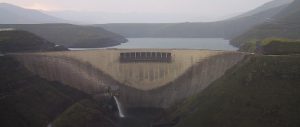
Countries will respond to the forecasts of more erratic water flows in all major river basins by building new upstream dams and water storage. Such “climate change adaptation” will drive cross-border tensions in the next decade, including the potential for armed interstate conflict. Strengthened international rules and more activist preventative diplomacy from the international community will be needed to peacefully manage changes in shared water and fisheries resources, and to preserve the rights of displaced people and states.
Issues of justice and ethics lie at the heart of climate change; the rich have caused the problem but the poor are bearing the brunt of the impact. Global resentment against the current international order will rise if there is a failure to agree and deliver aggressive emission reduction goals, or adequately help the victims of climate change adapt and obtain compensation.
Radical protest movements are building around the globe, and direct action against new airports and power stations is growing. Violent extremists will use these tensions to fuel existing causes and Osama bin Laden already has spoken several times on the inequities of climate change and highlighted the lack of action by the United States. Muslim countries will be among the hardest hit by climate change. If frustrated by global inaction to slow climate change, radical environmental movements may spawn eco-terrorist groups in a way analogous to the violent evolution of extreme left-wing movements in the 1970s.
Failure to act effectively in concluding a post-Kyoto UN agreement to control climate change will undermine the legitimacy of the international system, reducing its effectiveness in tackling other security threats. This agreement must protect the interests and rights of the poorest who are least able to adapt to climate change — not just the interests of the more prosperous in all countries who generate the vast majority of greenhouse gas emissions. This means preventing temperature increases beyond the 2-degrees Celsius threshold at which point levels of mortality from infectious diseases and water shortages rise dramatically.
In general, climate change could drive a more collaborative approach in inter-state relations or it could exacerbate tensions between and within countries, leading to a “politics of insecurity” as countries focus on protecting themselves against the impact. The pattern of cooperation which arises will depend on how effectively climate change is incorporated into mainstream foreign policy and is perceived as changing the balance of national interests in major countries across a wide range of security and geopolitical issues.
Climate change already is increasing conflict risks in unstable regions –- especially Africa -– as fragile governance systems are overwhelmed by the social stresses released by drought, famine, flood, migration, extreme weather events and rising sea levels. At moderate levels of change, conflict is preventable and conflict causality is complex as climate change acts as a stress multiplier of existing tensions. But this complexity should not be an excuse for inaction. The growing information on present and future climate security impacts is as good, if not better, than other information routinely used in security planning and assessment. If climate change is not slowed and critical environmental thresholds are exceeded, then it will become a primary driver of conflicts between and within states.
Over the next decades while climate change is still relatively moderate, the determinant of whether climate change drives serious conflict will lie in how political systems respond to the tensions it creates. Too often, analysis of climate-change impacts assumes that all governments will act to maximise the common good in response to change. But resource management regimes in much of the world already are built upon communal divisions and conflict, and are highly unlikely to respond in a predictable, rational and inclusive manner to climate stresses.
Experience of current instability in the Sahel –- especially in Darfur -– shows how quickly disputes over access to resources in times of environmental stress can become politicised and exacerbate existing communal conflicts based on ethnic, religious or other lines. These conflicts develop their own internal dynamics, but will see no sustainable solutions unless the root causes of resource grievances are addressed.
Achieving security in a climate-stressed world will require a more pro-active and intensive approach to tackling instability in strategically important regions with high climate vulnerability and weak governance. This will require changes across the security sector, with a stronger incorporation of long-term and structural risk factors into planning and a willingness to engage effectively with tough governance challenges — bringing diplomatic, development, intelligence and law enforcement capabilities to bear. This does not just require implementation of some general “conflict prevention” agenda, but direct focus on the strategic necessity of managing increased resource-use tensions.
This also should not be seen as just an adjunct to the development agenda, but as a critical part of achieving core security interest. There will be no long-term stability in Afghanistan unless rural livelihoods and water management are robust to climate change. Attempts to build a “hearts and minds” coalition against Islamist extremism will be crucially undermined when many of the main sources of job creation for young men in North Africa are being undermined by warmer temperatures and declining rainfall.
The impact of climate change on instability also will require changes to how climate adaptation is handled in the international climate-change regime. To date, climate adaptation has mainly been framed as a technical development activity, but in reality it will involve complex political and diplomatic interventions in difficult and highly charged internal resource-management issues. The political economy of resource management must lie at the heart of all adaptation measures as they deal with the resources delivering subsistence and identity: land, water and security. More controversially, access to international adaptation finance may need to be made conditional on countries implementing reforms to internal resource management policies to improve social resilience and prevent conflict and reduce marginalisation of vulnerable groups.
All these impacts already are occurring as the earth gradually warms in the early stages of climate change. If climate change is not controlled before we meet critical “tipping points” in natural systems, the impact will become catastrophic, with large parts of the world becoming uninhabitable for their current populations by the middle of the century. Such an outcome would overwhelm current security and humanitarian capacity to respond, and would make a mockery of the international community’s commitments to a “Responsibility to Protect” and the achievement of the Millennium Development Goals. The security community must be honest with its political masters: that under these all-too-likely scenarios, no country would be able to provide the type of secure environment enjoyed today, no matter how much hard and soft security investment is allocated.
The world has the financial resources and technological potential to deliver a secure and low-carbon energy economy. The question is whether we are capable of making the political choices to mobilise these resources in pursuit of our collective climate security, especially in time of economic downturn. Security issues are fundamental for making the political case for urgent action. Security-sector reform will be central to managing the consequences of the changes we are undergoing already. Security actors should be a powerful voice in overcoming the current dangerous tendency to lower expectations and ambitions for the Copenhagen climate change negotiations (COP15) in December 2009.
Half-solving the climate problem (for example, by aiming to stabilise temperatures at 3 to 4 degrees Celsius rather than 2 degrees) may reduce short term political and financial costs, but it will produce no meaningful reduction in the risk of extreme and runaway climate change. Only a Copenhagen agreement which effectively puts the world on a pathway to climate security for all is worth agreeing.
Security actors have a strong additional interest in ensuring a bold and rapid transformation to a secure and low-carbon economy, as this also will reduce tensions over access to dwindling fossil-fuel reserves and the destabilising impact of high energy prices.
The changing security context driven by climate change requires an imaginative and forthright response from security actors if we are to preserve our vital interests and values in this century. The first signs of this response are emerging, but the necessary changes will need to happen much faster than in the past if they are to match the remorseless ecological timetable of a changing climate.
Nick Mabey is a founding director and the chief executive of E3G, an independent not-for-profit organisation working in the public interest to accelerate the global transition to sustainable development. He is the author of Delivering Climate Security: International Security Responses to a Climate Changed World, a report published on behalf of the Royal United Services Institute (RUSI).
Homepage photo by Michael von Bergen