


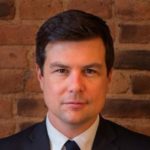
Connie Hedegaard, European commissioner for climate action, acknowledged today that there is unlikely to be a full global climate-change agreement reached in Cancun later this year.
However, in a wide-ranging lecture covering last year’s negotiations in Copenhagen and prospects for further international cooperation on climate change, she noted that progress was possible within the UNFCCC on items listed in the Copenhagen Accord including Measurement, Reporting and Verification of efforts to reduce emissions, curbing deforestation and financing adaptation.
Speaking to a select audience at London’s Commonwealth Club this afternoon, Hedegaard reiterated Europe’s desire to proceed with fast-start financing, but accepted that now was not the time to discuss “any money from public budgets” in Europe in the wake of the huge bailout package granted to Greece.
In light of the ongoing economic crisis, she also explained that Europe’s short-term emissions-reduction targets should be more easily achieved, but lack of investment in green technologies as a result of the crisis may make long-term targets more difficult. The EU will probably move to a 30% emissions reduction target for 2020, but Hedegaard suggested it would be tactically inappropriate to do so now.
While personally disappointed by the EU’s “unwise” strategy of abandoning the Kyoto Protocol to seek a new global agreement on climate change – which angered some developing countries – she emphasised that there remain a lot of unresolved issues with the Kyoto Protocol, including the prospect of countries like Russia retaining so-called “hot air” permits beyond 2013.
Hedergaard was also particularly keen to stress that Europe had not been sidelined in the final chaotic moments of the Copenhagen talks. Speaking to chinadialogue she said: “One should also be careful. There are many myths about what happened to Europe – for instance that Europe was sidelined. Well, sometimes coincidence happens. And President Obama wanted to see premier Wen Jiabao and he went into a room and it seemed that oh, Wen Jiabao is sat with the BASIC countries representatives. And then they started some talks. It was not a decision that Europe shouldn’t be part of that.
“So we should also take care not to create too many ideas of what happened in the last chaotic day (in Copenhagen). Lots of things happen like this without it being part of a huge plan where somebody wanted to sidetrack others and I think we should not underestimate the good relations between many different European countries and the BASIC group.”
She also outlined ideas for pushing forward negotiations outside the UNFCCC. The Major Economies Forum, she suggested, could be used as a venue for longer high-level discussions on key issues, much like the “extremely constructive” Greenland Dialogues. She had suggested to ministers that they should use an upcoming meeting to have a full-day session on Measurement, Reporting and Verification of efforts to reduce emissions. With the United States, China and India present, she felt such a meeting could push negotiations forward.