China’s decision to launch a group of city and provincial-level carbon-trading trials is widely considered to be preparation for an absolute cap on emissions. The scheme, led by the National Development and Reform Commission, China’s top economic planner, will see pilots established in five cities and two provinces: the cities of Beijing, Tianjin, Shanghai, Chongqing and Shenzhen and the provinces of Hubei and Guangdong
A good foundation for these trials is already in place: much experience has been gained from the operation of earlier environmental exchanges in Beijing, Shanghai and Tianjin. But even the best laid plans can go awry, and so we make the following suggestions:
1) Push for a carbon-emissions peak as soon as possible
If carbon output continues unrestrained, China’s carbon-dioxide emissions will account for 25% to 30% of the global total by 2020. In major Chinese cities, per capita carbon emissions are already higher than in many of the world’s large cities. But China’s city and provincial strategies rarely include an emissions peak. Long-term plans – to 2030 or 2050 – involve continued growth of energy consumption and carbon dioxide emissions in support of energy-intensive sectors such as industry and manufacturing.
These plans will only cement the link between economic development and higher energy consumption and emissions. They reinforce energy-hungry modes of development and economic structures, and a reliance on high-carbon routes for achieving prosperity. As a result, necessary changes in the future will be even more costly.
City and provincial plans for responding to climate change should be extended out to 2050, or at least 2030, and specify a point – as early as possible – at which emissions will peak. This point should be between 2020 and 2025 for cities, and between 2025 and 2030 for provinces, or even sooner. The later the peaks, the higher the costs of dealing with climate change down the road.
Such plans would mean that emissions controls gradually get stricter. This is in line with investor expectations of a rising carbon cost and will help to promote emissions cuts. When post-peak reduction targets are given in terms of absolute numbers, mature carbon markets will come fully into play.
2) Cut coal at the same time
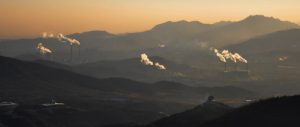
Strict controls should be placed on coal consumption in China’s carbon-trading pilot zones, including year-on-year reductions. This will help to control the air pollution from which all these densely populated cities and provinces suffer, and which comes mainly from coal burning and vehicle emissions. The substitution of clean energy – in particular natural gas – should be encouraged. Beijing has taken the lead in urban energy planning: annual coal consumption is targeted to fall by six million tonnes between 2010 and 2015 under the 12th Five-Year Plan.
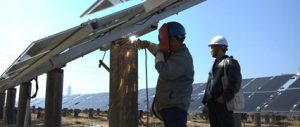
China already has a well-developed renewable energy sector: solar, wind and geothermal power are all widely used. Government policy should encourage further growth of these industries. The capping and allocation of carbon emissions and the use of carbon funds should incentivise the development and use of clean sources of energy such as natural gas and renewables in favour of coal and strengthen the power of these sectors.
3) Create local legislation
As with stock markets, constant high-volume carbon trading will give rise to inevitable disputes. A robust system of supporting legislation that provides for adjudication and penalisation is essential, along with regulatory and auditing bodies vested with clearly defined powers that allow them to resolve issues promptly.
In each location, the Standing Committee of the People’s Congress should put these rules in place in order to regulate all interested parties – including government authorities and the carbon exchange itself. Local development and reform commissions cannot and should not act as adjudicators. Local governments in the trial locations all have full powers to legislate and experience in doing so. They should take the lead here.
4) Take a broad approach to emissions reduction
There are ways to respond to climate change beyond tackling carbon emissions from energy consumption. Other areas of focus include land use, vegetation cover, the urban heat island effect, building techniques, low-carbon technology and urban-rural coordination. Greenhouse gases besides carbon dioxide must also be considered, in particular methane from organic waste: soil, vegetation and rubbish alone account for 35% of total greenhouse-gas emissions.
Currently the main greenhouse gases being captured or cut are carbon dioxide, methane, nitrogen dioxide, nitrous oxide, fluorocarbons and sulphur hexafluoride. As China’s level of vegetation cover is low and methods of calculation are imperfect, the carbon storage role of biomass should be emphasised in emission-reduction plans, but not included in trading.
China’s carbon-trading trials should be closely coordinated with other government projects – there are obvious synergies with plans to achieve energy-saving and renewable-energy targets. For example, carbon quotas in the power sector can be distributed in proportion to electricity generated. Renewable-energy generators can then sell their quotas and become more competitive, driving the development of renewables.
Carbon-emissions reduction has significant benefits for reducing other pollutants. Carbon-emission rights can be linked with sulphur, nitrogen and particulate pollution, adding to the value of carbon trading and further reducing pollution. The seven locations identified for China’s carbon-trading trials are also key areas in the Ministry of Environmental Protection’s efforts to cut pollution and coal use, and it is important to combine these tasks. The focus has to be broader than carbon alone.
These parts of China also suffer from smog and the public is well aware of the threat to their health. There can be no further delay. Dealing with PM 2.5 pollution – the finest and most damaging particulate matter – is particularly problematic, and research on how to tether this to carbon trading, energy-saving and carbon reduction is needed.
5) Respond to market supply and demand
China’s environment ministry has run previous trials – all now terminated – in the trading of sulphur-dioxide emission rights. Those experiments demonstrated how a lack of participants, low trading volumes and high transaction costs can cause markets to fail. Supply and demand issues need to be closely watched in the new trials. If a single city cannot support enough trading, the scope of the market should be expanded to surrounding areas. Trading volume will be the key to the success or failure of these carbon markets.
Both China’s Ministry of Finance and Ministry of Environmental Protection have long funded research into the introduction of a carbon tax and a number of models are available. But, as the outcome of such a levy is still unpredictable, it is not yet certain that China will impose one. A carbon tax would, however, help the process of establishing and testing a viable carbon-trading system. It would also give carbon a value: firms could decrease their tax burden – and hence increase profits – through energy saving and emissions reduction.
In the early stages of a carbon market, its low trading volumes and the immaturity of its systems can create uncertainty over the carbon price, something to which investors are very sensitive. During these early stages, there should be a price floor and cap: this will prevent economic or other uncertain factors from seriously affecting the carbon market, for example over-supply or over-demand causing the carbon price to be too low or too high. If human interference is too great, it will affect the carbon market’s normal operation. As the carbon market expands and becomes more mature, it is possible to relax and eventually do away with the interferences to the carbon market.
Alternatively, a carbon tax would, in those early stages, provide a fixed price for the period during which a mature and nationwide carbon market develops. Medium and long-term carbon prices could only be higher than that tax, as investors will expect it to increase with time. A carbon tax and carbon markets can coexist. And when the carbon market itself is able to set a stable price signal, the carbon tax can be abolished or modified to serve other ends.
Alvin Lin is climate and energy policy director for China at the Natural Resources Defense Council (NRDC). Yang Fuqiang is NRDC’s senior advisor on energy, environment and climate change.
This article is published as part of our Green Growth project, a collaboration between chinadialogue and the Energy Foundation.
Homepage image by Bruno Furnari