Asia faces a worsening water crisis, according to a leaked report from the Intergovernmental Panel on Climate Change (IPCC).
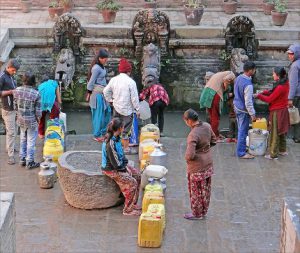
Water demand from rising populations and living standards, and poor management, – in addition to climate change – will increase the scarcity of freshwater for large portions of Asia, says the summary of the IPCC Working Group II report, due to be published on March 31.
Working Group II deals with adaptation and vulnerability to climate change. The report of Working Group I – which looks at climate science – was released late last year. The report of Working Group III – on mitigating climate change – is scheduled for release in April. Together they form the fifth assessment report of IPCC, a collective of thousands of scientists who form the leading international body for the assessment of climate change. The fourth assessment report was released in 2007.
Agriculture and Food Security
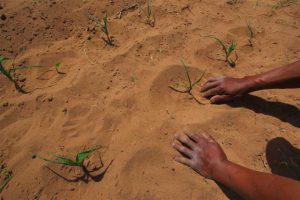
The IPCC says decreasing rainfall and snowfall will lead to more water scarcity in northern China. The situation there is already dire due to the growing population and expanding water withdrawal.
According to the scientists, warming temperatures may adversely affect rice and other crops growing near their heat stress limits in China every July and August. The most vulnerable regions for reduced rice yield are western Japan, eastern China, the southern part of the Indochina peninsula and the northern part of south Asia.
On the other hand, winter wheat yields could increase in some areas, such as the Huang-Huai-Hai Plain, China’s most productive wheat-growing region, due to warmer nighttime temperatures and higher precipitation. But maize yield could decrease by 25% by the 2080s (compared to 1961-90) in the North China Plain.
By the middle of this century, Asia’s urban population will increase by 1.4 billion and will account for over 50% of the global population. Climate change will compound the many stresses caused by rapid urbanisation, industrialisation and economic development. Asia experienced the highest number of weather- and climate-related disasters in the world during 2000-08 and suffered huge economic losses, accounting for the second highest proportion (27.5%) of the total global economic loss.
Flood risk
A large proportion of Asia’s population lives in low elevation coastal zones that are particularly at risk from climate change hazards, including sea-level rise, storm surges, and typhoons. Half to two-thirds of Asia’s cities with a million or more inhabitants are exposed to one or multiple hazards, with floods and cyclones being the most important.
Three of the world’s five most populated cities – Tokyo, Delhi, and Shanghai – are located in areas with high risk of floods and climate change threatens to increase their frequency and intensity. The IPCC expects that by the 2070s, the top Asian cities in terms of population exposure to coastal flooding will be Kolkata, Mumbai, Dhaka, Guangzhou, Ho Chi Minh City, Shanghai, Bangkok, Rangoon and Hai Phòng.
The scientists point out that climate change-induced floods already threaten vulnerable regions that have high concentrations of people and infrastructure in China, India and Bangladesh.
The combined effect of climate change and over-withdrawal of groundwater in many Asian cities, including China’s Tianjin, will probably result in land subsidence and may increase hazard exposure due to coastal inundation and sea-level rise.
Effects on health
Health experts in the IPCC say increases in heavy rain and temperature will increase the risk of diarrheal diseases, dengue fever and malaria. There will probably be deterioration in drinking-water quality, mosquito proliferation, increased exposure to rodent-borne pathogens and intermediate snail hosts of Schistosoma and more epidemics. Flooding-induced contamination of urban water supplies will probably increase exposure to pathogens and toxic compounds.
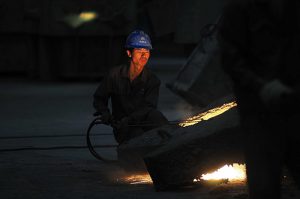
Warmer temperatures and more heat waves will likely to lead increased mortality and morbidity especially in vulnerable populations, such as the elderly, children, the poor and people with cardiovascular and respiratory disorders. Climate change will probably increase the frequency of heat stress disorders among workers, leading to productivity losses.
Climate change will affect the local transmission of many climate-sensitive diseases. Increases in heavy rain and temperature are projected to increase the risk of diarrheal diseases in China. Climate change is also expected to increase the distribution of schistosomiasis in northern China.
Effects on ecosystems
Terrestrial systems in many parts of Asia have responded to recent climate change with shifts in the timing of blooming, growth rates and the distributions of plant species. Permafrost degradation and future climate change are expected to further increase these impacts.
The scientists say earlier spring greening and longer growing seasons are expected to continue in humid temperate and boreal forest areas and this may increase the distribution of pests and diseases. Boreal forests are expected to expand northward and eastward at the expense of the tundra.
The permafrost is projected to decrease 20-90% by 2100 in North Asia and the Qinghai-Tibet Plateau, which will have substantial impacts on erosion, infrastructure, and livelihoods. Alpine vegetation may be largely replaced by forest or shrubland on the Tibetan Plateau. Snow leopard habitat in the Himalaya is expected to contract by up to 30% as forests replace open habitats.
Bamboo is projected to decline in the Qinling Mountains, with potentially adverse consequences for the giant pandas that rely on them for food.