American climate politics is about to get a lot nastier. Branching out from their usual protest marches, lobbying and lawsuits, greens are now taking their agenda on climate change straight to the ballot box, seeking to boost eco-conscious candidates and defeat their opponents.
Leading the charge is Tom Steyer, a 57-year-old San Francisco billionaire with an earnest face and a fondness for loud plaid ties. He’s a major donor to the Democratic Party and Barack Obama, and has made climate change the central theme of his political activities. Steyer used his money to defeat a 2010 California ballot proposal that would have gutted the state’s renewable energy targets, and helped pass another that funded energy-efficiency projects by closing a corporate tax loophole.
This year he’s going nationwide with a series of web ads against the controversial Keystone XL pipeline project that would transport Canadian tar sands oil to US refineries. And to keep that and other green issues at the forefront of this year’s elections, he’s reportedly putting US$50 million of his own and US$50 million more raised from other wealthy liberal donors into his political action committee, NextGen Climate Action, which will intervene with money and advertising in key political races around the country.
Steyer has a team of hard-nosed political operatives, including Democratic strategist Chris Lehane, a veteran of Bill Clinton’s scandal-plagued White House, to run his crusade. And to judge by its outing in 2013’s off-year elections, NextGen’s 2014 effort will be American-style politics at its rawest, with lavish spending, publicity stunts and plenty of mud-slinging.
Last year’s Democratic Senate primary in Massachusetts, pitting super-liberal Congressman Ed Markey against slightly-less-liberal Congressman Stephen Lynch, a Keystone XL supporter, was an example. Sounding like a gunfighter, Steyer co-signed an open letter warning Lynch to abandon his support for Keystone “by high noon on Friday” or face a fusillade of negative ads, which included an airplane towing a banner that read “Steve Lynch for Oil Evil Empire.”
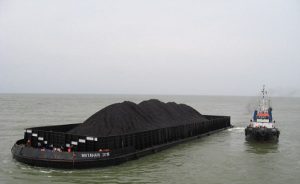
Steyer poured nearly US$8 million, according to news service Politico, into the Virginia gubernatorial race between Democrat Terry McAuliffe and Ken Cuccinelli, a Republican global warming-denier who as state attorney general launched an absurd investigation into climate researcher Michael Mann; NextGen ads levelled corruption allegations against the Republican and hired a Cuccinelli impersonator to throw fake money at crowds. Steyer even got involved in the election in tiny Whatcom County, Washington, where NextGen spent hundreds of thousands of dollars on an obscure county council race to elect a progressive body to fight a proposed coal-shipping terminal.
Dirty politics
Even allies have criticised Steyer’s heavy-handed tactics. After the “high noon” letter sparked charges that he was trying to buy the Massachusetts election, Markey, who won in a landslide, called on Steyer to “stay out of this Senate race.” NextGen ads have been pegged as unfair and even demagogic. Politifact.com called NextGen’s claim that Cuccinelli wanted to eliminate all forms of birth control in Virginia a “pants-on-fire” lie, and Steyer’s anti-Keystone ads harp on the xenophobic theme that it is a foreign-owned “sucker punch to America’s heartland” that will benefit only Chinese investors and oil consumers, a notion that The Washington Post singled out for its dishonesty.
Chris Lehane defends Steyer by saying that he is simply trying to “level the playing field” against right-wing plutocrats like the Koch brothers, to whom he is frequently compared, and the dirty-energy interests they back. Environmentalists are happy to have a rich man on their side to push politicians in a greenward direction. But there’s a deeper question raised by Steyer’s activities: just where and how far can he move something as amorphous, confused and inert as American climate policy?
Steyer’s direction and priorities can seem feckless, especially as they guide his political endorsements. Lynch’s voting record on environmental issues was very similar to Markey’s, and one of the greenest in Congress. The Virginia state governor’s race presented a starker choice between Cuccinelli, an almost Gothic villain to environmentalists, and liberal Democrat McAuliffe, but McAuliffe’s campaign backed his rhetorical support for renewable energy with few concrete proposals and edged away from earlier anti-coal stances, which played badly in Virginia’s coal-mining regions. For 2014 NextGen announced a possible target list of conservative Republicans and also, initially, incumbent Democratic Senator Mary Landrieu of Louisiana, a state dominated by its vast petroleum industry. Her support for Keystone is steadfast, but Landrieu’s re-election is crucial to retaining Democratic control of the Senate and NextGen subsequently backed off from its threat to run ads against her.
Another difficult issue is that Steyer follows President Obama’s “all of the above” energy strategy, a formula that hardly lends itself to a coherent platform, especially given the divisions over different approaches to decarbonisation. Landrieu is both a defender of oil and gas interests and a supporter of nuclear power, which some greens despise and others consider an indispensable clean-energy technology. Markey supports renewables but celebrated the announced shutdown of the Vermont Yankee nuclear power plant, one of New England’s largest generators of low-carbon electricity. McAuliffe has proposed investments in wood-pellet biomass, a renewable energy source that many environmentalists condemn for ravaging forests. It’s not clear which of these politicians has the best climate policies, or that any rigorous climate agenda could rally the whole green community, much less a majority of voters.
Hypocrisy?
Steyer’s own positions reflect these conundrums. His statements on the violently contentious issue of natural gas fracking — a useful bridge, if it’s safe — are a study in ambiguity. Indeed, he made his fortune running Farallon Capital Management, a hedge fund that invested in oil, coal and gas companies, including Kinder Morgan, which is now looking to expand its TransMountain pipeline so as to transport more Canadian tar-sands oil (Steyer retired from Farallon last year and says he has divested his fossil-fuel industry holdings).
Allegations of hypocrisy are less meaningful than what such conflicts say about the intractable complexity of American energy politics. The US is a resurgent fossil fuel superpower now uncorking stupendous reserves of shale gas and tight oil that it values as a motor of growth; home to the world’s largest nuclear power establishment; a leader in the renewable energy sector, which is becoming a powerful constituency.
Climate policy must navigate those clashing economic interests while parsing the technical niceties of energy production and decarbonisation, and do so in a way that somehow unites America’s deeply fractured body politic. Crafting such a policy, and then selling it through 30-second attack ads and campaign slogans, may be more than even a determined billionaire can handle.