Recent summer heatwaves in Europe and northeast Asia have caused massive water shortages and a large number of deaths. But the mechanism behind these extreme weather events is not fully understood.
Scientists at China’s Nanjing University of Information Science and Technology now say that decreasing snow cover in the Tibetan Plateau could be playing an important role.
Professor Wu Zhiwei and her team used monthly snow cover and air temperature data from the past fifty years to build a global circulation model.
Their findings show that reduced snow cover on the Tibetan Plateau triggers high pressure over southern Europe and northeast Asia, reducing cloud formation and pushing up temperatures. Warmer and drier conditions in turn further inhibit cloud formation, intensifying local heat waves, says their paper, published recently in Climate Dynamics.
With further snow loss projected in the future, “Tibetan Plateau snow cover may play an increasingly significant role in shaping the Eurasian heat waves in the next decades,” the Chinese scientists conclude.
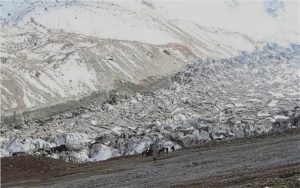
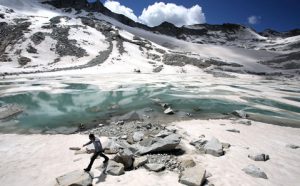
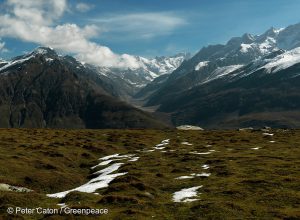
Summer snow cover on the Tibetan plateau has already decreased significantly over the past 50 years with rising levels of global greenhouse gases. The region is warming at almost three times the global average.
Global climate connections
As climate models grow more sophisticated and complex, scientists have identified a set of long-distance atmospheric connections – or “teleconnections” – linking climate and weather in regions that are far apart.
These teleconnections also explain why rising sea temperatures in the Pacific Ocean affect summer rainfall in North America and why there are major global climate anomalies when an El Niño occurs.
Read also: El Niño does hit the monsoon, but some links missing
The findings are significant for southern Europe and north-east Asia, where heatwaves have become more frequent and more severe over the past decades.
In 2003 Europe was caught off guard as sweltering temperatures brought the hottest summer since records began, leading to 70,000 deaths. In July-August 2010, another heatwave caused an estimated 56,000 deaths in western Russia.
In northern China heatwaves have led to major drinking water shortages for over half a billion people.
Tibet – the weather maker
Scientists agree that as the largest and highest plateau in the world, Tibet plays a key role in the global climate system. But many of the details remain a mystery.
The authors of the paper acknowledge their findings contain a number of caveats – including the lack of high quality and long-term climate data for the Tibetan Plateau.
The plateau and the Hindu Kush Himalayas are together often called the third pole because they hold the world’s largest stock of ice outside the poles. The plateau’s remoteness, high altitude and harsh conditions mean that even basic weather stations are few. Satellite data only exists from the 1970s and is plagued by errors because of the lack of calibration from ground observations.
Earlier studies have shown how heavy snowfall over the Tibetan Plateau can both weaken and prolong the duration of the summer monsoon system in the region. Another study linked greater winter snow cover in Tibet with warmer winters in Canada.
The Nanjing study adds fresh insights: “The findings in this paper are very important for understanding the causes to the increased frequency of heatwaves in Eurasia,” said Wen Zhou from the Guy Carpenter Asia–Pacific Climate Impact Centre, City University of Hong Kong. She is leading a separate team to study the influence of high summer temperatures in southeast China on the Asian monsoons.
Plugging the gap
China is trying to fill this data gap. Last year, government institutions launched a US$49-million initiative to wire up the plateau with sensors in an unprecedented attempt to understand its influence on climate — especially the Asian monsoons. The Chinese effort could help to predict extreme weather — both in Asia and as far afield as North America — and give scientists a steer on how climate change affects these events.
The China Meteorological Administration and the National Natural Science Foundation of China has set up sensors on high towers and in the soil to monitor temperature and moisture and cloud formation, as well as deploying sensors mounted on weather balloons and unmanned aerial vehicles.