One of the world’s most influential financial bodies has appointed former New York mayor Michael Bloomberg to head a task force that will examine how curbs on carbon and the impacts of climate change will impact corporate balance sheets.
The move by the Financial Stability Board (FSB), which advises the G20 group of the world’s biggest economies, aims to give investors and individuals a standardised, transparent database of information on how companies are exposed to the use or production of fossil fuels, and whether these corporations are taking action to reduce their carbon footprints.
At present, corporate disclosure on climate change is highly variable within and between different sectors, making it difficult for investors, such as pension funds and banks, to get a like-for-like comparison of companies’ exposure to carbon and climate risks.
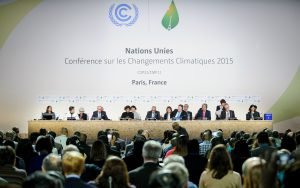
At the launch of the new initiative on the side lines of UN climate talks in Paris, Bank of England governor Mark Carney, who is also head of the FSB, said the new body would help the financial sector understand the mounting risks of climate change.
Throughout this year, Carney has been pushing for a task force so that financial markets and policymakers have access to high quality information that would help them understand and manage the growing risks of climate change. The panel is expected to complete its work by the end of 2016.
“(The data) will need to show whether companies are over-performing or underperforming (in terms of taking action to curb carbon emissions)…and providing information to policymakers,” Carney said, adding that better quality information would help governments reappraise carbon cuts enshrined in a Paris climate agreement expected to emerge at the end of next week.
Bloomberg, who has earned billions of dollars from his news and data company of the same name, said increased transparency would give investors information on a comparable basis that would help them to know which companies were doing what on helping to curb climate change.
“We have long had a saying in our company, ‘if you can’t measure it, you can’t manage it’, and this applies here also,” Bloomberg said at the task force’s launch.
According to a statement on the FSB’s website, the task force “will consider the physical, liability and transition risks associated with climate change and what constitutes effective financial disclosures in this area.”
It added: “It will seek to develop a set of recommendations for consistent, comparable, reliable, clear and efficient climate-related disclosures, as set out in the FSB’s proposal in November“.
Encouraging companies to do much more in curbing their use of, and financing for, fossil fuels has been a major part of the push ahead of UN climate talks. Next week the French hosts and the UN hope to deliver a deal that will put the world on a pathway to avoid runaway climate change, an outcome that will require the mass mobilisation of the private sector.
Some corporations, such as Siemens, Renault and Enel, have spent large chunks of their balance sheets on greener transport or low carbon energy, while many others have joined influential coalitions that are urging an ambitious deal in Paris.
A report released by the UN on Friday said actions by companies would result in an additional 800 million tonnes of CO2 being cut in addition to action by governments, although it did not specify particular actions.
But many energy-intensive companies have been slow to take action, while the resources industry has tried to shrug off pressure to diversify away from production of fossil fuels that contribute to climate change.
Asked by a journalist at a side event in Paris to clarify how a future database would jolt oil and gas majors into taking action, Carney said this would be one of the main questions that the taskforce would try and answer.
He added: “There is at least one (oil major) that has a strategy for a net-zero carbon world…(a database) will provide a perspective on who is on a low carbon path, and investors will decide accordingly. But it’s very difficult to truly diversify away from carbon risk.”
The financial sector said the FSB’s initiative would enable companies to better understand the extent to which they are financially exposed to efforts to decarbonise the global economy.