November’s US presidential election looks increasingly likely to be contested by Hillary Clinton for the Democrats and Donald Trump on a Republican ticket following ‘Super Tuesday’ primary elections on March 1.
Polls suggest that Clinton, a former US secretary of state, two-term New York senator and wife of a former president, would win a head-to-head election against the maverick Republican and celebrity billionaire.
However, Trump's huge lead in the race for the Republican nomination means the prospect of his victory is not as outlandish as it seemed a few months ago.
Followers of US environmental policy have been evaluating Trump’s pronouncements to work out just how damaging his presidency might be for environmental action, such as the Clean Power Plan (now stuck in legal limbo) and the Paris climate Agreement.
Trump hasn't addressed the Paris Agreement directly, but his support for coal and trenchant opposition to renewable energy suggests that under his presidency the US wouldn't be able to deliver on its commitments.
The property developer, who has little hands-on political experience, has vowed to dismantle the Environmental Protection Agency, a critical tool of the US executive branch that helps shape and enforce environmental policies.
‘The Donald’ also denies manmade climate change and his loathing of wind power, particularly when it is within sight of his golf courses, is well known.
Former Alaska governor Sarah Palin, also a vocal supporter of the oil industry and widely derided for being lightweight on energy issues, could get the job of energy secretary if Trump is elected.
For these reasons, and many others, US environmentalists consider a Trump presidency as an End of Days catastrophe that would roll back decades of environmental legislation and hand the keys of the White House to lobbyists for polluting industries.
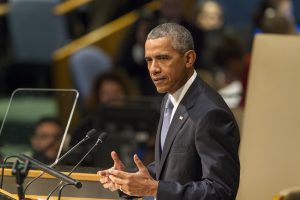
“Everything good that Obama has done on climate/environment has been through the executive branch, no legislative accomplishments at all. What one stroke of a Presidential pen does, the next President's pen undoes,” says RL Miller, the chair of California Democratic Party’s environmental caucus and an organiser with the League of Conservation Voters.
Clinton, on the other hand, is pitching herself as the continuity candidate that would protect Obama’s environmental legacy and has promised some centrepiece policies of her own, including a government investigation into oil companies, most notably Exxon, for deliberately suppressing research on the impact of climate change.
Clinton has also promised a big increase in the share of solar in the US energy mix by encouraging residential use of panels, but analysts say the plans lack detail.
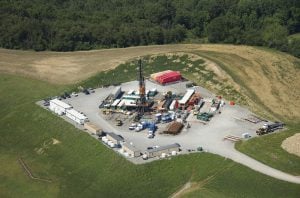
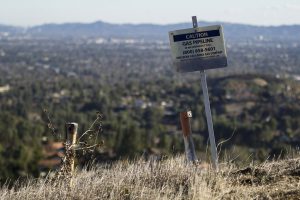
And for some, Clinton’s green policies are flecked with fossil fuel black – such as taking donations from lobbyists for big energy companies, qualified support for fracking, and ambiguity about the highly-contested Keystone XL pipeline that had planned to channel oil from highly-polluting Canadian tar sands.
However, there is also the question about to what extent the occupant of the White House will actually matter.
Some large states, such as California, have ambitious carbon targets of their own. The Sunshine State sets its own fuel standards, and is home to thriving green technology industry that is revolutionising how energy is generated, managed and consumed.
Meanwhile, US financial institutions are increasingly wary of being exposed to fossil fuels amid slackened demand, oversupply and the prospect of tougher legislation on the causes of climate change and pollution.
But for some, the occupant of the White House still has huge bearing on the environmental track that the US will take, said Timmons Roberts of the Brookings Institution. “Federal action on climate and environmental issues is still hugely important,” he told chinadialogue.
The candidates in quotes
Donald Trump
“The concept of global warming was created by and for the Chinese in order to make US manufacturing non-competitive.”
“Right now, green energy is way behind the times. You look at the windmills that are destroying shorelines all over the world. Economically, they’re not good. It’s a very, very poor form of energy.”
“The Environmental Protection Agency is the laughing stock of the world…The EPA is an impediment to jobs and growth.”
“Obama’s war on coal is killing American jobs, making us more energy dependent on our enemies and creating a great business disadvantage… Obama has decimated the coal industry. We’re going to bring it back.”
Hillary Clinton
“Building on the Clean Power Plan, I will launch a clean energy challenge to partner with states, cities, and rural America to accelerate clean energy deployment, building efficiency, and clean transportation.”
“Natural gas can play an important bridge role in the transition to a cleaner, greener economy.”
"The next decade of action [on the Paris climate agreement] is critical—because if we do not press forward with driving clean energy growth and cutting carbon pollution across the economy, we will not be able to avoid catastrophic consequences."
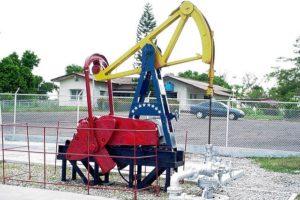
“I am very sceptical about the need or desire for us to pursue offshore drilling off the coast of South Carolina, and frankly off the coast of other southeast states.”
“We now have more jobs in solar than we do in oil…If we want to lead the world in the fight against climate change, we must galvanise investment in more solar, more wind, and more geothermal energy, and part of that is empowering consumers to become clean energy producers.”