Ban Ki-Moon leaves the United Nations (UN) just at the time when the stability of the international order is under strain. The order that emerged out of the ruins of the Berlin Wall in 1989 appears unstable, as major realignments are underway. Russia seeks to regain its former glory; China is now a de facto major power; and the United States is going through choppy waters, with the election of a maverick candidate who challenges every assumption that has governed international relations.
In such an environment, creating – or forging – an international consensus is not simple. And yet, Ban Ki-Moon is leaving the UN with two lasting achievements: one, the Paris Agreement on climate change; and two, the greater recognition of human rights violations faced by the lesbian, gay, bisexual, and transgender (LGBT) people, and seeking to end those injustices.
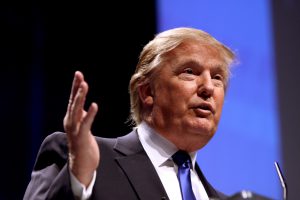
Both achievements remain precarious; President-elect Donald Trump has questioned the scientific consensus on climate change and the early appointments to his cabinet do not inspire confidence. African nations will no doubt make another attempt to cancel the appointment of an independent expert to monitor violence against LGBT people. (Their attempt to do so at the Third Committee of the United Nations failed in November).
Ban Ki-Moon championed both those causes. Speaking at a news conference after the accord was reached in Paris earlier in 2016, he said, “What was once unthinkable has become unstoppable.” When asked about Trump, Ban described him as a successful businessperson, who would, he hoped, understand that market forces were driving the world economy towards cleaner energies such as wind and solar power, which were emerging as cleaner and cheaper alternatives to conventional fossil-based fuels. “I am sure he will make a wise decision,” he said.
Ban is right, thanks to legislation in Europe and elsewhere, many large American companies with massive environmental footprints have already recalibrated their business processes and investment decisions after factoring in climate change. Their actions are in compliance with emerging international standards, and, at least in their public pronouncements, companies are making serious efforts to align their business practices with the consensus.
During his decade at the UN, Ban Ki-Moon travelled across the world to see first-hand the impact of climate change on lives. The Paris Agreement, reached in October 2016, entered into force in November with remarkable swiftness and purpose, as though the more than 200 governments which were party to the accord decided it was time to act. Strong international support and commitment, he said, represented “a testament to the urgency of action, and reflected the consensus of governments that robust global cooperation, grounded in national action, is essential to meet the climate challenge.”
The Pact was signed back in April by 175 countries in New York, and by October, 73 countries and the European Union had joined the agreement, exceeding the 55% threshold necessary for the Agreement to become law. It was first adopted in Paris by the 195 Parties to the UN Framework Convention on Climate Change (known as COP21) in December last year.
The Agreement aims to accelerate and intensify the actions and investments needed for a sustainable low-carbon future, as well as to adapt to the increasing impacts of climate change. Specifically, it seeks to limit global temperature rise to well below 2 degrees Celsius above pre-industrial levels, and to strive for 1.5 degrees Celsius.
During Ban’s time at the UN, the international community gradually moved towards an agreement, from Cancun in 2010 to Durban in 2011, Rio in 2012, New York in 2014, and Paris in 2015. His initiatives included Sustainable Energy for All, Zero Hunger Challenge, and Caring For Climate. He also worked with governments to raise US$100 billion (695 billion yuan) annually by 2020 to operationalize the Green Climate Fund and deliver long-term climate finance.
In bringing big business to the table, Ban and other climate advocates played a major role in allaying concerns of governments that pursuing a pro-climate agenda would be bad for business. As President, Trump may find that the train he wanted to stop has already left the station.
To be sure, Ban’s tenure hasn’t been without controversies; some of which he had little control over, some he had inherited. The last decade has been marked by the Arab Spring, the Syrian conflict and the refugee crisis, the Haiti earthquake, and wars in Yemen, Libya, South Sudan, and Ukraine. Some critics contend that he did not act fast enough in acknowledging the UN’s role in the Haiti cholera epidemic, as well as scandals affecting UN forces and corruption issues. But his leadership in championing the LGBT agenda, as well as climate change, besides working on the Sustainable Development Goals, showed the impact a committed secretary-general can have.
It may well be that Ban found his true calling in championing development and environmental goals because he was uncomfortable making political pronouncements. Unlike his predecessor Kofi Annan, Ban did not criticize the US invasion of Iraq, nor did he respond to calls for his support from Iranians in exile, during the disputed Iranian elections of 2009. In contrast, Ban was refreshingly forthright in addressing climate issues.
At the General Assembly in 2007, he said, “For my generation, coming of age at the height of the Cold War, fear of nuclear winter seemed the leading existential threat on the horizon. But the danger posed by war to all humanity – and to out planet – is at least matched by climate change.”
These were bold words even in the cynical world of diplomats where words are measured carefully, emotions expressed only sparingly, and texts agreed upon after meticulous drafting, following the path of least resistance.
The world may see more of Ban in future. Although he has not said so in public, reports in Korea suggest he might be considering running for President, following the impeachment of the incumbent President, Park Geun-Hy. Elections are scheduled for December 2017, but she may leave office earlier, necessitating an earlier election. Ban has only said he wishes to be helpful to his country.
As a boy who had to be evacuated with his family to a safe village to protect civilians from bombardment during the Korean War, and as a young man who was inspired after meeting President John F Kennedy in the White House, where he was part of an international students’ delegation, Ban has come a long way, and worked hard to make an imperfect world less imperfect. At a time where other leaders announce grandiose schemes and disrupt lives of millions of people around the world, it takes a different kind of leadership to forge consensus among contentious nations for common good, whose benefits will only accrue to generations not yet born and cannot be quantified.