In 1953, Charles Wilson, president of General Motors, then the largest vehicle manufacturer in the world, famously told the US Congress, “what was good for our country was good for General Motors, and vice versa." His remark captured the national mood following World War II, one that viewed economic growth as the country’s highest goal.
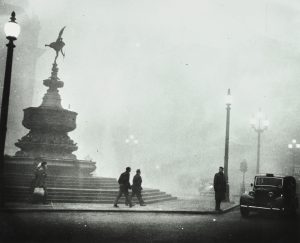
But it was the environment that paid the greatest cost in the economic boom of the 1940s-60s as the country’s air, water and soil pollution increased significantly off the back of industrial manufacturing and the expansion of consumerism. One reason for this was the absence of effective environmental enforcement law. The few laws that did exist to protect the environment either failed to provide substantive protection or were unenforced.
It was not until the 1970s that the US began to legislate its way to a healthier environment. New laws included the federal National Environmental Policy Act (1970), the Clean Air Act (1970), Clean Water Act (1972), and the Comprehensive Environmental Response, Clean up and Liability Act (Superfund) (1980). These ushered in what became known as the “Environmental Decade,” symbolized by the first Earth Day in 1970.
The 1970s also led to a rise in “environmental public interest” litigation, a powerful tool for enforcing the new environmental laws by which plaintiffs sued to protect public resources rather than seek personal damages. Many of the new laws contained “citizen suit” provisions that permitted NGOs, companies and individuals to enforce portions of the laws. In 1972, a key US Supreme Court decision broadened standing requirements that permitted suits based on harm to public resources like air, water and forests.
By the end of the 70s, citizen lawsuits by non-governmental organisations (NGOs) against polluters; challenges to government agency actions under the Administrative Procedure Act (APA) (for approving projects like new coal mines or logging projects on federal lands without proper environmental review); and the development of a strong Environmental Protection Agency (EPA) had all coalesced under new environmental laws.
In the decades that followed, thousands of environmental suits were filed, and US courts played an important role in enforcing environmental laws.
These developments constitute the beginning of environmental public interest law (EPIL) in the US and have improved the environment and public health significantly. The EPA has grown to over 15,000 full-time employees, more than half of which are engineers, scientists, and environmental protection specialists. And the “teeth” of EPIL remains real: BP has paid over US$62 billion in penalties and damage to the environment for the 2010 Deep Water Horizon oil spill.
China’s “Environmental Decade”
Environmental quality has improved significantly in the US over the last four decades. Courts played a key role in enforcing environmental law. Over time, company compliance improved, and state and federal agencies gained strength. The US experience offers lessons for rapidly developing countries like China.
There are several parallels between the development of EPIL in the US and recent developments in Chinese environmental law. Although China has had environmental laws for over three decades, enforcement has always been a challenge.
As in the US, local governments are under pressure to deliver economic development and so often cast a blind eye towards polluters. Meanwhile, central government’s Ministry of Environmental Protection has lacked the resources to address pollution on a nationwide basis.
As in the US, local governments are under pressure to deliver economic development and so often cast a blind eye towards polluters
Until recent years, Chinese courts were hesitant to adjudicate public-interest style suits under existing procedural laws and the 1979 Environmental Law. In addition, jurisdictional barriers for both standing of NGOs and the ability of local courts to hear transboundary pollution cases reduced judicial effectiveness.
But structural changes have recently opened courts to public interest suits by both NGOs and the procuratorate, which is reminiscent of the US’s own experience in the 1970s. Amendments to the Civil Procedure Law, the 2014 Environmental Protection Law, and 2015 Supreme People’s Court Judicial Interpretation established a clear path for NGOs to bring public interest litigation.
Suits can be filed at a higher level court, which removes undue local protectionism. Courts have broad remedial powers including injunctions, restoration and natural resource damages. Furthermore, successful plaintiffs are awarded litigation costs and attorney fees, a key feature behind the success of US citizen suit laws. The Supreme People’s Court set up an environmental tribunal in 2014; hundreds of environmental courts have been created at provincial and local levels.
These changes have resulted in a rise of new cases throughout China. From January 2015 to June 2016, courts at all levels accepted 116 public interest environmental cases. This was more cases in the space of 1.5 years that in the previous decade.
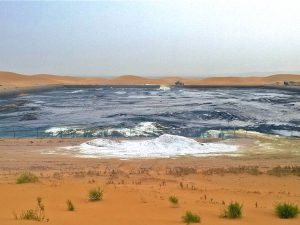
Pilot projects authorising the procuratorate to bring environmental cases against government entities have been implemented. Substantial judgments have been issued against polluters. Access to the courts was broadened in the key Tennger Desert case the Supreme People’s Court reversed lower court decisions and strengthened the definition of NGO standing.
What next?
It is still too early to predict the impact of China’s EPIL system but it’s clear that several structural barriers remain. While 700 NGOs could have standing to bring such cases, to date, perhaps only a dozen have the financial capacity and will to challenge polluters in court.
The increase in the number of cases is laudable but the lack of NGO capacity will hamper broader implementation of the EPIL system.
A lack of NGO capacity will hamper broader implementation of the EPIL system
In the US, the rapid growth of NGOs was key to developing US environmental law. Means must be developed to broaden the capacity of Chinese NGOs, especially at the local level. “Green groups” do more than just bring lawsuits; they increase public awareness and involve citizens in environmental education and clean-up.
In addition, the US experience shows that addressing pollution requires strengthening the enforcement powers and scientific capacity of administrative agencies. That means a financial commitment from national and local governments. China’s MEP and local EPBs will need to strengthen their technical and legal capacity to address the depth of China’s pollution problems.
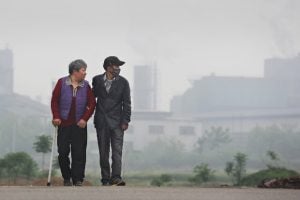
The nature and extent of pollution in China exceeds the problems faced in the US. For example, soil contamination in the US was more localised. Cleaning the Love Canal toxic dump, which led to the creation of the US Superfund law, took 21 years and US$400 million yet the site was only a few hundred acres. In China, soil pollution arguably affects 20% of the nation’s farmland.
Recent developments in China’s EPIL system suggest it is sitting at a threshold similar to that experienced in the US in the 1970s. As the country develops its EPIL system in a manner fitting to its legal and political system, it is worth considering a final lesson from the US experience.
Full development and implementation of an effective EPIL system takes years of effort by NGOs, the government and the citizenry. The commitment to protect the environment must become institutionalized both in law and cultural norms; the Trump Administration’s efforts to roll back protective regulations and strip EPA funding shows that even a well-established EPIL system can come under attack.
Moreover, the US’s environmental problems did not disappear overnight and neither will China’s. However, the current climate in China marks an opportunity for that process to begin in earnest.