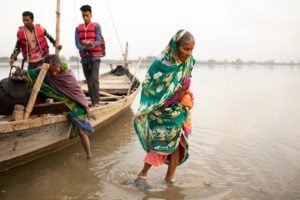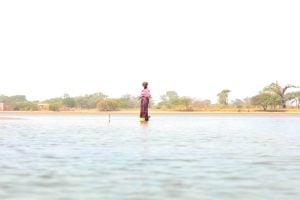
“It took me three days to take the flood water out of the house,” says Asghar Baloch, a local fisher living in the congested and squalid Mulla Band area adjacent to the Gwadar Port. “It was knee-deep, damaging the carpets, furniture and other household items. It has now been removed but it weakened the structure and base of the house.”
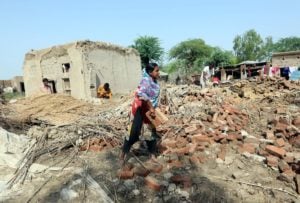
Like many of his neighbours in Gwadar’s low-income neighbourhoods like Mulla Band, TTC Colony and Shambay Ismail Ward, Asghar earns substantially below the national average. He told The Third Pole that his income varied, but was usually below PKR 30,000 (USD 108) a month, and while average income in Balochistan has risen in the last few years, it is still below the national average. For people like Asghar, it is hard to deal with the financial impact, and the floods did significant damage. Heavy rainfall lasted for 30 hours, which left five dead, a thousand homes and commercial structures damaged and scores displaced. Over 80 boats owned by low-income fishers were also destroyed.
Even weeks after the end of the deluge, stagnant water remains in a few areas and pumps are still at work to drain the remaining flood water. The floods painted a dismal picture for the underdeveloped parts of Gwadar in the neglected province of Balochistan. The port at Gwadar is often described as the ‘crown jewel’ of the China Pakistan Economic Corridor (CPEC) – a part of China’s ambitious Belt and Road Initiative (BRI).
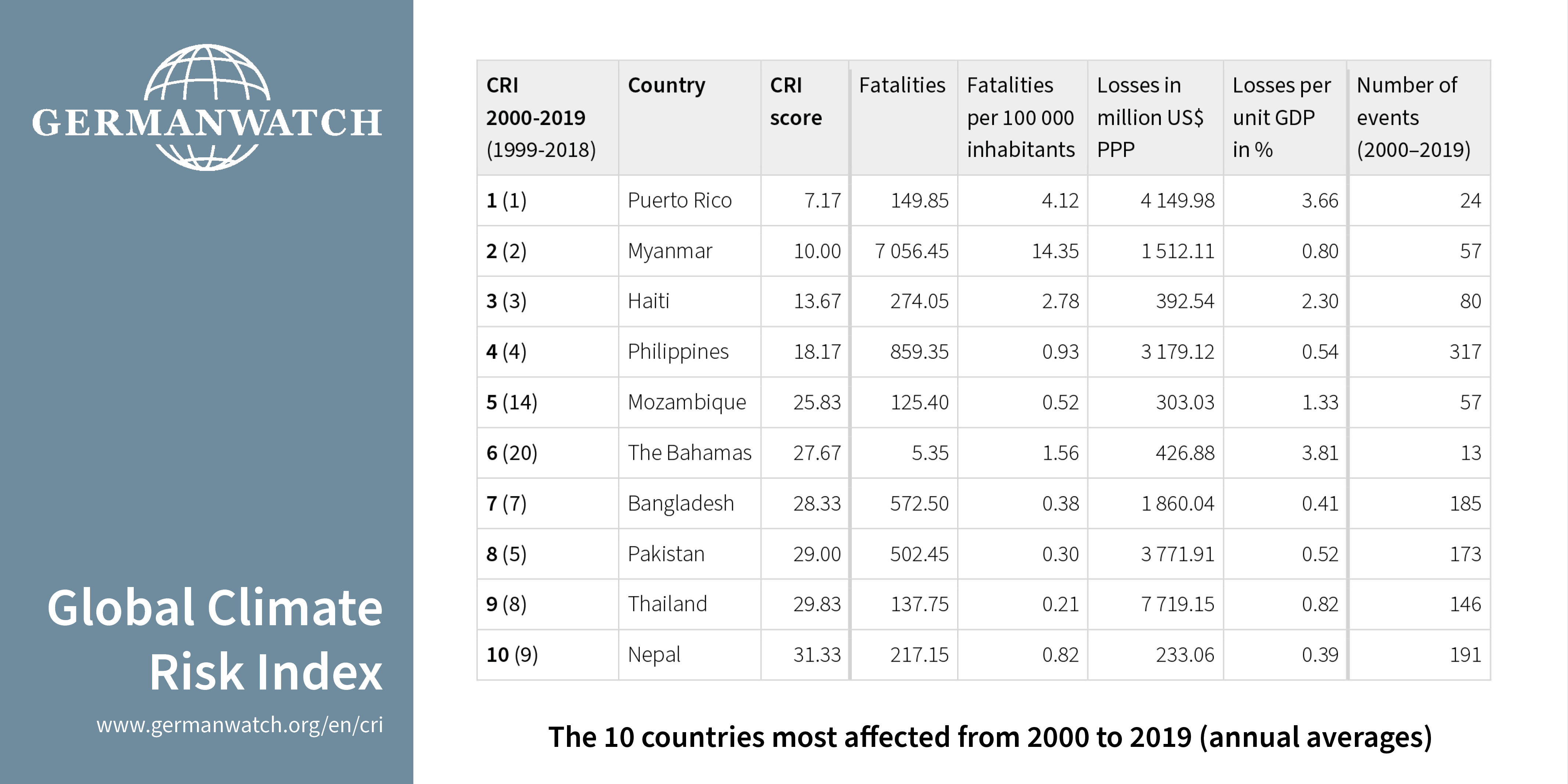
Pakistan is counted among the 10 most climate-vulnerable countries, according to the Global Climate Risk Index.
Although Pakistan is responsible for less than 1% of global emissions, it bears a disproportionate burden of climate change impacts.
Over the years, the country has experienced rising annual mean temperatures, an uptick in heatwaves, and increased variability in precipitation levels.
The floods of 2022 submerged one-third of Pakistan, prompting the UN in its 2022 annual review report to invoke Pakistan’s ‘once-in-a-generation weather event’ as a signpost for times to come.
A perfect storm
Gwadar received more than 180 mm of rainfall in less than two days – an unusual level of precipitation for a largely dry region like Gwadar. Maha Husain, team lead at the climate and environment Initiative at the Research Society of International Law (RSIL), said “The Pakistan Meteorological Department ranked it as the 8th wettest February.”
Balochistan is particularly vulnerable to climate disasters. A report by the World Weather Attribution on the 2022 floods “found that the 5-day maximum rainfall over the provinces Sindh and Balochistan is now about 75% more intense than it would have been had the climate not warmed by 1.2˚C, whereas the 60-day rain across the basin is now about 50% more intense, meaning rainfall this heavy is now more likely to happen”.
But climate change is only part of the story. The recent floods in Gwadar also revealed inadequate urban planning, which is significantly worsening the impact on local communities. Younus Aziz Mengal, who heads the provincial emergency operation centre at the province’s disaster management authority, attributes much of the destruction to the “absence of proper drainage systems” in the coastal town. Mengal adds that population growth and encroachment on waterways have also hindered the drainage system, leading to water accumulation in population centres.
For KB Firaq, an activist and founder of the Gwadar Environmental and Educational Welfare Society (GEEWS), the problems faced by locals during times of heavy rainfall is deeply linked with “development priorities and “disregard” for the traditional pathways of water.
He says, “There were natural drainage pathways in Gwadar before the development of the port and other infrastructure. The development projects in Gwadar disrupted these pathways without establishing alternative drainage systems.”
The case of Mulla Band serves as a poignant example of the challenges faced by communities in Gwadar amidst development projects. A significant portion of the area’s population was made to relocate to make way for the construction of the Gwadar Port. While the port has been modernised, what is left of Mulla Band has seen no investment, and is prone to frequent floods.
The construction of the six-lane East Bay Driveway in 2017 further exacerbated the situation for local communities in Gwadar by severing the connection between the sea and the city’s low-lying eastern region. Local communities, faced with a loss of livelihood, and concerned about the impact of floods, pressured the government into constructing three underpasses to address the concerns.
Unfulfilled promises
The city of Gwadar is no doubt integral to both China and Pakistan’s ambitions for regional connectivity. But while the state has framed the development of the port city as central to its vision of economic transformation, and vowed to usher Balochistan into a new era of development and modernity, local communities in Gwadar have expressed anxiety and fear about the pledges.
According to the Smart City Plan, Gwadar was envisioned to become the third largest city in Pakistan in terms of economic output, surpassing Karachi as the biggest hub of trade within a decade. The plan envisaged generating 1.2 million jobs in a city with a population of 137,695 people. Moreover, the ToR of the Gwadar plan called for “catering for climate change adaptability, disaster risk reduction and mitigation”.
It has been a decade since the CPEC project was initiated, and 5 years since the Smart City Plan was revised, but most of the population still lacks basic amenities including proper drainage systems and clean water. Mega projects have encountered frequent delays, with some struggling to even commence. The recent floods have only highlighted the glaring disparity between what was promised and the harsh realities, further deepening the distrust between the people of Gwadar and the state.
According to Husain, “The catastrophe in Gwadar highlights the need to invest in adaptation efforts across Balochistan”. She advocates avoiding “artificial construction” that disrupts Gwadar’s natural water flow to the sea, which can minimise flooding risks.
Firaq emphasises the need for inclusive and community-cantered policies and implementation. He says, “Local ownership arises when infrastructure initiatives consider the needs of local communities. An inclusive approach that incorporates indigenous wisdom, urban planning expertise while respecting Gwadar’s coastal ecosystem will mitigate flood risks and foster sustainable development”.