Climate

As Indian policymakers join Rio+20, anti dam activists arrested

While policy makers, experts, and activists meet for the UN conference Rio + 20 this week, thousands of miles away in north-east India’s Assam state, 22 farmers are languishing in the Lakhimpur jail for taking up cudgels to protect the environment.

While policy makers, experts, and activists meet for the UN conference Rio + 20 this week, thousands of miles away in north-east India’s Assam state, 22 farmers are languishing in the Lakhimpur jail for taking up cudgels to protect the environment.

These poor farmers, supporters of the anti-dam movement of Lakhimpur district, were arrested on the night of May 11, from the temporary camp of Krishak Mukti Sangram Samiti (the organisation spearheading the anti dam movement in northeast India) from Ghagarmukh near the Lower Subansiri dam site.


While the traumatised families of these activists await their early release, the bail process has been complicated because the activists are also implicated on various false charges in an effort to dampen the spirit of the anti mega-dam movement that is gaining momentum in the region.

These people fighting for the protection of the environment are being treated as petty criminals. It has been alleged that the arrests were made at the behest of the deputy commissioner of Lakhimpur, Anuwaruddin Chaudhary, himself a renowned ornithologist and environmentalist.

There is a total lack of transparency around the implementation of the 2000-megawatt Lower Subansiri hydroelectric power project that is the cause of all this turmoil. But the Lower Subansiri project is just one of many planned mega-hydro projects on the upper reaches of the Brahmaputra River in Arunachal Pradesh state that have been mired in controversy.  A series of projects are in the pipeline, including the 3000-megawatt Dibang, 1630-megawatt Demwe Lower, the Nyamjang Chhu, Siang Lower, and Tato project. But these massive dam projects are located in a highly seismic zone, and for a flood-prone state like Assam, raise grave concerns.
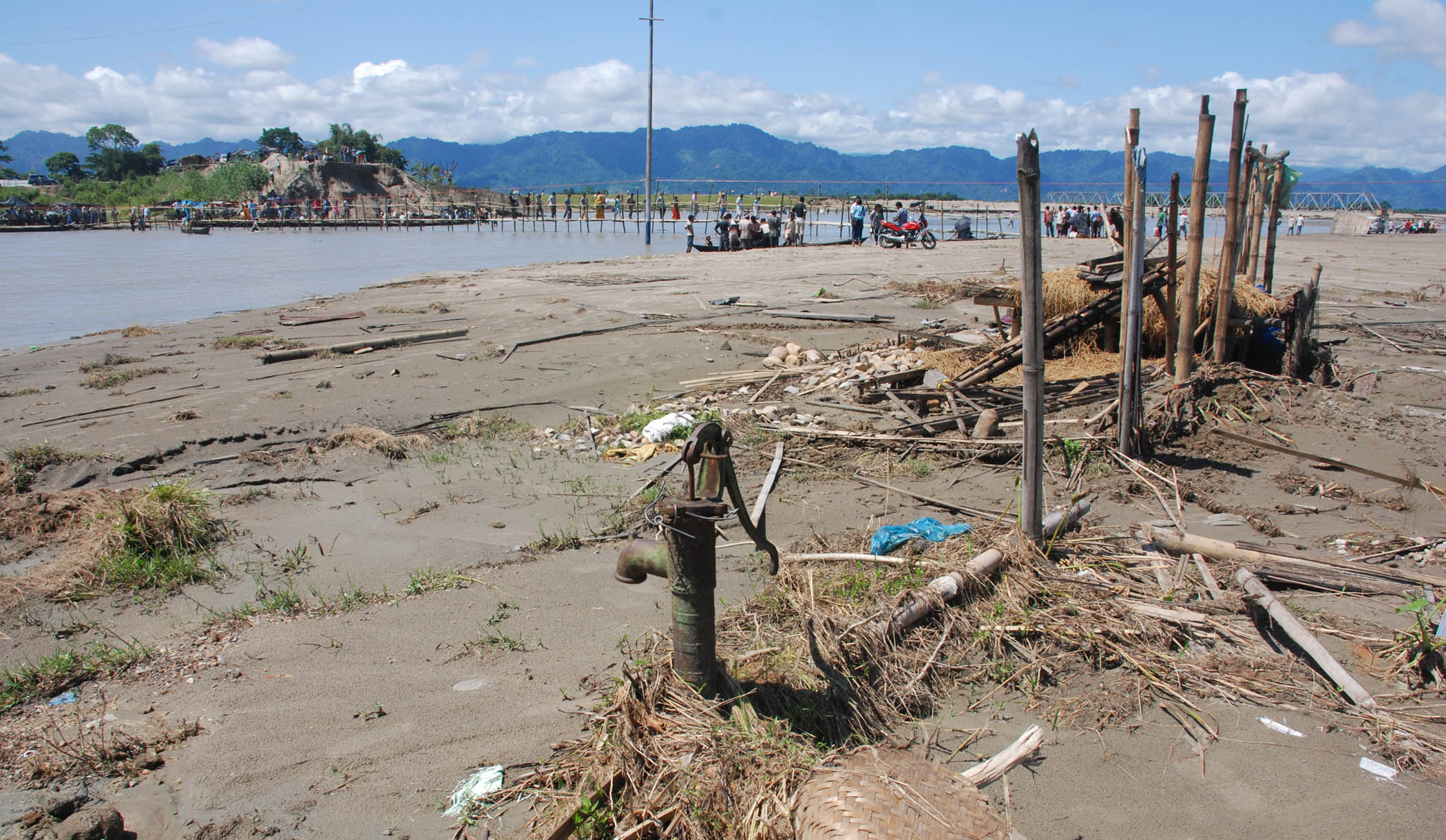

The projects threaten to magnify the flood problems of the state. The two districts of Lakhimpur and Dhemaji have borne the brunt of damage caused by flash floods. Already hundreds have lost their lives and many more have been made homeless in these two districts. A flood caused by a dam created havoc in Lakhimpur district on last year’s Independence Day. A family trying to take shelter on a treetop was washed away while helpless bystanders including the administration only looked on.

Alongside local communities, environmentalists are also opposing these mega dams since no serious attempts have been made to prepare a comprehensive environment impact assessment for these projects.

As delegates at Rio+20 discuss the “Green Economy” in the context of sustainable development and poverty eradication, the question that haunts those living in the far nooks of India is – how can these projects that pose a grave threat to agriculture, forests, fisheries, water resources and the rich bio-diversity of the region be acceptable in the context and ideals of the Green Economy?


Cookies Settings

Dialogue Earth uses cookies to provide you with the best user experience possible. Cookie information is stored in your browser. It allows us to recognise you when you return to Dialogue Earth and helps us to understand which sections of the website you find useful.

Required Cookies

Required Cookies should be enabled at all times so that we can save your preferences for cookie settings.

Dialogue Earth - Dialogue Earth is an independent organisation dedicated to promoting a common understanding of the world's urgent environmental challenges. Read our privacy policy.

Cloudflare - Cloudflare is a service used for the purposes of increasing the security and performance of web sites and services. Read Cloudflare's privacy policy and terms of service.

Functional Cookies

Dialogue Earth uses several functional cookies to collect anonymous information such as the number of site visitors and the most popular pages. Keeping these cookies enabled helps us to improve our website.

Google Analytics - The Google Analytics cookies are used to gather anonymous information about how you use our websites. We use this information to improve our sites and report on the reach of our content. Read Google's privacy policy and terms of service.

Advertising Cookies

This website uses the following additional cookies:

Google Inc. - Google operates Google Ads, Display & Video 360, and Google Ad Manager. These services allow advertisers to plan, execute and analyze marketing programs with greater ease and efficiency, while enabling publishers to maximize their returns from online advertising. Note that you may see cookies placed by Google for advertising, including the opt out cookie, under the Google.com or DoubleClick.net domains.

Twitter - Twitter is a real-time information network that connects you to the latest stories, ideas, opinions and news about what you find interesting. Simply find the accounts you find compelling and follow the conversations.

Facebook Inc. - Facebook is an online social networking service. China Dialogue aims to help guide our readers to content that they are interested in, so they can continue to read more of what they enjoy. If you are a social media user, then we are able to do this through a pixel provided by Facebook, which allows Facebook to place cookies on your web browser. For example, when a Facebook user returns to Facebook from our site, Facebook can identify them as part of a group of China Dialogue readers, and deliver them marketing messages from us, i.e. more of our content on biodiversity. Data that can be obtained through this is limited to the URL of the pages that have been visited and the limited information a browser might pass on, such as its IP address. In addition to the cookie controls that we mentioned above, if you are a Facebook user you can opt out by following this link.

Linkedin - LinkedIn is a business- and employment-oriented social networking service that operates via websites and mobile apps.