


China has put new life into stalemated climate talks by agreeing to take on legally binding targets to reduce its greenhouse gas (GHG) emissions after 2020. Its three partners in the BASIC group of countries – Brazil, South Africa and India – gave the move a big boost on Tuesday by supporting the position at the United Nations Framework Convention on Climate Change (UNFCCC) annual summit in Durban, South Africa.
China’s offer comes with five caveats. First, the world’s rich countries must agree to legally binding GHG emission targets after 2012, when the first commitment period of the Kyoto Protocol runs out. Second, the rich countries must provide developing countries the money they have promised both in the short and long term. Third, the 194 countries that are part of the climate talks should agree on institutions that will govern financing, technology transfer, fighting deforestation, helping to adapt to climate change effects and do all this in a transparent manner. Fourth, all countries must move forward on the basis of the information on global warming and its effects that will be provided by the Intergovernmental Panel on Climate Change between 2013 and 2015, and a review of that report must be started promptly. Fifth, any post-2020 framework must take into account the fact that most of the GHG in the atmosphere has been put there by rich countries, so developing countries cannot be treated equally – the so-called principles of common but differentiated responsibilities and respective capacities, of equity and of environmental integrity.
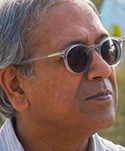
Speaking at the UNFCCC conference on Tuesday, Vice Chairman of the National Development and Reform Commission of China Xie Zhenhua pointed out that none of these conditions was new. “We have been saying this since the climate conferences in Bali (2007), Copenhagen (2009) and Cancun (2010).” What the Chinese delegation has done here is to put the five caveats together. Xie said, “It is time to pin down the commitments. And if after 2020, global efforts to halt climate change take into account common but differentiated responsibilities, and there’s a deal that enables every country to undertake its share of the responsibility, China will be a part of it.”
Addressing the media on the same platform as the environment ministers of India and South Africa, as well as the lead negotiator of Brazil at the talks, Xie asserted, “There is no difference between BASIC countries on this. We are ready to work with all other countries.”
Along with all developing countries, he said a second commitment period of the Kyoto Protocol was a must, something that many rich countries oppose. Japan, Russia and Canada have already announced they will not enter the second period, and Canada has threatened to pull out of the Protocol altogether.
Supporting Xie, India’s Environment Minister Jayanthi Natarajan said, “A clear and ratifiable decision on the second commitment period of the Kyoto Protocol must happen” if the talks on a global deal to combat climate change were to go forward. Referring to demands from the USA that China and India must take on legally binding emission reductions, she added, “developing countries should not be expected to pay every time payment from a developed country becomes due. We have already walked the extra mile.”
Later, in answer to a question, Natarajan said India would assess the question of making legally binding commitments after the scientific review due in 2015, a move away from India’s long-held position that developing country actions to mitigate GHG emissions should be voluntary. But, she added, there were some “fundamental imperatives” before India would consider binding itself legally – “We should know if it’s only about mitigation, if it’s the same for Annex I (rich) and non-Annex I (developing) countries, we should know if financing and technology transfer commitments from developed countries will be in that deal; we should know if it will have equity (equal rights to carbon space), if it will have unilateral trade measures and what it has to say about intellectual property rights. Most important, we should know if that treaty will be ratifiable. Today, we seek answers to these questions, but we don’t have them. And whatever we do, we cannot forget the imperative of developing countries for growth, nor can we forget the principle of common but differentiated responsibilities or historical emissions. BASIC countries have a small carbon footprint. They have a right to grow.”
Brazil’s chief negotiator Luiz Alberto Figuerdo said,”We are doing our part. We hope everybody will do the same.” He added, “We are in favour of a legally binding instrument, but not any instrument. We should have one that is meaningful. Then Brazil will be happy to join.”
Echoing the others, South Africa’s Environment Minister Edna Mulewa said the second commitment period of the Kyoto Protocol was “at heart of the conference” in Durban.