For three days in July, Beijing was hit by downpours of unprecedented intensity that led to 44 people losing their lives.
Thousands of properties were damaged, as were hundreds of kilometres of roads, hundreds of bridges and numerous hydropower installations. The city activated its highest level of emergency response and evacuated 104,000 people.
Though unprecedented, this extreme event did not come out of the blue. Between 1984 and 2021, direct losses from weather disasters in China averaged CNY 217 billion (USD 30 billion) per year, shows China Meteorological Administration data.
This year’s China Climate Change Blue Book notes that China is vulnerable to climate-change impacts and is warming faster than the global average, with extreme-weather events becoming both more frequent and more intense.
But how many such events can be linked to human-induced climate change? And how much of their cost can be blamed on it? This is what the science of extreme-event attribution aims to quantify.
Myself and colleagues at Tsinghua University’s Institute of Energy, Environment and Economy examined the droughts, floods, typhoons and cold waves recorded in the 2014 to 2020 yearbooks of China’s meteorological disasters. Drawing on the methods of the latest Chinese research into extreme-event attribution, we concluded that an average of 27% of the resulting direct losses (about CNY 80 billion) could be attributed to human-induced climate change.
Less easy to calculate, and even to notice, are the indirect climate-change-related losses arising from those same events. These losses, often stemming from supply chain disruption, are in fact even higher, at CNY 91.1 billion. To reduce such losses, we need locally tailored adaptation and supply-chain resilience strategies, which take into account the types of disasters most likely to strike a particular area.
The visible, direct losses
We calculated that, between 2014 and 2020, droughts, floods, storms (referring here to typhoons) and cold waves caused direct losses of CNY 298 billion a year, on average, or about 0.36% of GDP. About 27% of that, CNY 79.8 billion, is attributable to human-induced climate change.
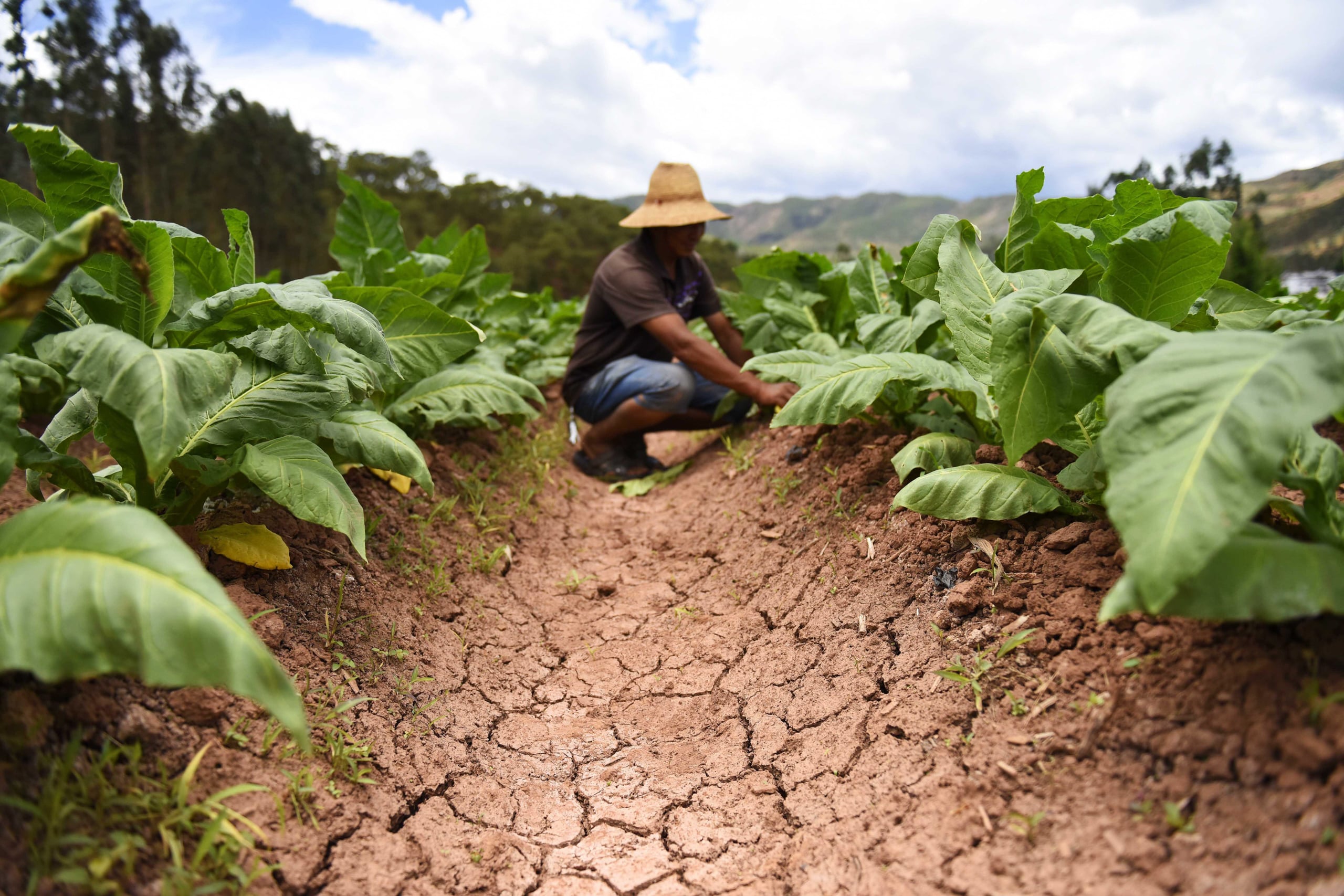
Climate change has significantly increased the incidence of storms and droughts, while the risk of cold waves has reduced. The picture is less clear when it comes to floods, which cause more economic losses in China than any other type of disaster. Climate change has two contrary effects on floods. It increases daily extreme rainfall but reduces persistent rainfall. In other words, short bursts of very heavy rain become more frequent and intense but there are fewer long-lasting periods of steady rain. This makes it harder to attribute flooding and associated losses to climate change.
Specifically, 58% of direct losses (CNY 25.5 billion) from droughts can be attributed to climate change. The figure for floods is 10% (CNY 18.1 billion) and for storms 81% (CNY 47.3 billion). Climate change also averted CNY 11.1 billion in losses from cold waves.
In sectoral terms, agriculture and manufacturing suffer the most attributable direct losses – CNY 32.1 billion and CNY 28.6 billion respectively, or 40% and 36% of total attributable losses. These are followed by water infrastructure (15%) and transportation (6%).
These losses are very unevenly distributed across the country and can account for up to 1.27% of provincial GDP, as they do in Gansu. Losses from drought are concentrated in the north – in Heilongjiang, Liaoning and Jilin provinces, as well as Inner Mongolia – and in Yunnan, Guizhou and Sichuan in the south-west. The manufacturing regions of the south-east coast and the Yangtze basin – including Guangdong, Zhejiang and Shandong – see the highest losses from storms. These are also the regions where the greatest overall extreme-weather losses are suffered.
The invisible, indirect losses
Extreme weather doesn’t just harm people and property where it strikes. Impacts on supply chains can hamper trade and industry and so cause indirect losses in otherwise unaffected regions or industries. This is known as “loss amplification”.
Disruption to some vital industries, such as steelmaking, petroleum and coking coal, can have varied and widespread impacts elsewhere. The loss of crops to drought or flood can cause indirect losses to retailers, restaurants, traders and hauliers. Damage to road and water infrastructure and services can also hamper the operation of other sectors.
Economic statistics on disasters often only include the direct losses, but a complete picture requires indirect ones too. Our research shows that direct losses attributable to climate change create indirect losses in other industries and regions to the value of CNY 91 billion per year, bringing total attributable losses to CNY 171 billion.
For floods, storms and cold waves, indirect losses are greater than direct. Loss amplification is greatest for floods and storms, mostly because a greater number of industries are affected. It is less of an issue for drought, which affects mostly agriculture.
Manufacturing is most affected, with indirect losses reaching CNY 54.6 billion, or 60% of all attributable indirect losses. This is because the sector involves substantial fixed assets and close ties with other sectors. While finance, real estate, wholesale and retail, and business services are not directly impacted by extreme weather, they do see significant indirect losses through linkages with affected sectors, to the tune of CNY 18.5 billion, or 20% of all indirect losses.
Extreme weather overseas can also cause indirect losses in China. A separate paper we published this year, looking at droughts, floods and storms between 2009 and 2019, found that 17% of China’s attributable losses arose from incidents overseas, causing indirect losses of USD 4 billion a year.
Storms caused 80% of that figure. The main causes were typhoons in North America, and both typhoons and floods in Asia, with manufacturing particularly affected. Due to trade links, the chemicals, textiles and steel industries suffer almost 30% of these overseas-originating indirect losses. The disruption of international trade links also causes losses for business services and trade.
What to do?
China’s national climate-change strategy continues to focus on mitigation, meaning cutting, avoiding and sequestering greenhouse gas emissions. Measures for adapting the country to climate change, meanwhile, receive limited funding. Priorities for adaptation funding and technology should be made clear by government, with resources going to where losses are greatest and adaptation costs lowest.
Regions should create their own prevention and adaptation plans, based on the types of disasters suffered and the industries affected. Based on our research, efforts to reduce direct losses should focus on adaptations to protect manufacturing in Guangdong, Zhejiang, Fujian and Shandong from storms, and agriculture in Inner Mongolia and Liaoning from drought.
But climate adaptation policies should take indirect losses into account. Disasters are like stones thrown into a pond, creating ripples elsewhere. To reduce losses, links across regions and industries need strengthening.
Unlike mitigation, adaptation is often seen as more of a local matter. This means there is a lack of mature and proactive channels for international cooperation. But our findings on indirect losses show that adaptation is not in fact a “local matter”. As China has close trade links with the United States and Southeast Asian nations, and is expanding connections through its Belt and Road Initiative, extreme-weather events in those regions will affect it.
Disasters in Asia cause significant disruption to China’s textile and steel industries. While typhoons have a huge impact on the country’s oil and coking coal sectors. In contrast, China’s construction and agricultural sectors, as well as most of the service industry, are rarely affected by overseas disasters.
When allocating South-South cooperation funds and financing adaptation projects, China should prioritise improving local adaptive capacity in key partner regions, so as to reduce the indirect economic impacts on China of extreme events abroad.