The afternoon sun blazed down in Beijing on 28 May, with breezes blowing waves of heat as the mercury climbed past 32C. Food delivery driver Zhang Ye, 28, sat cross-legged on his electric bike in a sweat-drenched short-sleeved shirt, scrolling through Douyin (Chinese TikTok). Nearby, a food court and bank are both air-conditioned, but he sits by the roadside in the shade of a tree, awaiting his next order.
In Beijing alone there are over 50,000 food delivery drivers like Zhang Ye working outdoors under this relatively new model of employment. Across China, the number already exceeds 10 million.
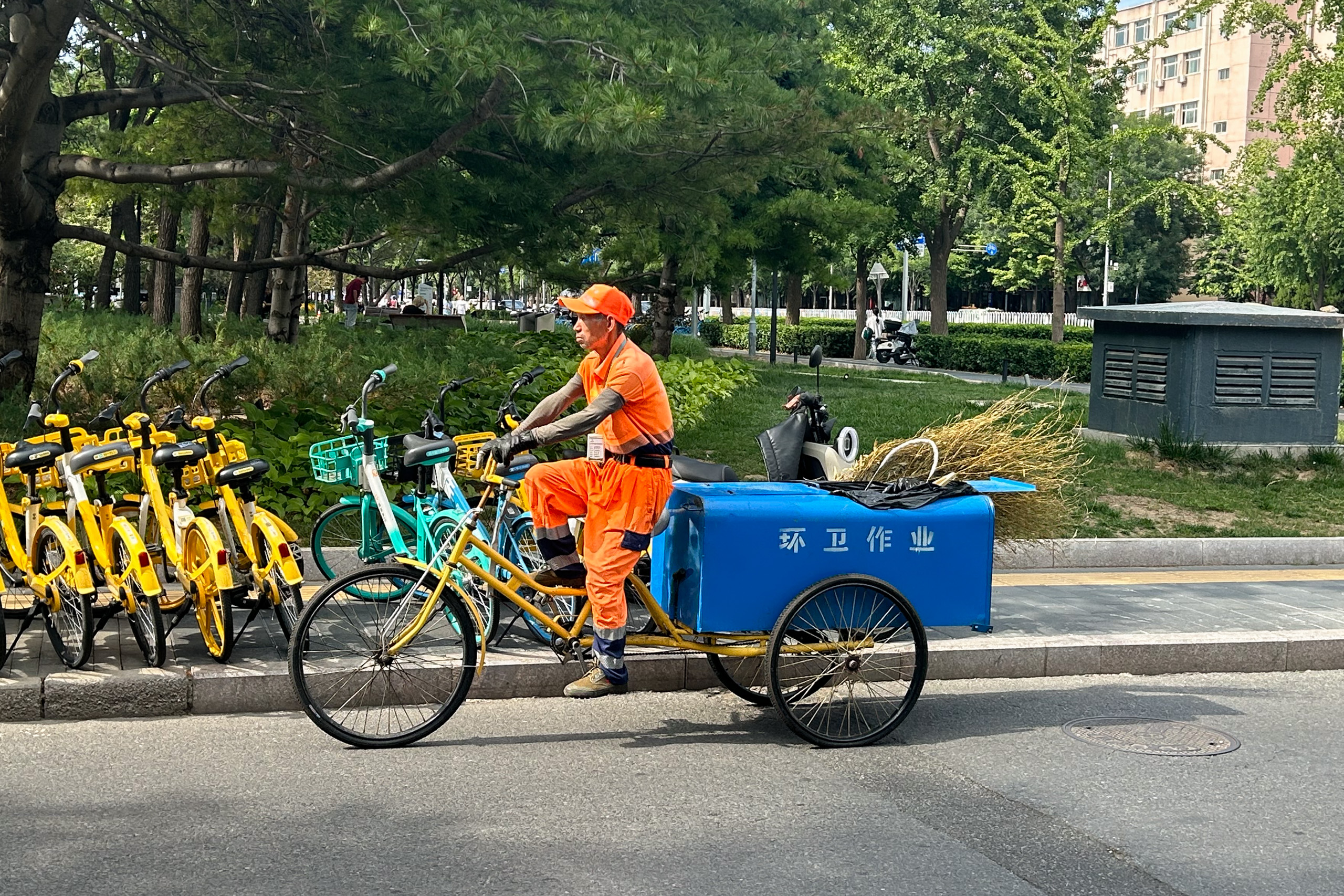
Many other workers are also exposed to high temperatures in Chinese cities. These include construction workers (around 43 million), couriers and sanitation workers (both around 5 million) and bike-share dispatchers. They are all seriously tested every summer.
By 2018, nearly 100 million people were already engaged in high-temperature outdoor labour, according to a survey published in Chinese Workers. But experts believe the health risks faced by outdoor workers during heatwaves are still receiving too little attention.
Extensive health risks
“The past two years have been so hot that I get headaches,” says landscape gardener Gao Xiang, who always keeps a one-litre bottle of water in his tool cart. “I drink some water and rest for a few minutes if I have a headache.”
Since 2022, global temperature records have kept being broken, with 2023 and 2024 “the hottest years” in history. More frequent and extreme heatwaves are becoming major threats to public health, with outdoor workers among the most vulnerable groups.
Working in temperatures exceeding 35C creates occupational health risks, a UN Development Programme report found. Workplaces where workers are at increased risk of accidental injury due to high temperatures are not restricted to outdoor spaces such as farms, construction sites or roads. Indoor sites such as laundries, boiler rooms and processing plants also carry a high risk of heat-related injuries.
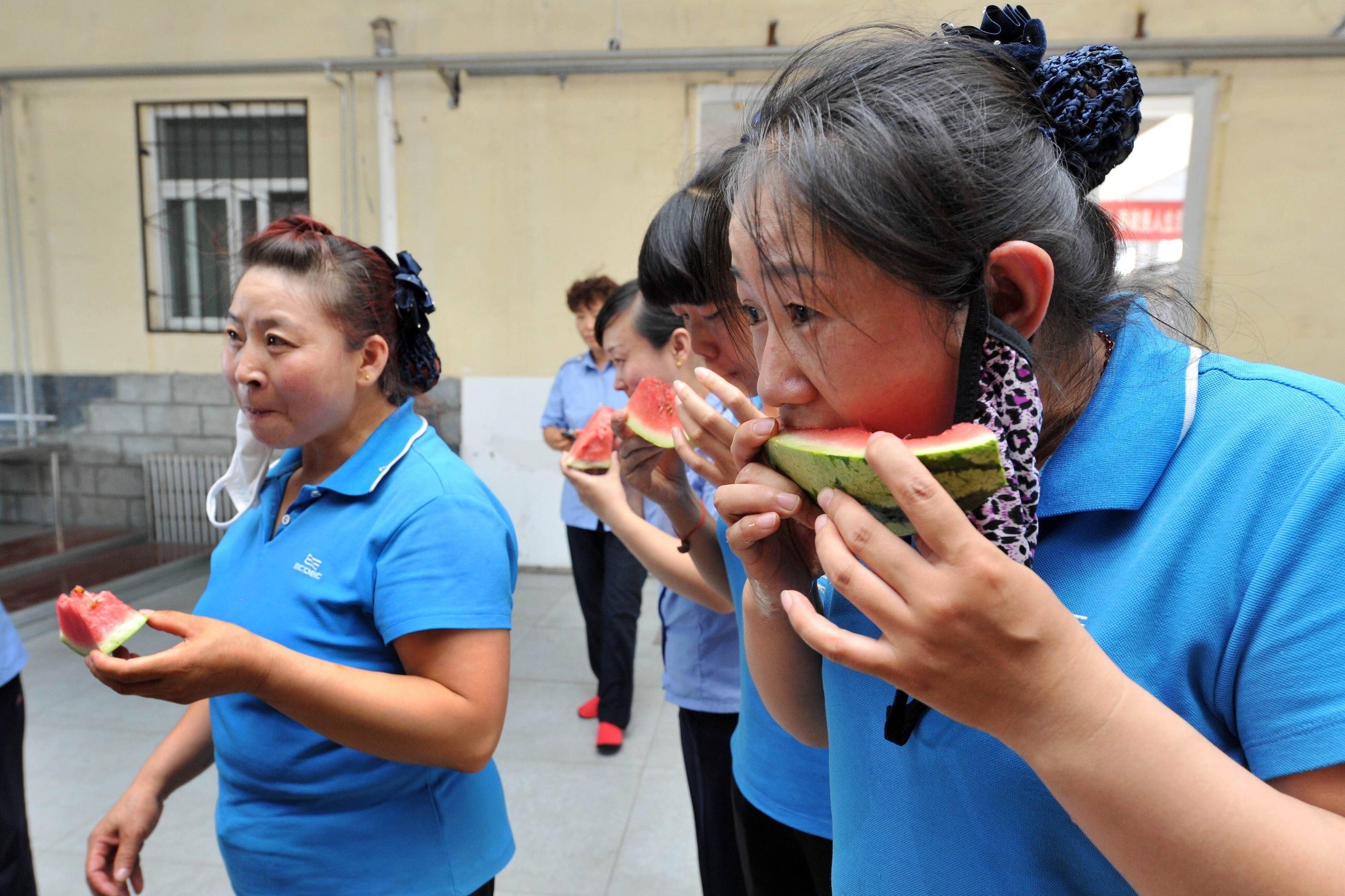
“High temperatures can affect workers’ reaction speed and coordination, thereby reducing productivity or even increasing the chance of work-related injuries,” Zhao Mengzhen tells Dialogue Earth. She is one of the authors of the 2024 Lancet Countdown report on health and climate change in China, and an associate professor at the Beijing Institute of Technology.
Lu Hui, a doctor in Zhaoqing, Guangdong province, says that among the patients he sees every summer, those sent for emergency treatment due to heat exhaustion are predominantly outdoor labourers such as construction workers, food delivery drivers, forest rangers and farmers. Muscle exertion creates heat, which combines with high ambient temperatures to increase health risks. Some older outdoor workers also have underlying health issues, making them particularly vulnerable.
The Lancet report mentioned that potential work hours lost due to heat stress in China increased by 24.1% in 2023. It reached 36.9 billion hours, which is equivalent to the average income of 12.6 million people. This potential loss is most prominent in southern, eastern and central China, with Guangdong and Henan provinces having the highest share. At the same time, losses are increasing rapidly even in the relatively cool northern regions, highlighting the urgency of implementing protective adaptation measures.
Heating and cooling technician Wang Chengyi’s main job is to install air-conditioning systems in semi-indoor environments. What left the deepest impression on him was working at a construction site in Hangzhou in the summer of 2024, when ambient temperatures exceeded 40C. “I would sweat even when standing still,” he tells Dialogue Earth. “My clothes would be soaked if I moved.” He bought a large industrial fan to keep cool, at a cost equivalent to a week’s worth of food.
Sharp increase in heat-related mortality
In July 2022, construction worker Wang Jianlu worked continuously in the Xi’an heat for nine hours before succumbing to heat stroke. The next summer, a 48-year-old tour guide also died of heat stroke after showing a research group around the Summer Palace in Beijing. Cases of outdoor workers dying due to extreme heat have regularly been reported in the media since 2022.
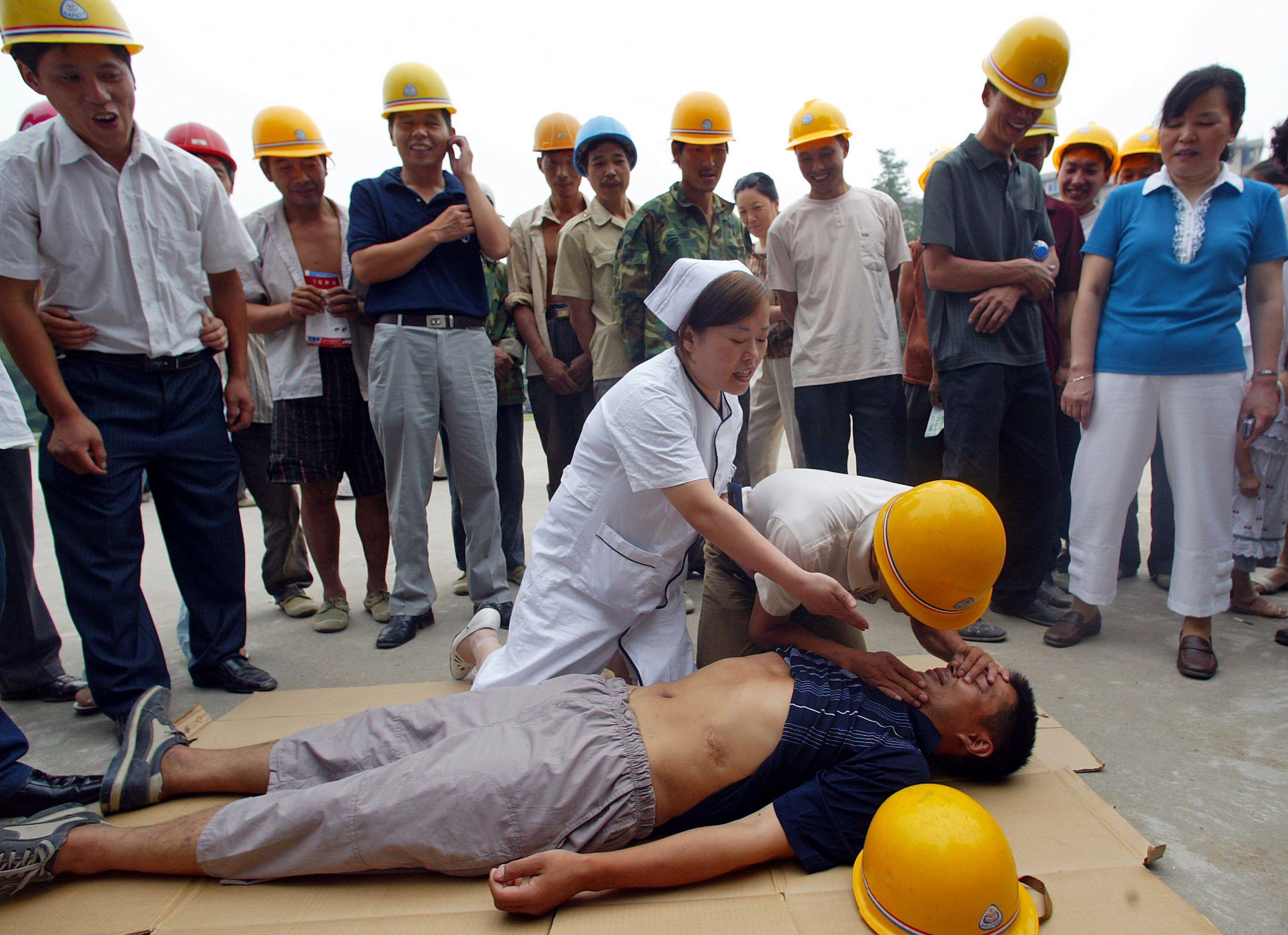
“Heat stroke and heat cramps are indicative of severe heat exhaustion. Without timely intervention, progression from the initial signs of heat exhaustion to severe illness can be rapid,” Lu Hui tells Dialogue Earth. The impacts of heatwaves on public health mainly include different stages of heat exhaustion, heart attacks, strokes, the exacerbation of respiratory and cardiovascular diseases, and indirect accidental injuries, he adds.
From 1991 to 2018, heat-related mortality rates significantly increased on every continent, according to research published in Nature Climate Change, more than a third of which could be attributed to man-made climate change. Another study, published in Nature, mentioned that the heatwave which struck Europe in the summer of 2022 caused more than 60,000 excess deaths in the region. The study also estimated that for every 1C increase in temperature, there would be an additional 35.3 excess deaths per million people in Europe.
The Lancet report showed that in 2023, the average number of days in which people in China were exposed to heatwaves reached 16. This was more than three times the historical average (1986-2005). From 2019 to 2023, China’s heat-related deaths were 1.9 times higher than the historical average. Even in the northern regions, at higher latitudes, the number of heat-related deaths also increased significantly. By the 2060s, such deaths could reach 29,000 to 38,000 every year.
Lu Hui says that, in the context of climate change, more attention must be paid to compound heat-related events, such as day-and-night compound heat, high temperatures with high humidity, and increased temperature differences before and after summer rainstorms or strong winds. The changing climate may also render prior coping experience obsolete. A patient Lu Hui treated in July of 2022 left a deep impression on him: a veteran forest ranger in Guangdong with decades of experience who was accustomed to heat and sun exposure. The ranger avoided patrols during the hottest part of the day, and only entered the mountains after 3pm. Even he succumbed to heat exhaustion and collapsed on the mountain.
How to help outdoor workers handle heatwaves?
To help outdoor workers better adapt to climate change globally, the International Labour Organization adopted guidelines in 2015. These proposed measures such as strengthening assessment of occupational safety and health risks, sharing weather alerts, and improving work clothing and equipment.
In 2012, to address the health risks of high temperatures, the Chinese government published the Administrative Measures for Heatstroke Prevention and Cooling, which proposes a series of protective measures. In the event of high heat, individual workplaces should: promptly adjust the duration and intensity of work; provide personal-protective equipment and “heat allowance”; and include the diagnosis of heat exhaustion as an occupational disease in workplace insurance benefits.
Heat allowances are designed to cover the cost of dealing with high heat. The payment period and amount vary by province. Many provinces concentrate payment between June and August, with the amount varying between CNY 8 and 24 (USD 1.11 and 3.34) per working day. In most provinces, the allowance is between CNY 10 to 13 (USD 1.39 and 1.81). Beijing’s heat allowance is no less than CNY 180 (USD 25) per month for outdoor workers, while in Shanghai and Guangdong it’s CNY 300 (USD 42). Relevant authorities also clearly require that heat allowance to be considered part of worker pay and provided in the form of legal tender; it cannot be substituted with items such as cooling products.
However, due to the flexible employment models of outdoor workers, which generally adopt subcontracting, outsourcing or crowdsourcing, it is sometimes difficult for heat allowances and personal-protective equipment to reach individuals. Additionally, most outdoor workers face financial pressure, so they often choose to extend their working hours and increase their workload to earn more. This makes it imperative to address the problem of how to effectively implement protective adaptation measures against high temperatures.
Take food delivery drivers. Their working hours overlap with peak midday temperature, and the higher the temperature, the greater their workload, as people seek to avoid going outside. As a result, some provinces and cities have brought in specific measures for these workers.
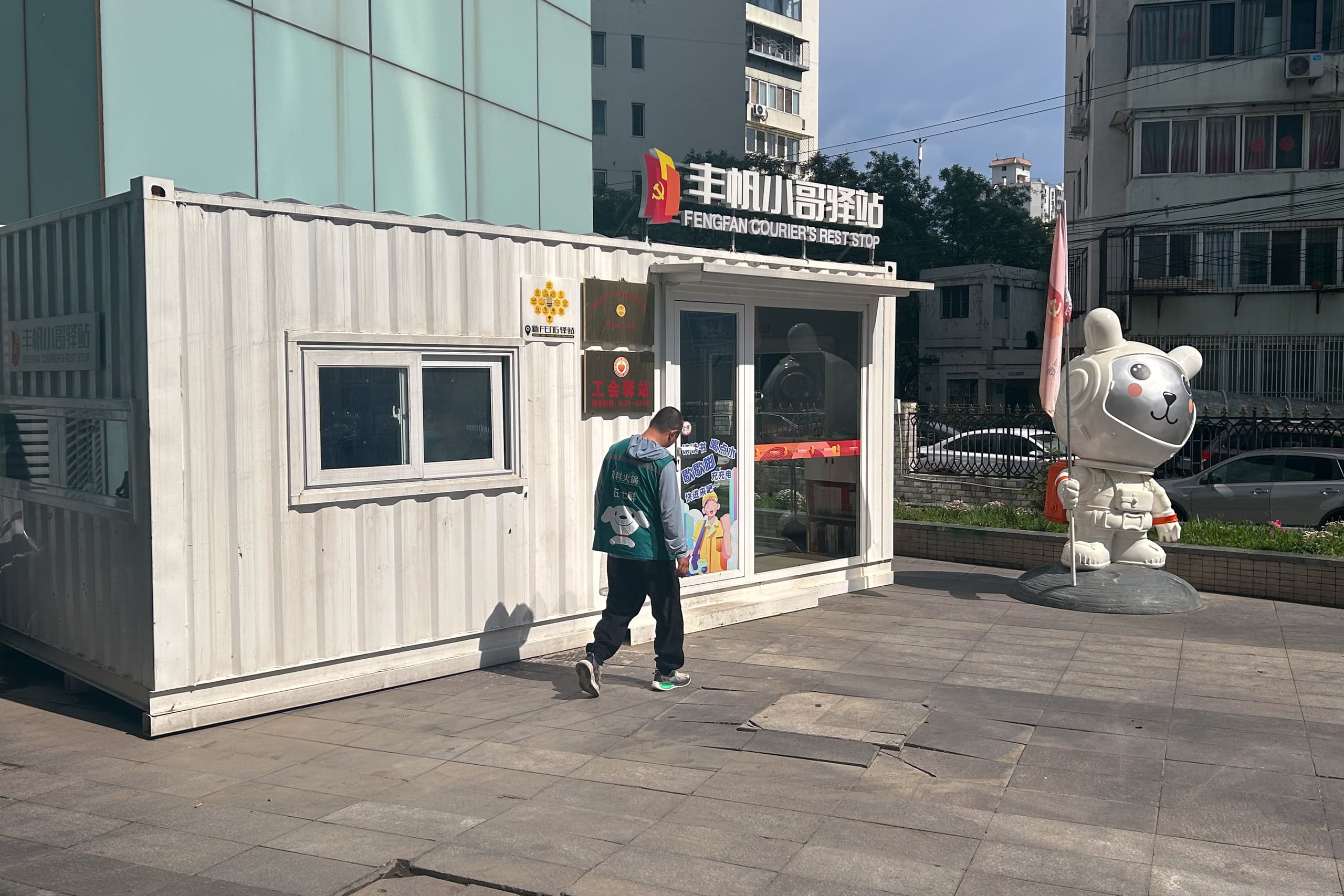
In 2023, the Hangzhou government launched its Online Catering Takeaway Delivery Supervision and Management Measures to protect food delivery drivers. There are 350,000 registered online delivery drivers in the city, with 110,300 weekly active drivers, and delivery of 2.2 million orders daily. To help drivers better cope with heat, some districts and communities in Hangzhou have launched “break stations”. These provide drivers with places to rest, where there are water dispensers, charging points and heatstroke-prevention medication. By the end of 2024, 3,025 stations had been established throughout the city. In other cities, some restaurants, bank branches and subway stations have also set up “care points” which provide drivers with drinking water, rest areas and other amenities.
Preparation for high temperatures urgently needs improvement
Experts say knowledge of heat-related health risks in wider society is still far from sufficient, which creates additional risks.
Yu Kun, a sociologist based in Zhengzhou, experienced delivery work first-hand in the summer of 2024, and conducted in-depth interviews with many delivery drivers. To her surprise, she discovered they were reluctant to use service stations or cool off in places like banks and subway stations.
One reason was that delivery drivers, with their colorful uniforms, feel particularly conspicuous in non-delivery locations, creating an additional burden of explanation. “Many drivers feel that the space on their electric bikes is the only place that really belongs to them,” says Yu Kun.
Another reason is their tight delivery schedules: resting on their bikes enables them to set off for pickups as soon as they receive an order.
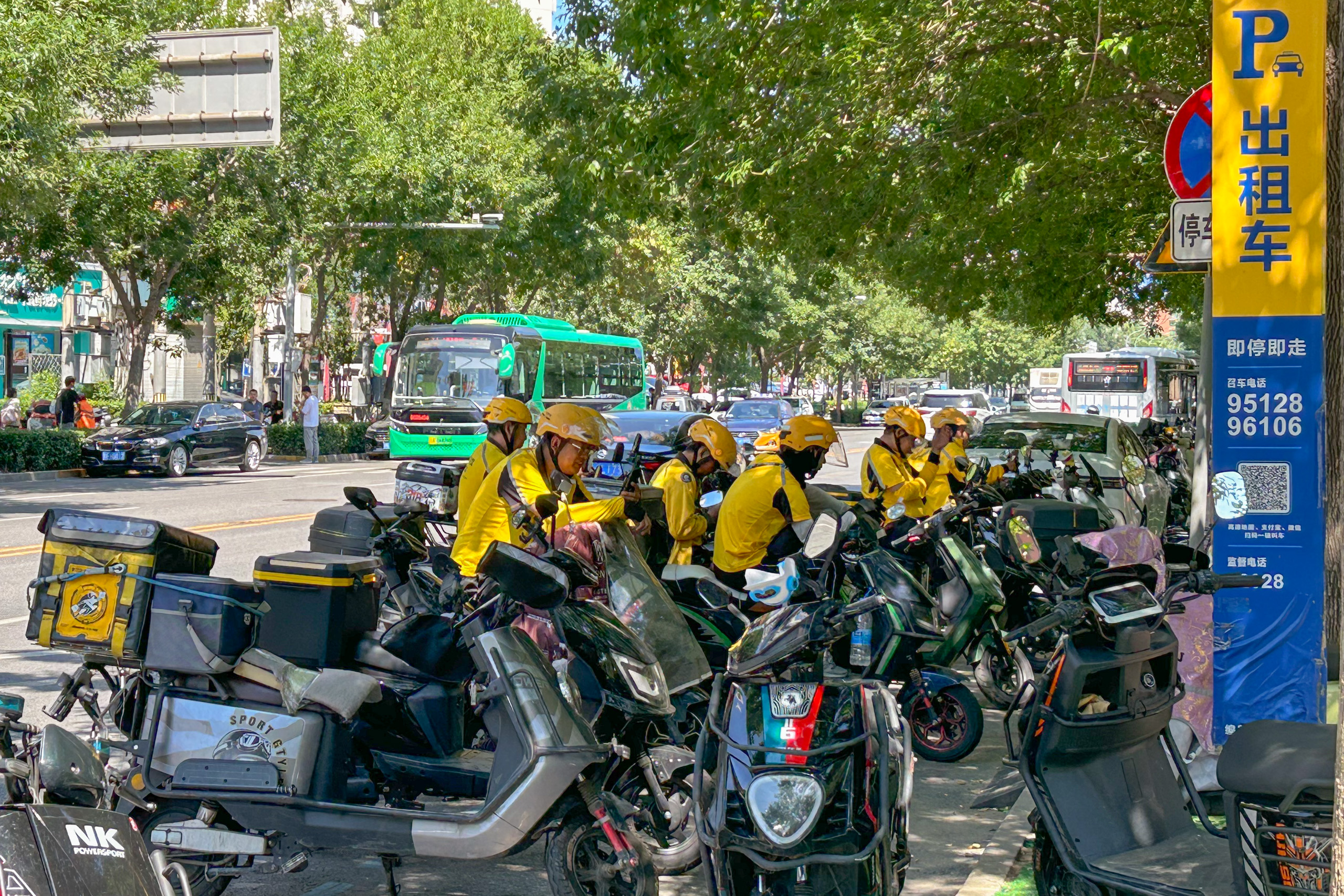
Yu Kun discovered that the majority of food delivery drivers she interviewed didn’t associate high temperatures with illnesses like heat stroke, heart attacks and strokes. At the same time, experienced food delivery drivers generally believed themselves to have higher heat tolerance. Most also did not have the awareness or ability to seek professional health assessments when they felt unwell.
There are different reasons for this widespread lack of awareness. Zhao’s team had previously conducted a climate change adaptation survey. It found that people living in cooler regions often believed there was no need to worry about the threat of heatwaves. Meanwhile, those in hotter regions believed they were already accustomed to high temperatures and thus didn’t need to worry either.
Still a lot to do
“Climate change is a long-term challenge. Regions which are cool now may experience heatwaves in the future, while currently hot regions may become unbearable,” Zhao says. She believes that relevant stakeholders including government departments, academic and research organisations, and the media should adopt more diverse communication and education methods to ensure that the issue of climate change reaches everyone. “Recommendations for outdoor workers should be more precise, and targeted at the platforms they regularly engage with,” she notes.
In Yu Kun’s view, delivery platforms should be the principal entities helping workers to adapt through protective measures. Platforms can monitor the duration and distance of online orders and appropriately adjust delivery time, order volume and delivery range to ensure the health and safety of workers.
Moreover, all respondents agreed on refining early warning alerts and improving the design of warning indicators and risk levels. Warning information must incorporate more dimensions, such as temperature, humidity and wind speed, and combine temperature alerts with health-risk warnings. Such information must be more targeted and actionable for different regions or groups for it to be able to play a greater role in early intervention.
The International Organization for Standardization has already started using the Wet-Bulb Globe Temperature, which simultaneously monitors temperature and humidity. It helps with identifying high-temperature work environments and calculating rest and work cycles under different levels of physical exertion.
Climate change is a long-term challenge. Regions which are cool now may experience heatwaves in the future, while currently hot regions may become unbearableZhao Mengzhen, associate professor at the Beijing Institute of Technology
Domestic organisations and government bodies are also attempting to innovate. The first meteorological orange alert for the risk of stroke from heat was released in June 2023 by the Tianjin Meteorological Observatory and the Tianjin Interdisciplinary Innovation Centre for Health and Meteorology. Alongside these alerts, more targeted health-protection recommendations are provided to groups with underlying cardiovascular diseases who are at higher risk for strokes.
On 2 July, the National Administration of Disease Control and Prevention issued the country’s first nationwide high-temperature health-risk warning. The forecast is based on an analysis of the relationship between exposure to extreme heat and excess mortality from circulatory and respiratory diseases.
To help workers, especially outdoor workers, obtain information on the health risks of high temperatures, and on coping strategies, Zhao’s team developed a WeChat mini-program called High-Temperature Labour Risk Inquiry. Users can choose their city and occupation to receive information on labour risks and recommendations for the next 8-24 hours. The listed occupations include many outdoor jobs such as delivery, construction, sanitation, security, mining and automotive rescue.
Zhao also suggests that research organisations should collaborate with relevant government departments in conducting surveys and studies to further clarify the impact of high temperatures on productivity within China’s industrial structure, as well as impacts on the health of different groups. This would lay the foundation for applying and promoting protective adaptation measures. “In adapting to extreme weather induced by climate change, there must be close collaboration between government, business, research and the media. They must work together, with no missing piece,” she concludes.
Note: Zhang Ye, Gao Xiang and Wang Chengyi are pseudonyms.